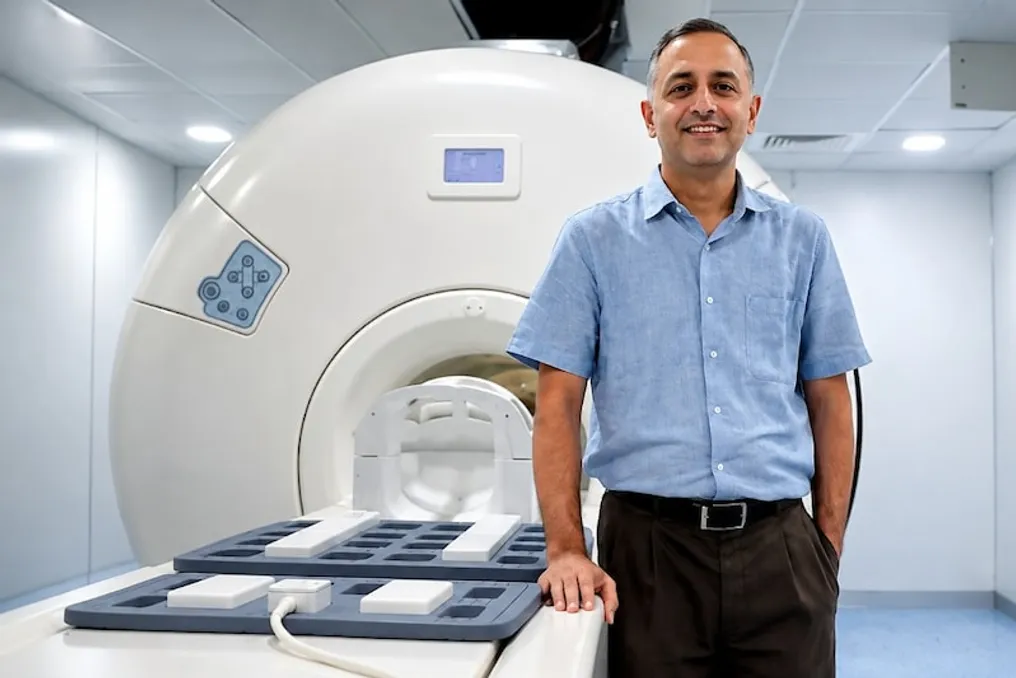
Magnetic Resonance Imaging (MRI) machines have begun to be manufactured in India. A company based in Bangalore is developing affordable MRI devices and distributing them across the country. However, the process of creating such equipment is fraught with serious difficulties, as global corporations often acquired small Indian companies that were introducing new technologies.
The first MRI manufacturer in India, VoxelGrids from Bangalore, faced similar challenges. Nevertheless, financial support received from Tata Trust and Zoho, with the involvement of Sridhar Vembu, helped this company create and deliver MRI machines to every corner of India.
For decades, countries such as the USA, Germany, Japan, China, Italy, and the Netherlands have produced MRI machines, and hospitals worldwide use them, with India being one of the largest consumers. Arjun Arunachalam, founder and CEO of VoxelGrids, struggled with funding while developing one of the world's most complex medical instruments and competing with multi-billion dollar companies. When he was offered a deal by a foreign firm, he refused.
According to Arunachalam, if he had accepted the offer from a foreign company, innovation would have stopped, and that foreign firm would have taken over the entire development. Thanks to funding from Tata Trust and Sridhar Vembu, Arunachalam's startup received significant support. This allowed the startup enough time to develop the first indigenous MRI scanner in India.
In 2015, when Ratan Tata was the chairman of Tata Trust, Arunachalam received funding after meeting with him. The initial funding for this company came specifically from Tata Trust. Later, in 2021, the company received major support from the founder of Zoho.
Arunachalam told India Today Digital that this device is capable of reducing the cost of MRI scans by approximately 70%, making medical services accessible anywhere in the country. VoxelGrids has made a breakthrough in medicine: its MRI machines will be 40% cheaper and 50% lighter, which will further reduce installation costs. This will be a small revolution for a country that annually imports MRI-related goods worth 350 billion rupees.
Discussing with India Today Digital, Arunachalam noted that the creation of an MRI scanner is often compared to the production of jet engines or rockets. MRI machines are among the most expensive and technically complex medical devices, requiring years of research, large capital, as well as expertise in physics, electronics, software, and precision engineering.
Arunachalam fully understood the difficulties he would face. Specializing in MRI physics, he studied at the University of Wisconsin-Madison in the USA and then spent about three years at the GE Healthcare research center in the USA around 2008–2009. It was there that he gained experience that would help in manufacturing MRI machines in India.
Afterward, Arunachalam moved to Singapore, and after brief teaching at IIT Bombay, he realized what concerned him. Arunachalam stated that he wanted to do something meaningful in India and stay here.
Instead of trying to copy existing manufacturers, VoxelGrids of Arunachalam started from scratch. He noted that large companies are constrained by regulatory frameworks, which prevents them from rapidly implementing innovations and changes. This became an opportunity for small players like them. Initially, Arunachalam planned for his company to only develop software for MRI visualization and artificial intelligence. However, existing manufacturers did not allow external parties to enter their systems. As a result, Arunachalam decided to build his own MRI machine.
Everything, from software to electronics, was designed by an in-house team that grew from four engineers to 33 people. Arunachalam told India Today Digital that the quality of their images is comparable to any MRI scanner, although their design is different.