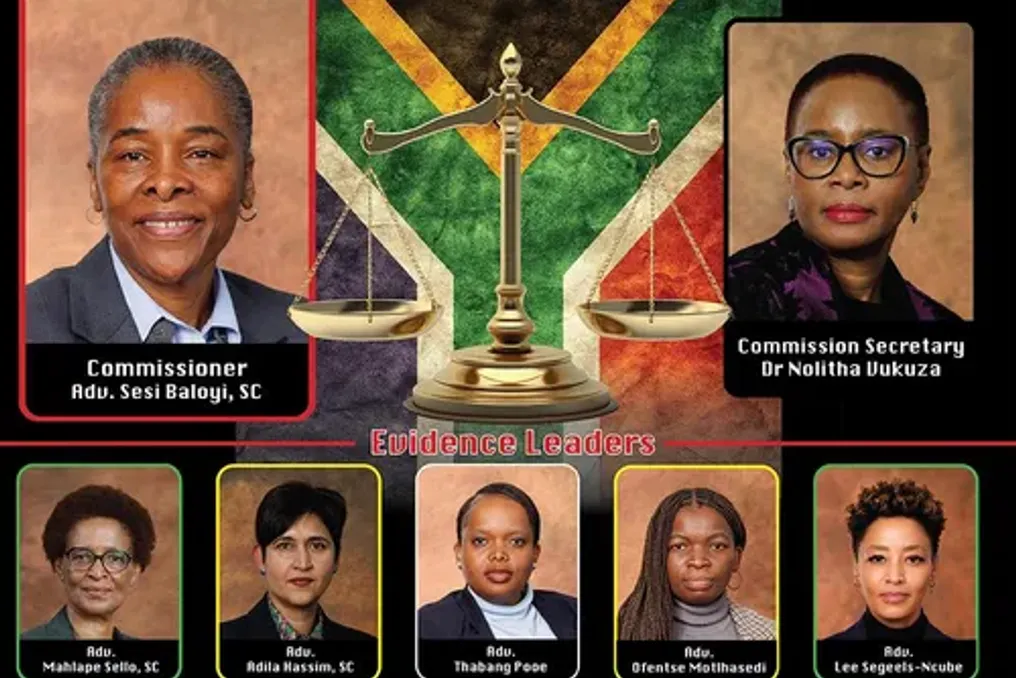
The women leaders of the Madlanga Commission exhibit great courage in difficult and hostile conditions, demonstrating firm resolve in the pursuit of truth. According to the author, they follow the example of women who protested against apartheid seven decades ago, and are now bravely fighting corruption within the criminal justice system.
In August, South Africans once again commemorate the anniversary of the 1956 Women's March. On that day, about 20,000 women gathered to protest the expansion of pass laws for Black women and presented their petitions to the office of Prime Minister J.G. Strijdom. The slogan they chanted—'wathint’ abafazi, wathint’ imbokodo,' which translates to 'if you beat a woman, you hit a rock'—became a permanent symbol of the resilience of women in the country. The courage of these marchers finds its modern reflection in the women of the Madlanga Commission.
It is not surprising that some people view the Madlanga Commission with skepticism, as South Africa has a well-documented history of commissions that have failed to bring about change. Much time and resources have been spent on previous investigations, and many pieces of evidence have been collected. Unfortunately, their recommendations have often been ignored.
Nevertheless, even the most cynical person must acknowledge the impressive work of the Madlanga Commission. The conduct of the commission members and their support staff, in all aspects—especially the women—inspires respect and admiration. They are eloquent, effective, and highly competent. Their professionalism instills pride, despite the shocking and outrageous findings being uncovered. This level of professionalism serves as a model for other state institutions.
Patriarchy, racism, and class discrimination remain prevalent in South Africa, making the fight of the women who marched to the Union building in 1956 as relevant today as it was then. However, the women leaders of the Madlanga Commission show that when given the opportunity, women succeed as professionals, leaders, and drivers of change. They play a key role in shaping the narrative and outcomes of the proceedings.
Their presence and activities challenge established norms that have historically marginalized women from positions of power, especially in legal and judicial spheres. Their example offers a clear model for institutional reform based on competence, not rhetoric.
Attorney Ceci Baloyi, an outstanding senior counsel, serves as a member of the commission alongside attorney Sandile Humalo SC and Judge Mbuyiseli Madlanga, who heads the Commission. Her successful legal career, including extensive experience in constitutional and administrative law, provides her with the knowledge, sound judgment, and judicial temperament necessary to fulfill the duties of the Commission. Through meticulous and systematic examination of witnesses, rigorous analysis of evidence, and consistently balanced conduct in court, she earns public esteem. During the investigation, she demonstrates an unwavering commitment to the rule of law, justice, and due process, thereby strengthening public trust in the Commission's work.
Lead investigators, attorneys Malape Selo SC, Adila Hashim SC, Lee Segels-Nkube, Ofentse Motlhasedi, and Tabang Pue, all possess strong professional and personal qualities that influence their contribution to the Commission. Each woman possesses a remarkable moral compass and demonstrates principled leadership, quietly but firmly resisting intense political pressure during the investigation. Their collective track record shows that thorough and principled legal work can succeed even in a heavily compromised system.
They demonstrate great courage in dangerous and hostile circumstances, showing firm determination in the pursuit of the truth. Intellectually, they display authority, insight, and forensic accuracy, successfully combining legal rigor with genuine human responses. This quality lends the proceedings a necessary degree of compassion and supports their effectiveness. The issues they face are often complex and controversial. Thanks to their collective commitment and consistent discipline, they uphold the values of the legal profession and earn genuine trust and respect. Through their steady professionalism, the Commission continues to operate with authority. Society, weary of official misconduct, can find hope in the steadfast dedication of these lead investigators.
Dr. Nolita Vukuza, Secretary of the Madlanga Commission, performs a vital administrative function that underpins the entire investigation. Her duty is to manage the investigative and organizational infrastructure of the Commission. She is responsible for the secure handling of confidential evidence, including the organization of testimonies from at-risk individuals. Witness safety is paramount, and Dr. Vukuza ensures appropriate protocols are in place to protect those deciding to testify. Furthermore, her leadership provides the institutional framework necessary for the Commission to carry out its duties transparently, reliably, and credibly. She maintains the integrity of the Commission by signing official documents and making procedural decisions. Dr. Vukuza oversees the financial prudence of the Commission, managing a budget exceeding 147 million rand. This enormous financial responsibility requires acute oversight and unwavering integrity to prevent waste or mismanagement. Without her firm hand guiding the administrative mechanism, the commission members would not be able to focus on substantive legal and investigative work. She is the engine of the Commission, ensuring seamless operation behind the scenes so that public hearings can proceed without interruption or procedural breaches.
The 1956 March was a massive demonstration of courage. Participants were willing to risk their lives and freedom for a better South Africa where all people would be treated as equals and with dignity, regardless of race, class, or gender. At a time when South Africa craves authority and superiority in its state institutions, the staff of the Madlanga Commission, especially the women, stands out as a powerful beacon for a nation going through turbulent times. They reflect the spirit of that historic march and show that the fight for justice and accountability is far from over. Their efforts serve as a reminder that the ideals of 1956 are not mere historical artifacts, but living principles requiring constant vigilance and active defense. Their actions offer a model of renewal that South Africa so desperately needs. By following the example of the courageous women who opposed apartheid seven decades ago, they are now bravely fighting corruption in the criminal justice system, thereby contributing significantly to the creation of a better South Africa for all its residents.