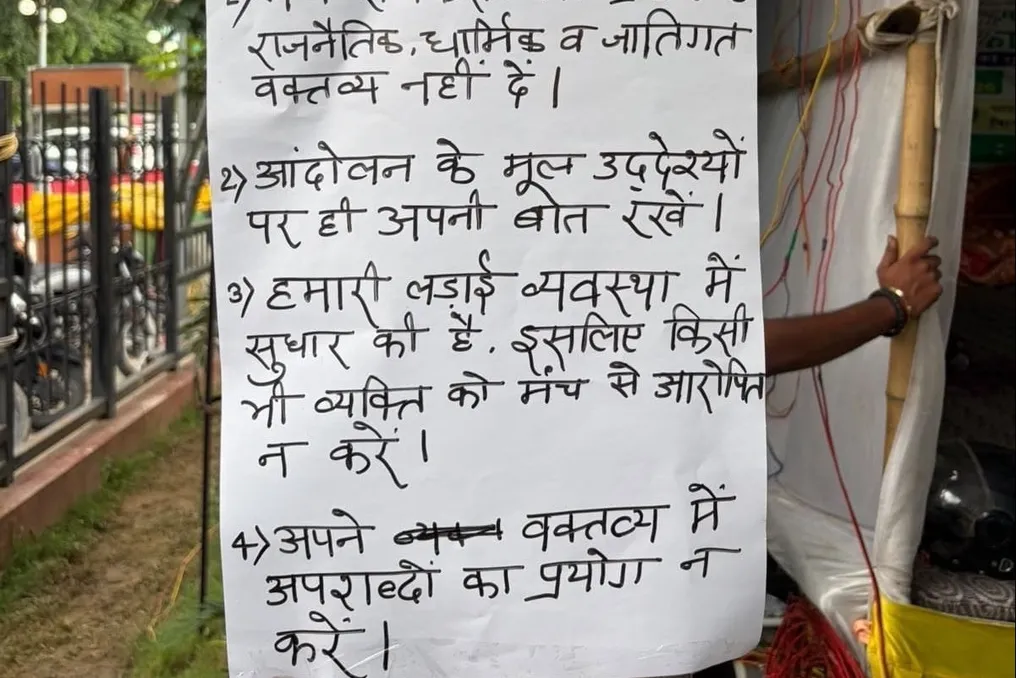
In Ranchi, the capital of the state of Jharkhand, the student movement against alleged irregularities in the JPSC and JSSC exams continues. During this protest, a handwritten poster quickly spread across social media. It prominently displayed 'CODE OF CONDUCT' in large letters, followed by four rules for participants in the action.
People on social media are discussing this poster, with many viewing it as an example of discipline and dignity during protests. These four rules set boundaries for expressing dissatisfaction.
The first rule states that the platform must be used exclusively for the purposes of the movement. It requires refraining from any national, anti-national, political, or caste commentary, thereby preventing the platform from being used for other disputes or political statements.
Secondly, the necessity of focusing only on the core issues of the movement is emphasized. Since the students' demonstration is aimed at alleged leaks and violations in competitive exams such as JPSC and JSSC, the focus is placed specifically on raising these problems.
The third rule calls for avoiding accusations against any individuals or making insulting remarks. The fourth rule urges everyone to express their opinions through legitimate means.
It is these four points that make the poster a subject of particular attention on social media. By sharing photos, users note that the protest signifies not just slogans or unrest, but also a peaceful, disciplined expression of opinion on the substance of the issue. Some social media users cite this poster as an example for other movements.
Students are holding demonstrations at the Jayapal Singh Munda stadium in Ranchi, demanding transparency in the recruitment process and pointing to alleged violations and leakage of examination materials in JPSC and JSSC. Among the students' demands are the cancellation of the first stage of the JPSC exam for the 14th year and an impartial investigation of the entire matter. Attempts at dialogue between the government and students have also begun during the protest.
Thus, this small poster, created at the site of the action, has become a subject of wide discussion on social media. Importantly, it simultaneously supports the loud voice of the protest while setting boundaries regarding language, behavior, and methods.