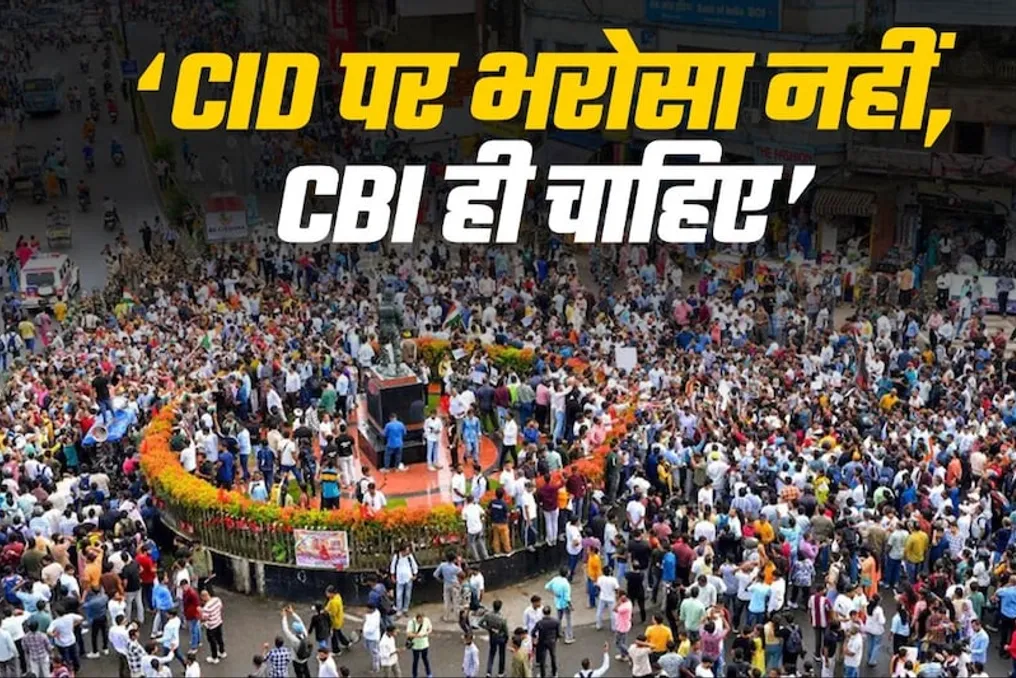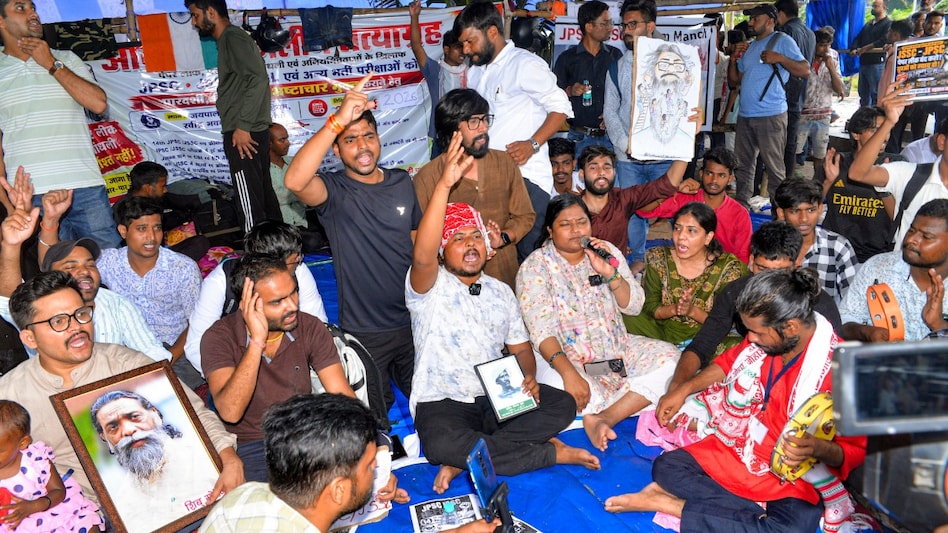

The student protest in Jharkhand, sparked by alleged irregularities during the JPSC and JSSC examinations, entered its fourteenth day on Friday. Six protesters are on hunger strike at the demonstration taking place at the Jai Pal Singh stadium in Ranchi.
Negotiations took place in the evening between the administration and student representatives, but they failed to reach an agreement on the delegation structure, halting further dialogue. Meanwhile, the CID investigation into alleged irregularities in the JPSC exam has intensified, with 19 people arrested so far.
According to sources, a meeting between the government and the student delegation is scheduled for the day. The protests began on July 25 under the aegis of the JPSC-JSSC Reforms platform and have become one of the largest student movements in the state in recent years. Protesters demand the cancellation of the 14th JPSC exam and an independent investigation by either the CBI or a commission of retired Supreme Court judges of the state. They also insist on significant reforms in JPSC and JSSC.
Late Thursday evening, around ten thirty, SDO Kumar Rajat and ADM of Law and Order Dhannandaj Kumar arrived at the site of the protest and spoke with student representatives. The administration clearly stated that it would only negotiate with official student representatives, while students insisted on their originally approved 11-member delegation, including a journalist and a lawyer.
Despite the night negotiations, no agreement was reached on the composition of the delegation. Student movement leader Ravindra Paswan reported that the SDO assured a positive attitude but did not set a time for the start of negotiations.
The protest also impacted the Jharkhand Legislative Assembly, where opposition MPs held a procession and called on the government to wake up, wearing masks on the first day of the monsoon season. The Bharatiya Janata Party (BJP) reiterated the demand for a CBI investigation, accusing the state government of playing with the future of students. Minister Hemant Soren had previously stated that the problem of examination material leakage exists across the country, and the government is ready for dialogue.
Due to plans by student organizations to hold demonstrations near the Legislative Assembly on August 7 and 10, the administration imposed restrictive orders under Section 163 within a 750-meter radius of the building from August 6 to 12.
Devendranath Mahto, the leader of the Jharkhand Democratic Revolutionary Front, who is on hunger strike, has been fighting for his life for several days, and concern is growing over his health due to a sharp drop in blood sugar and blood pressure. Social activist Sonam Wangchuk, who conducted a 26-day hunger strike regarding the NEET exam leak in Delhi, spoke with Mahto on the phone and urged him to drink at least water, after which Mahto started drinking.
The Congress party leader also contacted the students by phone and promised any possible assistance. The student leader stated that if the Congress could not put pressure on the Jharkhand government, it should withdraw from the coalition. The BJP called this political posturing.
As part of the CID investigation, former JPSC chairman L. Hiyante was interrogated four times. In connection with Abhay Tiwari, considered the main organizer of the conspiracy, the CID raided his native house in Bengali, Giridih, and detained his father-in-law Vikas Pandey. Both Tiwari's sons-in-law are allegedly absconding, and his wife has not been found. The CID demanded that all 2204 candidates who took the exam submit their carbon OMR sheets by August 7.
Furthermore, the student organization ISA (All India Students Association) will also take to the streets today, Friday, at eleven in the morning. In its post on X, ISA indicated that their first stop would be Birsa Munda Square. ISA named this tour 'Gen-Z Rising.'