Finance Minister Nirmala Sitharaman asserts that the economic transformations of 1991, implemented by the government of P.V. Nehru, were caused by a balance of payments crisis rather than being the result of a conscious choice.
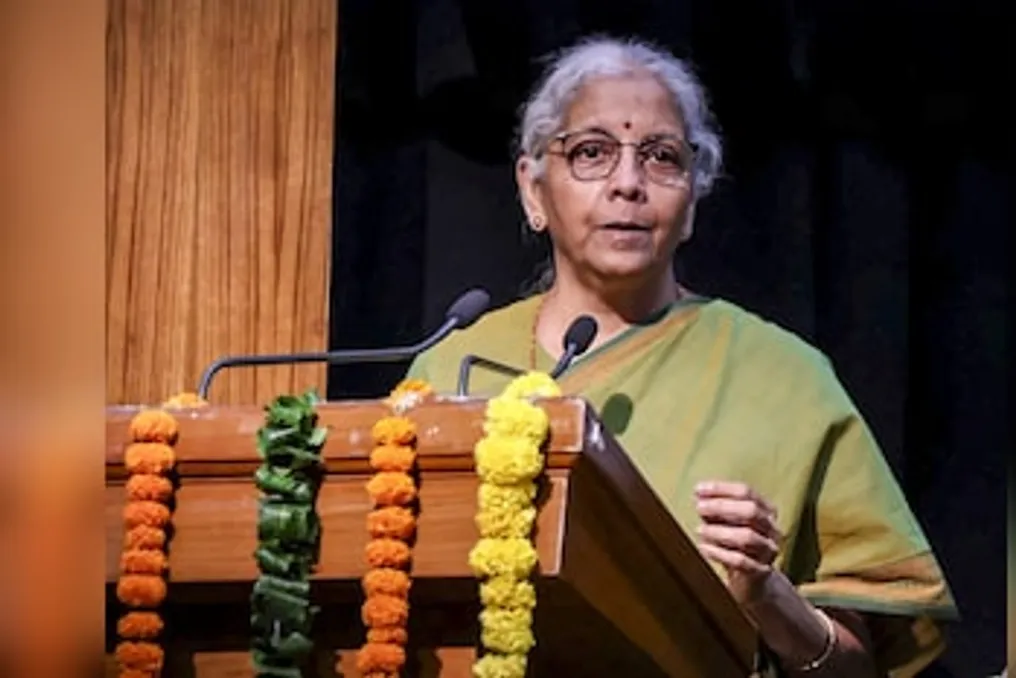
Speaking at the 23rd India Policy Forum, organized by the National Council for Applied Economic Research (NCAER) in New Delhi, Sitharaman emphasized that despite the significance of these reforms, they were carried out against the backdrop of a severe balance of payments crisis, making them an act of forced necessity rather than a voluntary decision.
She noted that accelerated development occurred around the beginning of the new millennium, alluding to the reforms conducted by the National Democratic Alliance government led by Atal Bihari Vajpayee. Following this, the country underwent fundamental changes.
Sitharaman stated that economic development, physical connectivity, and digital infrastructure rose to the top of the national agenda. The United Progressive Alliance government held office from 2004 to 2014, utilizing this momentum.
Listing several measures adopted over the last 12 years under Prime Minister Narendra Modi, she reported that India gained momentum for acceleration when the external environment became unfavorable. She added that rare events like 'black swans' have become regular occurrences, but India has not allowed these shocks to become a reason for stagnation. Furthermore, millions of Indians have emerged from poverty.
As India gained speed, the external environment sharply deteriorated due to successive disruptions and unprecedented global uncertainty. Sitharaman discussed the government's 'Viksit Bharat' initiative—transforming India into a developed nation by 2047—calling it not an unprecedented aspiration, but a restoration. To achieve this goal, the Finance Minister believes the country must shed remnants of 'colonial thinking' and reject the 'victim mentality.'
The Finance Minister clarified that the objective is to create a 'great society' based on civilizational heritage. She stressed: 'Our destiny is to become prosperous without becoming consumerist, rich without becoming materialistic, and globally successful without losing our civilizational character.'
Sitharaman also stated that the Indian model is neither consumerist nor mercantilist, as wealth gains meaning when it strengthens society. She warned that 'the philosophy of individual rights itself, without collective responsibility, will affect our future generations.'