At an internal meeting on August 6th, ByteDance executives, including CEO Liang Rubo and CFO Zhou Shouzi, along with heads of Doubao, e-commerce, monetization, and creative services platforms, announced a change in their artificial intelligence strategy. The company decided that the consumer segment would support Doubao's competitiveness and maintain Seedance video model leadership. However, the main focus will shift to increasing productivity in the enterprise sector, where ByteDance has traditionally been weaker among Chinese internet giants.
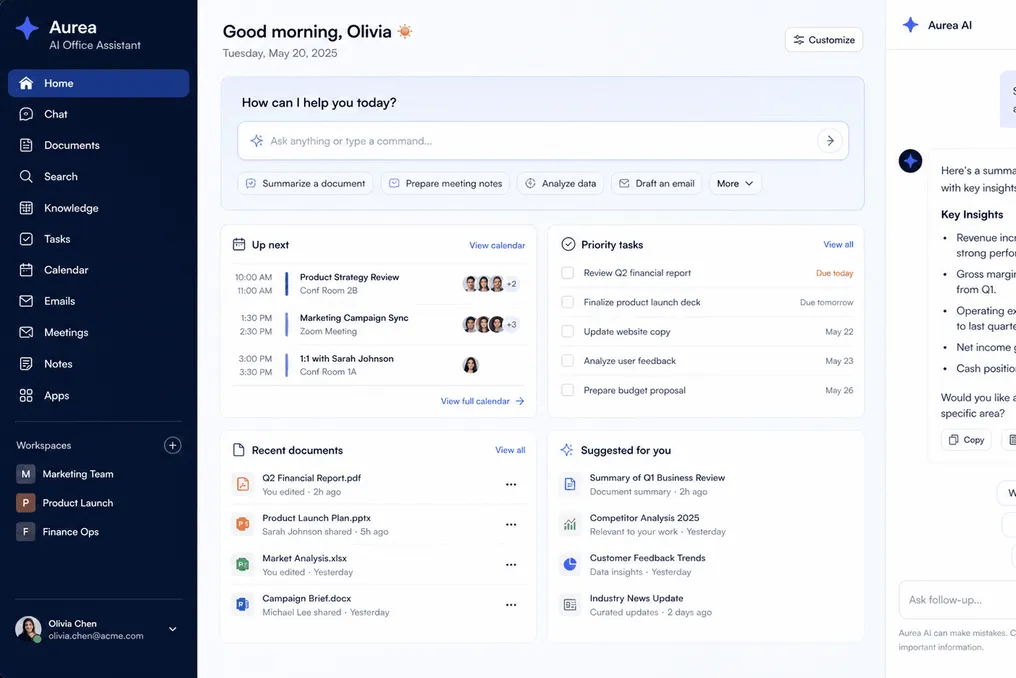
A week prior, ByteDance integrated the productive team Lark into Doubao, and Lark's sales, marketing, and customer support functions were moved to Volcano Engine. The Lark brand, which had spent five years trying to compete with Tencent and DingTalk in the collaboration space, now represents only a thin layer within a much larger production structure.
Zhao Ci, the manager of Doubao, has become the most influential product leader in AI at the company. Former Lark head Xin Xia now reports to Zhao instead of directly to Liang, which, according to internal sources, is a deliberate demotion.
The trigger was a sudden market shift. In June, Tencent's desktop AI agent platform attracted 20.97 million monthly visits in China, taking the top spot in the country and surpassing the combination of ByteDance's TRAE IDE and Alibaba's QoderWork. Corporate buyers stopped paying for collaboration tools; they started paying for AI agents capable of independently breaking down and executing tasks.
The fundamental product structure of Lark, based on collaboration, chat, and documents, proved incompatible with this shift. Now, Doubao bears the entire load. As of March 2026, Doubao had 345 million monthly active users and a peak of 150 million daily active users. Doubao models process 180 trillion tokens daily, which is 1500 times more than since the model's launch in 2024.
In June, the company launched Doubao Pro at prices of 68, 200, and 500 yuan per month. Simultaneously, a closed beta test of the enterprise version of Doubao with Lark integration was launched, which includes knowledge extraction, data isolation, permission control, and auditing features.
The architecture now presents a clear three-layer enterprise structure. Volcano Engine is at the base, providing cloud services and as-a-service models. Doubao is in the middle, controlling the model and user experience. Lark is on top, responsible for office workflows and market penetration. Liang framed this as 'high priority, thick trunk, long horizon': secondary bets must be returned to the core business, allowing the main business to feed adjacent areas.
The essence of this restructuring is that the winner in AI-focused offices will be the one who controls the model and the agent surface, not the one who owns an outdated workflow scheme. ByteDance places the model level at the center and accepts a period where Lark appears less significant. If Doubao becomes the main driver promoting search, e-commerce, content distribution, and collaboration, similar to how Douyin previously facilitated monetization, the strategy will seem obvious in hindsight.