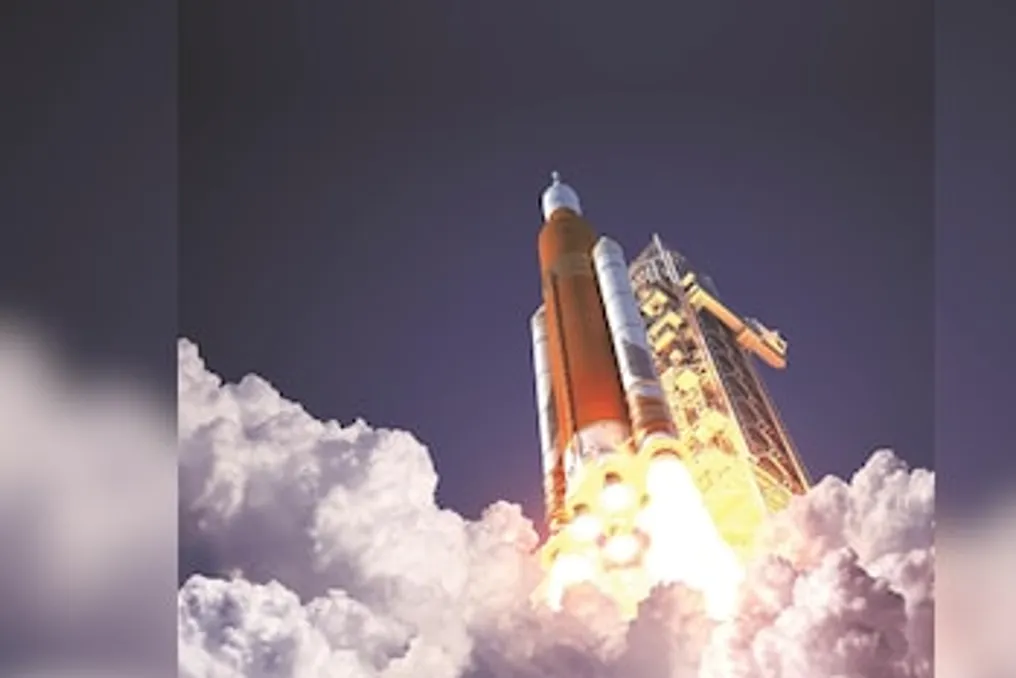
According to Tracxn, Indian space technology startups involved in developing launch vehicles, satellite manufacturing, propulsion systems, space situational awareness systems, Earth observation, and low-level analytics have attracted approximately $871 million. These funds were raised across 241 funding rounds involving 285 companies as of July 2026.
Sector Growth Dynamics
This figure demonstrates rapid industry growth compared to 2021, when the total amount raised was only $43 million across 12 rounds. Over sixty percent of the capital raised was directed into ten most funded startups, led by Skyroot Aerospace, which secured $150 million.
Impact of Policy Reforms
The development of India's private space sector has been stimulated by policy reforms that have facilitated investment attraction and allowed the country to create its first space technology unicorn and develop its own launch vehicle privately.
Skyroot Aerospace Achievements
On July 18, 2026, Skyroot's Vikram-1 rocket reached low Earth orbit at an altitude of 450 kilometers, successfully deploying four payloads. These included demonstration technologies from Grahaa Space, Cosmoserve, DCubed, and Skyroot's own SCOPE satellite. This achievement made India the third country, after the USA and China, capable of privately developing orbital launch vehicles.
Ecosystem Development and Funding
This launch highlights the pace of development across the entire ecosystem: India conducted its first private orbital launch six years after opening the sector to private participation in 2020. Skyroot plans another test flight at the end of 2026 before commencing commercial launches in 2027.
Funding has significantly increased: from $43 million in 12 rounds in 2021 to a record $200 million in 53 rounds in 2025, with funding in 2026 maintaining strong momentum as of now. Five companies—Skyroot Aerospace ($50 million Series C), Digantara ($50 million Series B), EtherealX ($21 million Series A), Bellatrix Aerospace ($20 million Series A), and AgniKul Cosmos ($17 million Series C)—collectively contributed $158 million, exceeding half of the capital raised in 2025 and 2026.
Investment Structure
Seed funding volume increased from $7 million in 2022 to $62 million in 2025. Furthermore, late-stage rounds appeared for the first time, reaching $17 million in 2025 and $53 million as of now in 2026. Investors have expanded their base to include not only domestic venture capital funds and business angels but also sovereign wealth funds and global institutional investors.
Top Capital Raisers
The ten leading companies by funding volume have collectively attracted over $548 million. The leader is Skyroot Aerospace with $150 million. Significant amounts have also been raised by Pixxel ($96 million), AgniKul Cosmos ($76 million), Digantara ($67 million), and Bellatrix Aerospace ($34 million). Skyroot became India's first space technology unicorn after a $50 million Series C round in May 2026, while Pixxel, AgniKul Cosmos, and Digantara have also attracted substantial funding.
Investment Geography
Bengaluru leads with $495 million raised across 106 rounds. Hyderabad follows with $205 million, and Chennai with $80 million. These three cities together account for the majority of equity financing gathered by the Indian private space technology ecosystem.