Meta has introduced Muse Code, a new artificial intelligence agent designed for programming and game creation. This model is based on the recently launched Muse Spark 1.2 and has the capability to execute large-scale coding tasks.
With this launch, the company aims to compete with giants in the generative AI sector, such as Anthropic and OpenAI. On X, Mark Zuckerberg shared results from internal tests, comparing the new agent with various Large Language Models (LLMs) on the market, including Claude Opus 5 and GPT-5.6 (in Sol and Terra versions).
Preliminary results indicate that Muse Code's performance is still at an intermediate level when compared to its direct competitors. A notable feature of Muse Code is its ability to handle extensive projects, which it achieves by dividing tasks among multiple agents.
Two games developed with this new AI were presented on Meta's blog, displaying simplified mechanics and graphics. Muse Code is already available in beta version. Muse Spark 1.2 is specifically aimed at coding activities, ranging from bug fixing to data interpretation, while maintaining the qualities of Muse Spark 1.1 for general AI agents.
Although related, no information was provided regarding the model's improvements in cybersecurity or scientific research. The figures presented by Meta suggest that the AI falls slightly short of current Anthropic models, although it manages to surpass GPT-5.6 in certain situations. In analyses conducted by Terminal Bench 2.1, Muse Spark 1.2 ranks second, with performance close to Claude Opus 5, contrary to what Meta's internal benchmark shows.
Among the points highlighted by Zuckerberg's company are the ability to manage prolonged tasks and maintain context understanding throughout the entire process. Additionally, the AI can map and improve its own training, surpassing Muse Spark 1.1 in this aspect. Focused on programming, the new agent promises good performance in game development, which often requires multiple layers of code and various logical conditions.
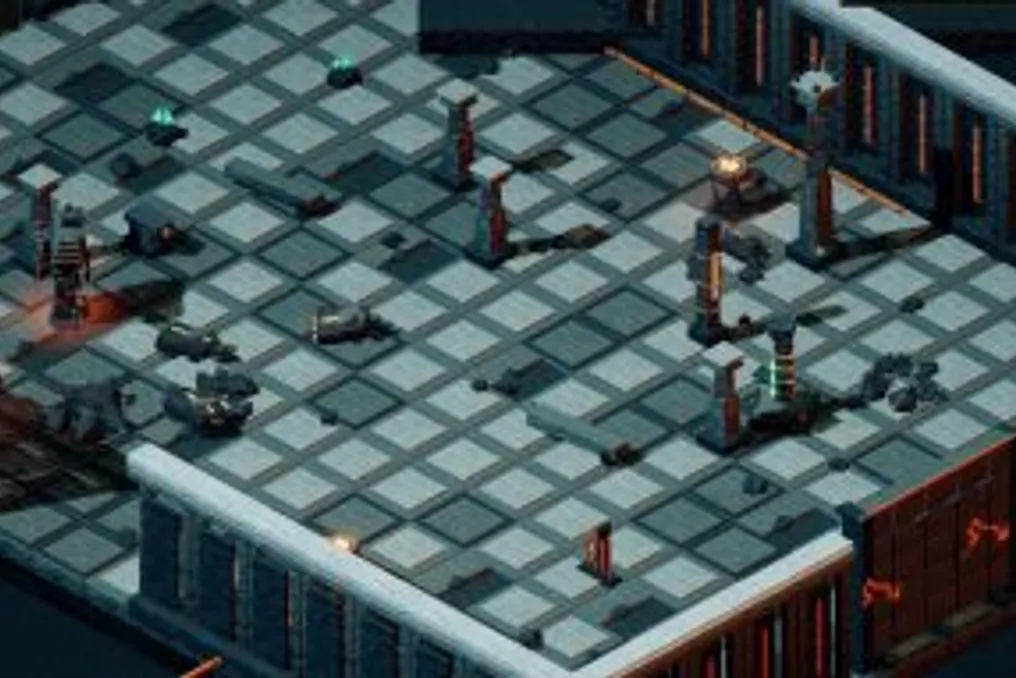
In the release of Muse Spark 1.2 on its blog, Meta also demonstrated the AI's potential with three examples, two of which were simple games. The first, named Embervault, features an isometric perspective and a board format where the player controls a robot that must eliminate constantly pursuing enemies; the gameplay demands fluidity, but the website showed freezes during the test. The second game, Avo Lawn, is a 2D tower defense type, where zombies advance slowly towards the player. In this game, the user collects seeds and acquires fruits to strengthen their defenses, lasting five attack waves, presenting a slow pace but with potential to be a good mobile game.