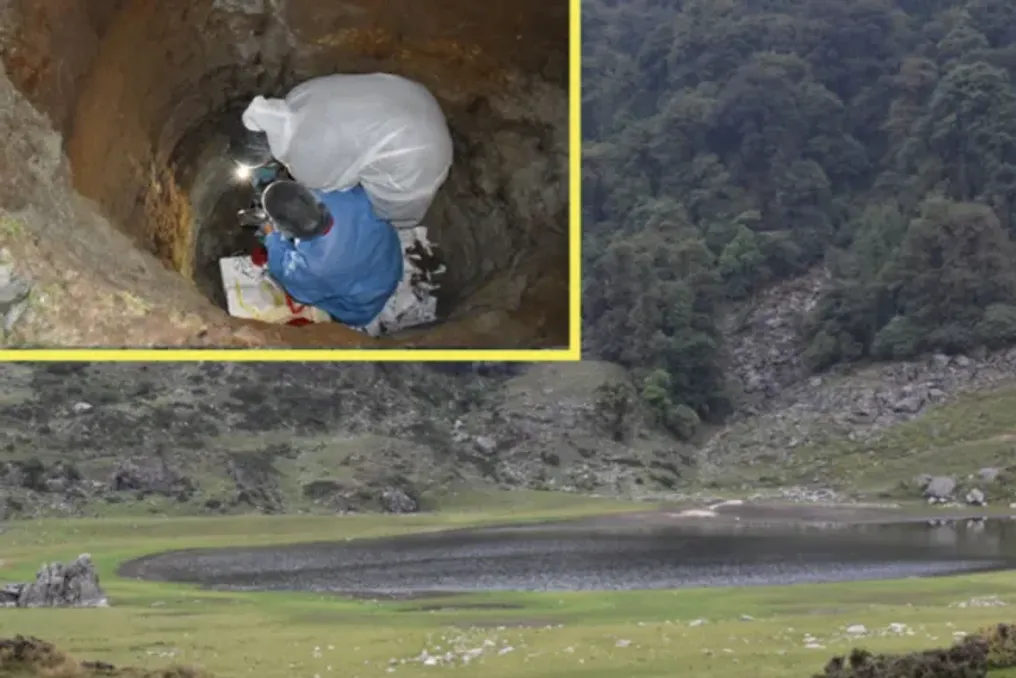
Scientists have discovered a biological time capsule at the bottom of a remote lake in the Himalayas, indicating that humans inhabited high-altitude regions thousands of years earlier than previously thought. A multidisciplinary team of researchers analyzed ancient DNA and chemical molecular fossils trapped in the silt of Lake Toli in Uttarakhand state, reconstructing a continuous history of climate change, forest fire regimes, and human migration over the last 15,000 years.
This discovery calls into question current understandings of human migration, as the team found human DNA in sedimentary layers dated to approximately 8,300 years ago, which predates physical archaeological findings in the region by five millennia.
The investigation was conducted by scientists from the Indian Institute of Technology (IIT) Roorkee, the Indian Institute of Science Education and Research (IISER) Mohali, the Birbal Sahni Institute of Paleobiology, the Inter-University Accelerator Centre, and the Indian Institute of Geomagnetism. A multi-proxy approach was used for the analysis, which did not focus on a single type of evidence but studied the profile of the lake silt, which is 178 centimeters thick. Various materials were extracted from it—from waxy leaf exudates and soot particles to microscopic fragments of genetic material known as sedDNA.
This is the first case of using such metagenomic data to study a lake in the Central Himalayas. The study provides insight into how the environment responded to the end of the last Ice Age and the subsequent intensification of the Indian summer monsoon.
As plants, animals, and humans interact with the landscape, they leave chemical traces that settle in water bodies like lakes and are buried over time in layers of silt. Because of this, ancient lake bottoms serve as natural repositories of the environment and ecosystems that existed thousands of years ago. One of the markers used by the researchers is the study of n-alkanes—long-chain hydrocarbons found in the waxy coating of plant leaves. By measuring the length of these carbon chains, scientists can determine the origin of organic matter in a specific layer: this may indicate aquatic plants during high water levels or terrestrial trees and grasses, signaling a change in vegetation.
Similarly, the team tracked polycyclic aromatic hydrocarbons—chemical residues of fire. High concentrations of these soot markers allowed researchers to establish periods of intense burning in the region, which they linked to both natural climatic cycles and later human efforts to clear land for agriculture.
The resulting 15,000-year timeline narrates the history of the Himalayas during a massive ecological transformation of the Ice Age and the Indian summer monsoon. The oldest layers, dating from 15,000–9,500 years ago, show a cold, dry landscape as the region emerged from the last glacial period. During this time, Lake Toli was a shallow, calm body of water with minimal biological activity.
However, as the Earth warmed and the Indian summer monsoon intensified between 9,500 and 3,600 years ago, the region became lush and humid. This period, known as the Holocene Climatic Optimum, was marked by rising lake levels and an explosion of biodiversity. It was during this fertile period, around 8,300 years ago, that researchers found the first traces of human DNA. Although physical artifacts, such as pottery, were only found in much younger layers, dating to approximately 3,300 years ago, the genetic data indicates that migrating or nomadic groups used these mountain valleys significantly earlier.
Researchers suggest that these groups might have arrived following seasonal animals or in search of resources as glaciers retreated. The combination of chemical biomarkers with sedDNA also allowed for the detection of certain plants, such as cultivated rice and tropical guava, even if their seeds or pollen were not visible. This bridge between genetics and geology provides a much deeper understanding of how humans adapted to changing climates.
The history of Lake Toli concludes with a warning for the present day. After a warm and humid period, the climate began to dry out again about 3,600 years ago. Approximately 2,100 years ago, chemical records show a sharp increase in fire activity and changes in land use patterns. This clearly signals a transition from small migrating groups to permanent human settlements that actively managed the landscape through burning.
Nevertheless, researchers note that they analyzed only a small number of samples for ancient DNA, which limits the temporal resolution or detail of the genetic record. Furthermore, they emphasized that DNA can confirm human presence but does not always reveal who they were or what they did, requiring future research to identify more specific markers of human activity, such as fungal spores growing on animal manure.
By using sedDNA for the first time in this region, the study proves that human migration and environmental conditions can be tracked even in the absence of physical ruins. This genetic history also provides a vital basis for understanding how the fragile Himalayan ecosystem responds to both natural climate changes and human pressure. It offers insight into how the fragile Himalayan ecosystem reacted to temperature fluctuations and human intervention over the last 15,000 years, allowing for better prediction of the Third Pole's response to current global warming.