The Indian Army is taking significant steps to maintain its military potential on the borders shared with China and Pakistan. The Ministry of Defence has initiated the procurement process for 2715 logistics drones, which would be the largest proposed drone purchase in the history of the Indian Army's supply missions.
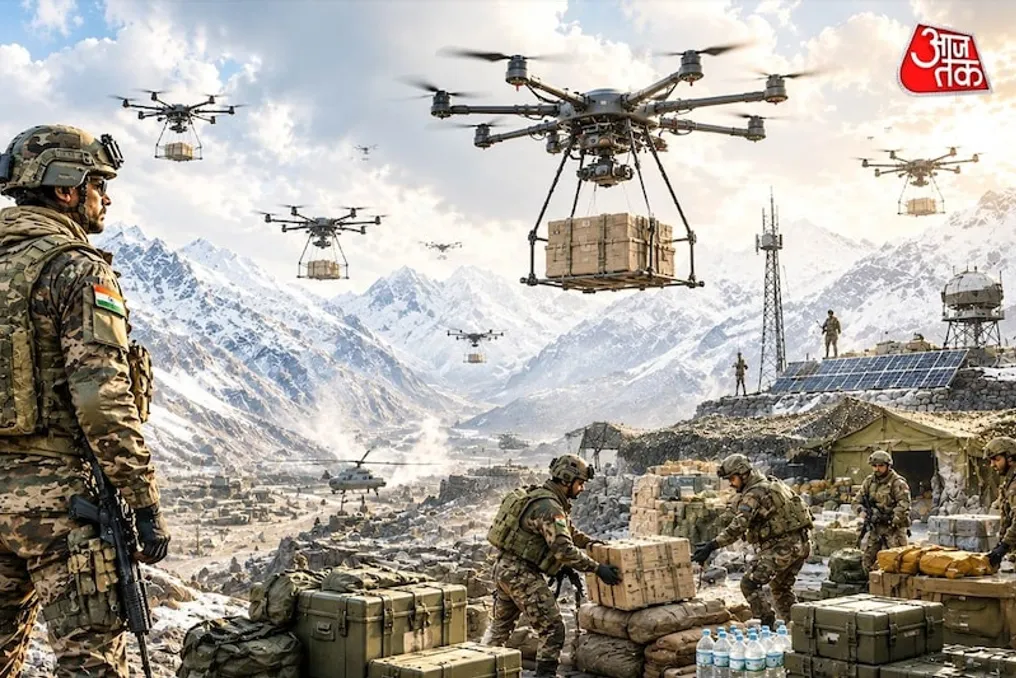
The Ministry released a Request for Information (RFI) to gather data from the industry. These drones will enable the delivery of vital supplies, such as food, ammunition, medical equipment, and other necessary goods, directly to soldiers stationed at remote border posts.
The proposed drone fleet will operate across three different altitude ranges: up to 6,000 feet, from 6,000 to 12,000 feet, and from 12,000 to 20,000 feet. This will allow operations to be conducted both on plains and at high mountain posts along the Line of Actual Control (LAC) with China and the Line of Control (LOC) with Pakistan.
Following the Galwan conflict in 2020, the army deployed a large number of troops in the high-altitude areas of the LAC and continuously strengthens the supply system at high altitudes. These drones will play a key role in this process, reflecting the army's growing emphasis on an autonomous supply system. This will reduce dependence on soldiers, porters, and mules.
In times of conflict, logistical routes often become the first target of enemy surveillance and shelling. Delivering supplies via drones ensures that soldiers receive necessary equipment without risking their lives. Furthermore, it will allow isolated posts to be maintained even in difficult conditions or if routes are disrupted.
Recent global conflicts have demonstrated that logistics drones significantly enhance battlefield resilience and responsiveness.
According to the RFI, each drone system must include an unmanned aerial vehicle, a ground control station, a remote video terminal, day and thermal imaging cameras, GPS, a navigation system, and obstacle avoidance technologies such as LiDAR. The army requires these drones to operate in autonomous, manual, and return-to-home modes.
They must also be capable of taking off and landing on unprepared sites, as landing zones are absent at Himalayan posts. These drones must withstand temperatures from minus 30 to plus 50 degrees Celsius, have a service life of at least seven years, endure over a thousand landings, and provide a mission radius of 10 to 20 kilometers depending on the altitude. To protect against competitive environments, the request also includes anti-jamming and spoofing capabilities, as well as IFF functionality, so that Indian air defense systems do not mistakenly identify them as enemy aircraft.
This project demonstrates a sharp increase in the army's need for logistics drones in recent years. An RFI for 570 drones was issued in 2022, followed by an urgent procurement of 363 drones. Another RFI was issued in 2025, focusing on medium and high-altitude operations.
The requirement for 2715 drones signals a serious shift in the army's logistical doctrine. Unmanned aerial delivery is moving beyond being just a supplementary system to becoming a core capability for sustaining troops on northern frontiers. This step is critical for providing the army with a modern, fast, and safe logistical system, which could be a lifeline for personnel deployed in the mountains and strengthen border security.