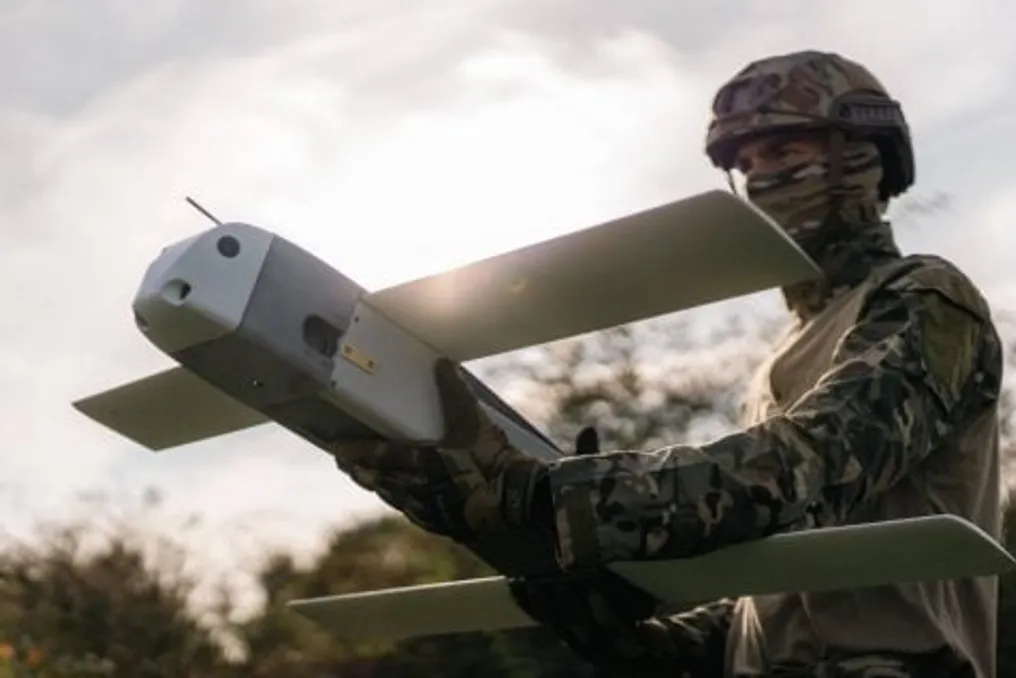
France has begun utilizing its automotive industry to accelerate the production of military unmanned aerial vehicles. Since the beginning of the year, companies such as Renault, along with suppliers Valeo and Forvia, have entered into partnerships with defense enterprises. This strategy has been supported by the French government with the aim of strengthening the country's industrial and military autonomy.
The core idea involves applying the scale, automation, and efficiency of automotive production lines to one of the fastest-growing military segments. As noted by Valeo President Christophe Perrelat in July: 'Why now? Because the need has arisen now.' He added that the choice was made specifically in France because 'we are required to guarantee our sovereignty.'
According to a report from the Commission of the French Senate on Defense, published in July, the national reserve of military drones, estimated at several thousand units, is deemed insufficient to reach critical mass. The intensive use of this equipment in the war between Russia and Ukraine has changed methods of warfare, and pressure from the United States on Europe to expand its military capabilities has accelerated these processes.
Valeo will manufacture electric motors for drones developed by the defense technology company Harmattan AI in France. At the end of July, Forvia signed an agreement with an unnamed European defense company specializing in AI-based anti-drone systems. This company plans to establish a production facility in the country to produce thousands of interceptors monthly.
Renault has gone further: together with Turgis & Gaillard, it produces the long-range Chorus drone at its Le Mans plant in western France, where it claims the capacity to produce up to 600 units per month. In June, at the Eurosatory exhibition, the company announced cooperation with Thales to industrialize Toutatis, a remotely controlled munition—an explosive drone—with the goal of reaching a rate of one thousand units per month starting in 2027.
Also in June, the French drone manufacturer Delair partnered with German Schaeffler to install a line in France capable of producing about 100 drones daily until November.
The combined capacities of Renault, Schaeffler, and Forvia could approach 60,000 units annually. However, this volume is still below what French authorities consider necessary for high-intensity conflict. In December, the government announced the allocation of 150 million euros (approximately 884 million Brazilian reais) for sector development, but the industry considers this amount insufficient.
There is also a risk of accumulating rapidly obsolete equipment. Patrice Caine, President of Thales, noted this year: 'Drones are developing very quickly.' Therefore, the French focus is not so much on stockpiling armaments as on maintaining production readiness for activation. According to Patrick Peyeux, General Delegate for Armaments, the defense startup is failing to meet the challenge of mass production using robotic manufacturing lines.