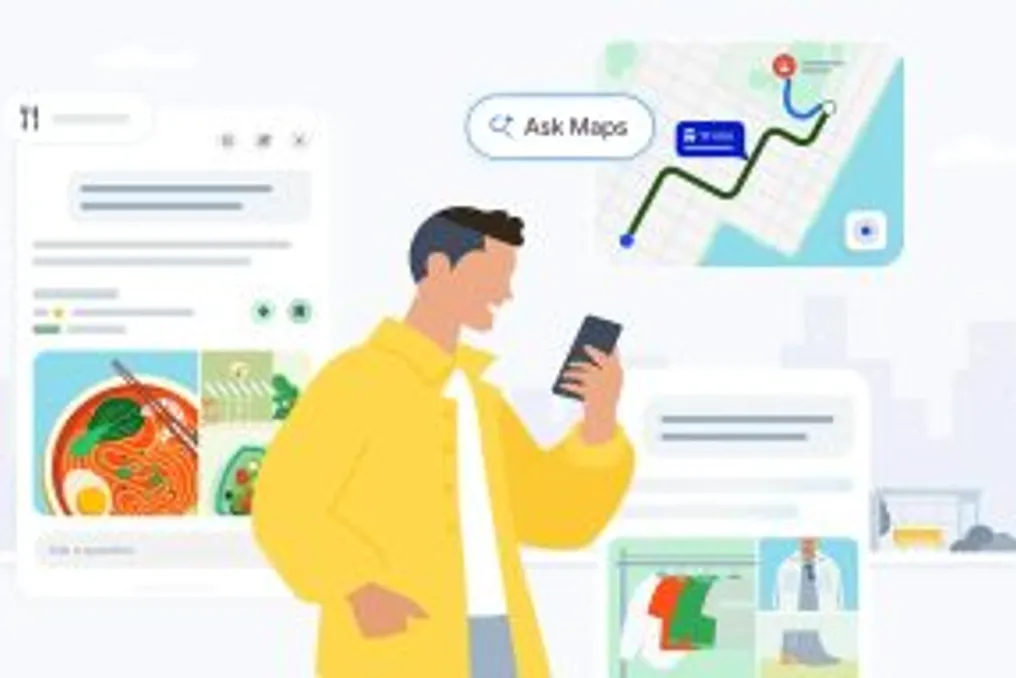
Google announced on Thursday (06) a new development phase for Google Maps, introducing features based on artificial intelligence. These tools aim to assist users with various tasks, such as ordering meals, finding accommodations, and discovering events.
This update enhances the 'Ask Maps' feature, enabling it to understand more complex requests. The innovation was presented by Google and combines Gemini capabilities with internal Maps data, resulting in more customized responses. The company stated that these new functions are already available in several markets, including Brazil, as well as other regions.
With this improvement, the application transcends its primary function as a mere location finder, starting to assist in executing specific steps of activities. This reduces the need for the user to constantly switch between different services during the planning process.
Among the additions is the ability to place food orders using natural language commands. The user can specify their preferences, dietary restrictions, and pickup point, while the system locates suitable restaurants along the route and compiles the order on partner platforms for the purchase to be completed.
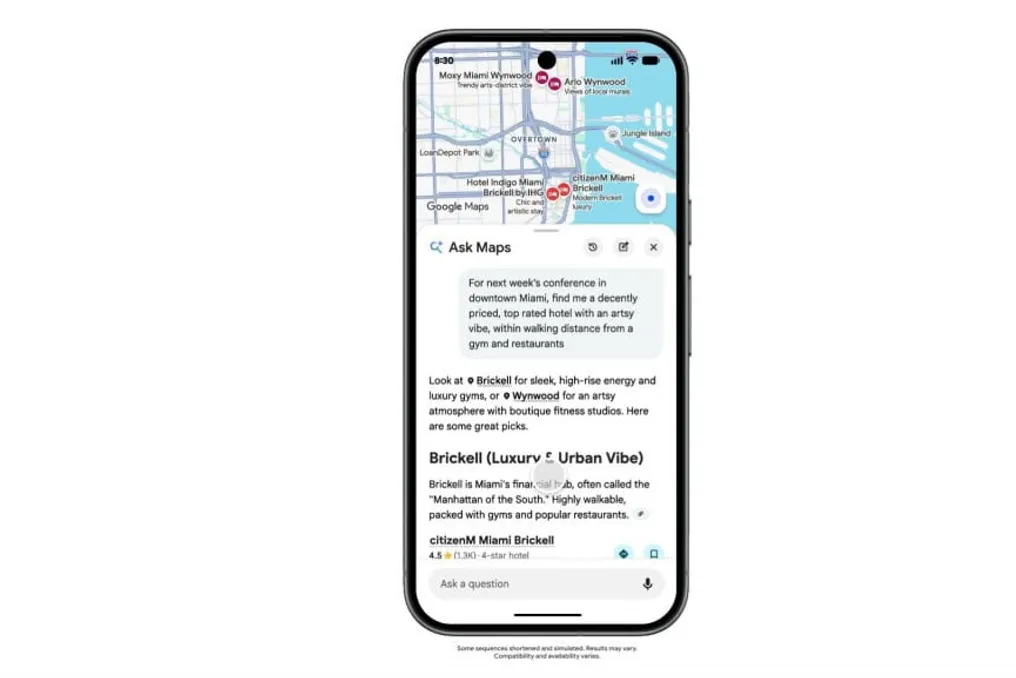
The feature has also been expanded to accommodation searches. Instead of applying multiple filters manually, the individual can simply describe the desired hotel profile—such as location, price range, ambiance characteristics, and proximity to certain points—allowing Maps to find options that fit the criteria.
Additionally, the tool offers support in identifying nearby events and activities. Suggestions can take into account the user's declared interests, presenting options such as concerts and local attractions, including information on how to purchase tickets, when available.
According to Google, these functionalities represent a transformation in the operation mode of 'Ask Maps,' which now executes parts of the tasks instead of just providing answers. The technology processes the request, consolidates relevant information, and triggers actions in integrated services.
Another launched feature is 'Personal Intelligence,' which allows linking 'Ask Maps' to Gmail. This enables responses to consider data such as future appointments and travel reservations. This integration is optional and requires user authorization. When activated, the tool can use Gmail data to suggest activities near a stay, for example, or assist in planning travel related to appointments.
Google also mentioned plans to extend this integration in the future to other applications, such as Google Calendar. Furthermore, users who keep their activity history active can resume previous conversations held in Maps without having to restart the planning.
The update also brings real-time information about public transport. A new mechanism allows monitoring changes in bus, train, subway, and ferry lines, including potential delays or alterations during the journey.
Another novelty involves user collaboration in updating Maps data. Artificial intelligence now assists in sending suggestions about establishments, being able to extract information from images, such as times displayed on signs, before forwarding the change for analysis. Google emphasized that the contributions of hundreds of millions of users are crucial for keeping the service updated, and that all suggestions go through verification systems before being published.