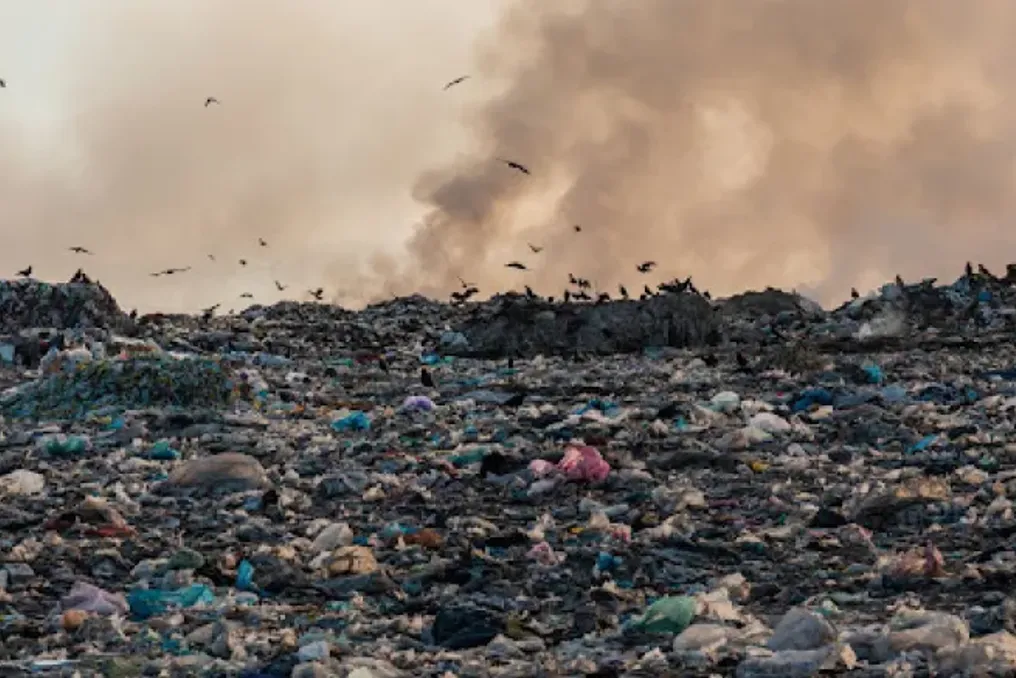
Researchers have identified a new species of bacteria capable of surviving in extremely aggressive and toxic soil at a site where banned pesticides were dumped. The microorganism, named Microbacterium pollutisoli, was isolated from the ground in the village of Ummari, Uttar Pradesh, by a team of scientists from Delhi University and the CSIR Institute of Microbial Technology.
Despite the area being heavily contaminated with hexachlorocyclohexane (HCH)—a dangerous pesticide banned worldwide due to its link to cancer—this microorganism has not only adapted to the environmental conditions but also possesses genetic tools that could potentially contribute to the production of new vitamins and antibiotics.
The discovery began after researchers collected soil samples from a depth of 30 centimeters at the landfill site. Their goal was to find microbes capable of existing under stress from pesticides. After isolating a specific strain of yellow-pigmented bacteria, the team delved into studying its biology. By applying polyphasic testing—a method combining physical observation with DNA sequencing—they confirmed that they had found a previously unregistered species.
Microbacterium pollutisoli's exceptional resilience and untapped potential are particularly significant. Physically, it forms shiny yellow round colonies and has a short rod shape. It is a hardy microorganism capable of growing at temperatures ranging from 12°C to 46°C and tolerating highly alkaline conditions. Although it does not consume the HCH pesticide, it has evolved to coexist with it.
A more important aspect is that its genome contains clusters of biosynthetic genes. These are sets of instructions in the DNA that allow the bacterium to produce valuable compounds such as carotenoids (natural pigments used in vitamins), ectoin (a substance that protects cells from stress), and beta-lactones (chemicals often studied for their ability to fight bacteria or even cancer cells).
To prove it was a new species, scientists compared it with its closest known relative, Microbacterium invictum. Despite external similarity under a microscope, their DNA showed significant differences. The new species shares only 83% identity in average nucleotide composition with its relative, which is significantly below the 95% threshold usually required to recognize two microbes as identical. Furthermore, M. pollutisoli is capable of breaking down certain sugars, such as maltose and lactose, which its cousin cannot do, and possesses a unique fatty acid profile in its cell walls.
The name Microbacterium pollutisoli directly reflects its origin. Researchers chose this designation by combining the Latin words 'pollutus,' meaning 'polluted,' and 'solum,' meaning 'soil.' Thus, the name literally translates to 'Bacteria of Polluted Soil.' The team believes that by studying the functioning of this resilient organism, new ways to produce industrial chemicals can be discovered, and how life adapts to man-made ecological disasters can be explored.