The Finance Minister stated that the government intends to continue rationalizing tariffs in the 2027–2028 fiscal year (FY28) budget, aiming to reduce customs duty on most goods to a single-digit level.
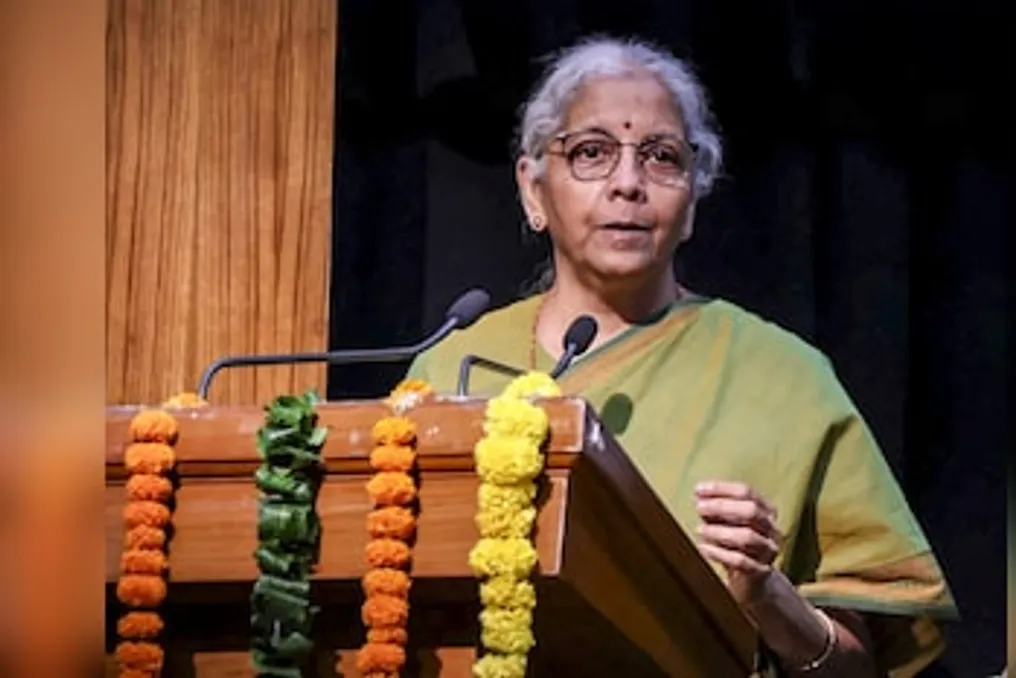
This statement was made by Nirmala Sitharaman at the National Council of Applied Economic Research in New Delhi on Tuesday. She clarified that, with the exception of a few items, customs duty could drop to single-digit figures by the 2027–2028 budget. Previously, a rationalization of rates had been conducted, excluding 13 goods.
The rationalization of customs duties is the next step in the government's agenda following similar work in corporate tax, income tax, and Goods and Services Tax (GST) over the past six years.
The government has already achieved success in optimizing basic customs duty rates, reducing the number of tariff categories to eight, including a 'zero' rate. In the FY26 budget, seven tariff rates were eliminated, supplementing the seven rates removed in the FY24 budget.
According to government estimates, the average customs duty rate in India has decreased from 11.65% to 10.66% as a result of this rationalization.
Discussion on Public Debt
Furthermore, commenting on India's public debt, the Finance Minister emphasized that the government is making conscious efforts to attract borrowed funds solely for capital creation.
Sitharaman noted that no country can function solely on its own resources, but the volume, timing, and purpose of borrowings must be carefully considered. She added that the attracted funds should be directed towards asset creation, as this yields dividends.
Post-Covid-19 pandemic, the government increased its capital expenditure to stimulate the multiplier effect in the economy. Over the last five years, the central government has almost tripled its capital expenditure.
The Minister stated that it was government spending, sustained for many years with the confidence that the Indian economy would benefit from it, that helped the private sector become active. Now, private companies are taking risks and investing to capitalize on the growth observed in India.
She recommended that states follow the same approach—attracting financing for asset creation. However, she warned that borrowings must be managed consciously so they do not become a burden for future generations.
The Minister also stressed that annual growth in own revenues must compensate for the debt burden so that it gradually decreases. It was noted that some states have approached the Centre for debt restructuring and reduction of interest burden, and the Ministry of Finance is working with these regions without naming them.
According to the International Monetary Fund (IMF), India's total public debt in 2026 was 83.4%.