Tourist spots in South Africa are full of unexpected discoveries. While international trips are always appealing to experience the charm of Greece, Italian vineyards, or the Swiss mountain landscape, it is not necessary to leave the country.
Tourist spots in South Africa are full of unexpected discoveries. While international trips are always appealing to experience the charm of Greece, Italian vineyards, or the Swiss mountain landscape, it is not necessary to leave the country.
These locations offer the opportunity to experience the atmosphere of different corners of the world while remaining close to home. Below are destinations in South Africa that create the feeling of a much farther journey than it actually is.
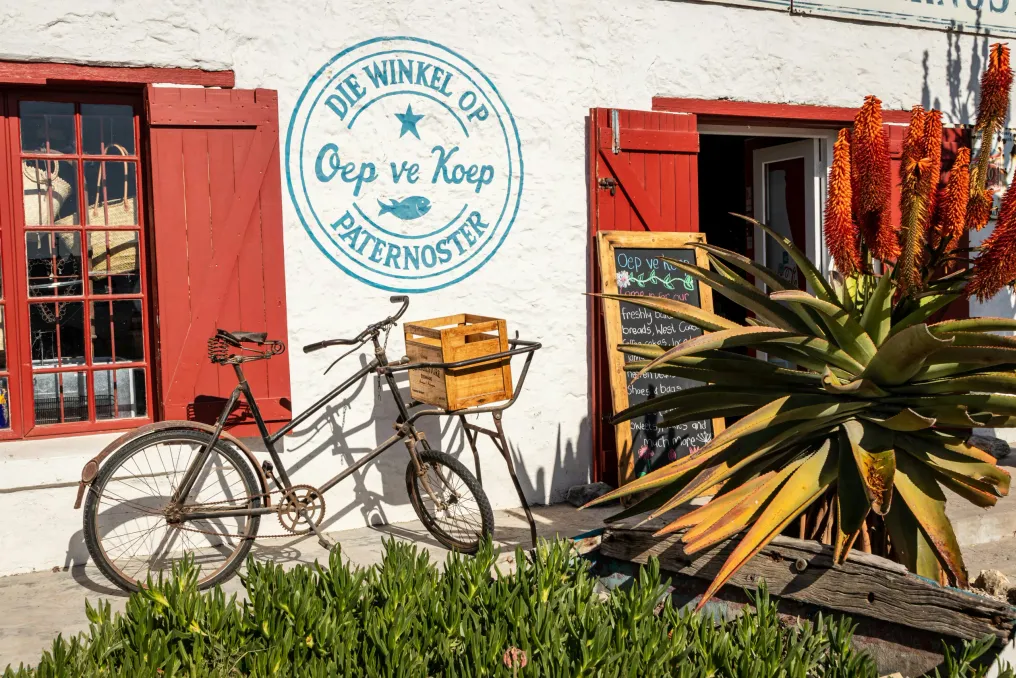
Paternoster is popular among travelers due to its snow-white cottages, blue ocean views, and narrow sandy streets that resemble famous villages of the Greek islands.
This fishing village, founded in the late 1800s, remains one of the oldest fishing settlements in South Africa. Strict building regulations have helped preserve its recognizable white architecture, creating a vibrant image far from the hustle and bustle of big cities. It is suggested that the name 'Paternoster' derives from prayers of Portuguese sailors after surviving storms, although historians continue to debate its exact origin.
The best time to visit Paternoster is from August to October when wildflowers bloom on the West Coast, or from November to March for warm beach weather. Tip: wake up before sunrise and head to the beach; the morning light turns the white cottages into an ideal shot for photographers.
Rolling vineyards, cypress-lined roads, mountain views, and elegant wine estates give Franschhoek a striking resemblance to the rural landscape of Tuscany, Italy.
Franschhoek was founded in 1688 by French Huguenot settlers fleeing religious persecution in Europe. It has become one of South Africa's leading wine regions. Despite its French heritage, the landscape is often compared to Tuscany due to the presence of vineyards, olive groves, and a relaxed, rural lifestyle.
The recommended period for a visit is from March to May during the harvest or from September to November when the vineyards turn lush green. Tip: instead of driving between wineries, spend a day on the Wine Tram to fully enjoy the experience.
Every spring, the Northern Cape bursts into bloom. Vast carpets of daisies and seasonal flowers spread across the landscape, often evoking associations with the famous flower fields of the Netherlands for visitors.
The blooming of Namaqualand is one of the most spectacular seasonal phenomena in the world, caused by winter rainfall rather than cultivation. The Huntams area around Nieuwoudtville is particularly known for its exceptional botanical diversity, earning the town the nickname 'Capital of World Bulbs.'
The best time to visit is late August to September, depending on rainfall. Tip: the flowers fully open between late morning and early afternoon on sunny days.
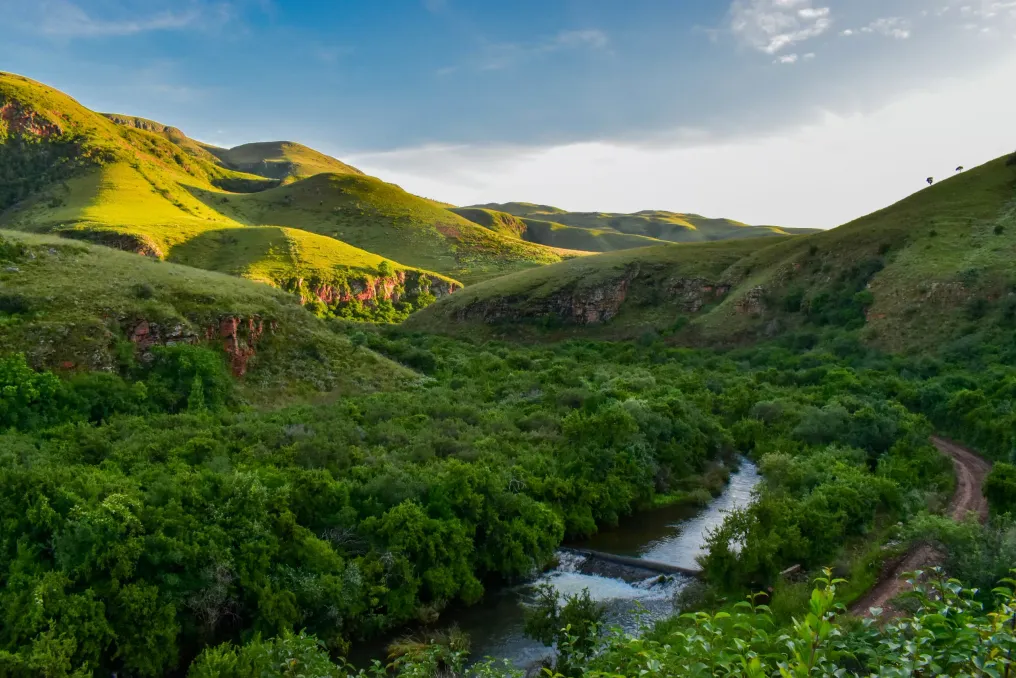
High peaks, alpine meadows, crisp mountain air, and winding hiking trails make the Drakensberg the closest analogue to the Swiss Alps in South Africa.
The mountain range, recognized as part of the UNESCO World Heritage site uKhahlamba-Drakensberg, contains some of the most significant San rock art, as well as dramatic sandstone cliffs formed millions of years ago.
A comfortable time for hiking is April-June or September-November. Tip: mountain weather changes quickly, so even in summer, you should bring warm clothing.
Clarens has established itself as one of South Africa's most artistic small towns. Pavement cafes, galleries, sandstone buildings, and leisurely daytime strolls create an atmosphere reminiscent of small French towns.
Founded in 1912, the town is named after a Swiss city where former President Paul Kruger spent his final days in exile. Despite its Swiss designation, many tourists compare its café culture and artistic streets to rural France.
The most suitable time to visit is from September to April, when the weather is mild and suitable for outdoor relaxation. Tip: it is worth staying overnight rather than just visiting for the day, as Clarens becomes truly charming when the daytime visitors leave.
Hidden in the Amatole Mountains, the misty forests of Hogsback, wooden cottages, and cool climate have long drawn comparisons to the Black Forest of Germany and the Bavarian countryside.
The settlement developed in the late nineteenth century as a logging community. Dense local forests, waterfalls, and the mountain landscape have led to speculation that this area may have inspired parts of J.R.R. Tolkien's Middle-earth, although there is no direct evidence for this.
The best period for a visit is from October to April. Tip: wear sturdy walking shoes, as many of Hogsback's best attractions are located on forest trails.
With its white houses, canals, maritime lifestyle, and sparkling waterways, St Francis Bay often surprises first-time visitors.
Originally developed in the 1950s and 1960s as a coastal resort destination, strict architectural standards have preserved the signature white houses and black thatched roofs. The expansion of the canal area later increased the district's appeal, making it one of South Africa's most unique waterfront areas.
The best time to visit is from November to March. Tip: book a sunset cruise on the canals to see the village from a completely different perspective.
Thus, South Africa's tourist destinations prove that a foreign ticket is not required to change scenery. From snow-white fishing villages to alpine mountains and vineyard-covered valleys, these local gems convey the atmosphere of some of the world's most iconic places. Travel often begins with curiosity, not distance. Although nothing can replace walks through the streets of Santorini or a cup of coffee under the Eiffel Tower, South Africa possesses its own unique way of reflecting the spirit of places around the world. Sometimes it is enough to simply choose a different route, slow down the pace, and look more closely to discover that your next trip, inspired by international places, is only a few hours away from home.
The popularity among travelers sparked by TikTok has brought many destinations in South Africa to prominence. Although drone footage and cinematic edits often create the illusion of a perfect paradise, some locations showcase their beauty regardless of elaborate editing or trending audio tracks.
Several destinations across South Africa have gone viral not because of excessive hype, but because they genuinely meet expectations. These places offer breathtaking landscapes, unforgettable experiences, and an atmosphere that cannot be replicated with filters. In a sense, TikTok merely reminded travelers that these locations were worth visiting all along.
Lisbon Falls vividly illustrate the difference between what is shown on social media and reality. On screen, it is just another impressive waterfall shot in slow motion from a drone. However, standing at the viewpoint, one cannot ignore its scale. Lisbon Falls is the highest waterfall in Mpumalanga, reaching a height of 94 meters. It plunges into a forested canyon where the air is filled with mist, and the roar of the water drowns out all other sounds.
This waterfall is one of the iconic stops on the Panorama Route. Unlike many places whose popularity stems from skillful camera work, Lisbon Falls makes an equally strong impression upon personal visit. The appeal of this location also lies in the fact that the experience rarely ends with the waterfall itself. Most tourists continue along the Panorama Route, combining a visit to Lisbon Falls with stops at Berlin Falls, Bourke’s Luck Potholes, and God’s Window, turning one viral spot into one of South Africa's most delightful scenic journeys. Arriving early in the morning allows for softer light for photos and a calmer atmosphere before large tourist groups arrive. The overall feeling of this region is unique to Mpumalanga: lush, dramatic, and naturally photogenic.
One weakness of drone videography is its inability to convey the true size of a place. This becomes evident when visiting the Blyde River Canyon. Spanning approximately 26 kilometers, it ranks among the largest green canyons in the world, carved by majestic cliffs covered in dense subtropical vegetation. Videos often focus on the famous Three Rondavels viewpoint, but they fail to capture the immense depth of the landscape or the feeling of being above one of Africa's greatest natural wonders.
The beauty of the Blyde River Canyon lies in taking your time. Each viewpoint reveals something new—from vast escarpments to winding rivers below. Furthermore, cruises on Blyde Dam offer a completely different perspective of the canyon from the bottom level. It is a place that rewards curiosity, not quick photo stops. A quiet grandeur reigns here that no viral clip can fully capture.
Not all viral spots on TikTok are associated with dramatic landscapes. Dullstroom gained fame through something more measured. Videos showcasing misty mornings, cozy cafes, crackling fireplaces, and hot coffee introduced thousands of travelers to one of South Africa's beloved rural corners. Fortunately, the reality feels as tranquil as it does online.
Instead of chasing attractions, visitors immerse themselves in the rhythm of the town. Long breakfasts give way to leisurely days spent in local shops, tasting local whiskey, or fishing in the region's renowned fishing waters. Winter only enhances the atmosphere, enveloping the town in low clouds and giving every street a Highveld character. This proves that sometimes the destination itself is less important than the pace it encourages.
Some places seem made for social media, but Moonshine on Whiskey Creek gained popularity for reasons extending far beyond aesthetics. Nestled among local woodland near The Crags, the elevated wooden cabins appear to float among the trees, with floor-to-ceiling windows framing an unobstructed view of the surrounding forest canopy. It is easy to understand why these cabins became a favorite backdrop for content creators.
However, the real luxury here is the silence. The lodge runs entirely on solar power and offers an authentic off-grid living experience, where birdsong replaces notifications, and forest walks become the main event of the day. The cabins encourage slowing down, deep breathing, and appreciating how restorative a holiday without constant distractions can be. Proximity to hiking trails, nature reserves, and wildlife habitats allows for easy extension of the stay, but one can also be perfectly content doing almost nothing.
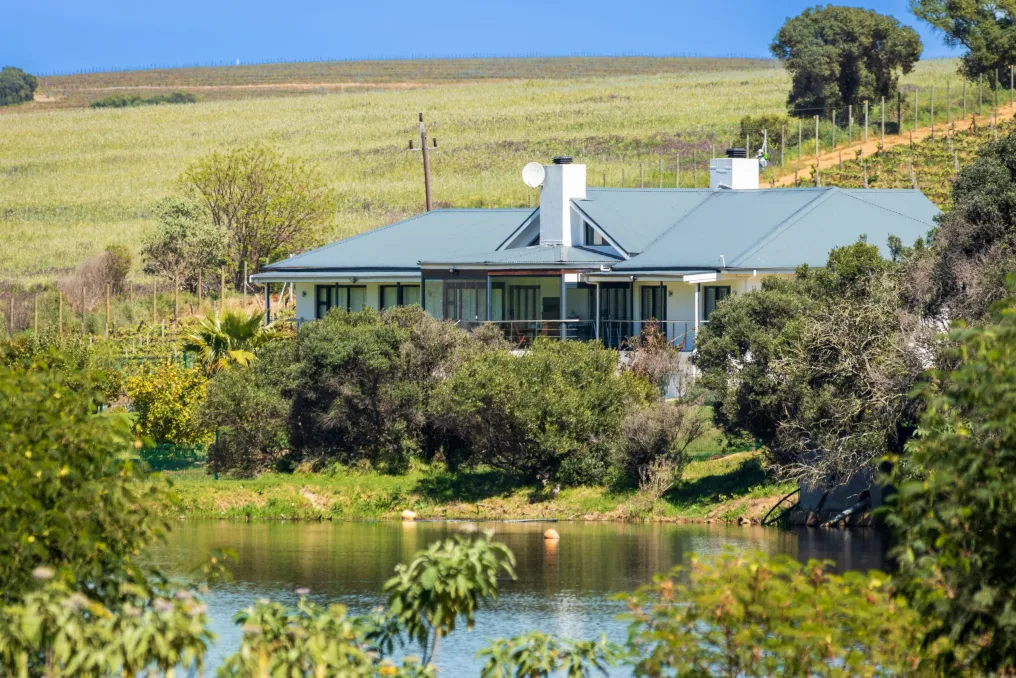
Some places look so flawless online that they seem artificial. Postcard Café, located at the Stark-Condé Wine Estate outside Stellenbosch, is one such example. Reflections shimmer on the lake, vineyards stretch towards the mountains, and it seems every table offers postcard-worthy views. Fortunately, reality does not fall short in beauty.
Unlike places where tourists come, take a picture, and leave, this location invites lingering. Long lunches transition into lazy afternoons, wine tastings turn into unhurried conversations, and the landscape quietly demands attention long after the camera is put away. It reflects everything people love about the Cape Winelands without being overly commercial.
In an era of increasingly crowded coastlines, Sardinia Bay beach feels refreshingly untouched. Located near Gqeberha, this beach has become a favorite among TikTok content creators looking for dramatic dunes, endless sandy expanses, and crashing surf. Despite growing online popularity, it retains the wild character that originally made it special.
There are no noisy promenades or rows of beach umbrellas competing for space here. Instead, high dunes meet the ocean in a landscape that feels wonderfully pristine and open. It is best enjoyed by walking along the sand at sunrise or watching the sky turn gold at sunset over the Atlantic. Strong currents make it better suited for strolling than swimming, but this is not a major issue. Sardinia Bay is a place to experience, not just visit.
Cape Town has many Instagram-popular spots, but the Boomslang Canopy Walk at Kirstenbosch National Botanical Garden continues to justify its popularity. Suspended above the treetops, the gently curved steel walkway offers a perspective few botanical gardens can replicate. Table Mountain looms on the horizon, while local trees and fynbos unfold beneath your feet, creating a view that changes with every season.
This is one of those rare attractions where the experience feels surprisingly peaceful despite its fame. Visitors naturally slow their pace, stopping to admire the changing landscape or simply enjoy one of the city's finest green spaces. The canopy walk is only part of the experience. Time should also be set aside to explore the wider gardens afterward, especially in spring when Kirstenbosch blooms.
Travelers often advise avoiding places as soon as they become popular on social media, fearing crowds or disappointment. Sometimes, this caution is warranted. However, these places remind us that popularity and authenticity do not exclude each other. Whether it is the roar of Lisbon Falls, the immense scale of the Blyde River Canyon, the calming silence of Dullstroom, or the wild beauty of Sardinia Bay, each destination offers something that cannot be fully appreciated through a screen. TikTok may have introduced them to a new generation of travelers, but it did not create what makes them special. It simply gave us all another reason to pack the car and see it for ourselves.
There is a special sense of satisfaction when the phone signal drops. Initially, there might be panic, but then comes relief: no more emails, endless scrolling, or group chats demanding attention. Instead, you hear birdsong, the crackle of a fire, and the sight of the starry sky, reminding you that life seems more meaningful when the screen shrinks.
Across South Africa, the number of such eco-sanctuaries is growing, inviting travelers to embrace this feeling, trading notifications for nature and proving that going offline can be the greatest luxury.
Many of these remote locations rely on solar energy, rainwater harvesting, and low-impact principles. Their secluded setting naturally encourages guests to slow down and reconnect with the local environment. Many intentionally limit Wi-Fi access or have no cellular service at all, making them ideal for a true digital detox.
These off-grid places in South Africa demonstrate that opting out of digital distractions does not mean sacrificing comfort or unforgettable experiences.
In the Kgalehi Transfrontier Park, deeply hidden in the North Cape, lies !Xaus Lodge. This lodge appears wonderfully detached from everyday life. It can be reached by an excursion transfer through the desert, offering views of a tranquil salt pan where wild animals roam, and silence stretches for kilometers. Since there is no Wi-Fi and virtually no cell service, evenings are spent under some of South Africa's darkest skies, rather than in front of glowing screens. Days are dedicated to guided walks with San tribe members, safaris, and exploring the rich cultural heritage of the Kalahari.
The complete absence of digital distractions allows the landscape to become the main focus. Every sunrise, animal encounter, and conversation feels more meaningful when notifications stop competing for attention.
Along the Wild Coast, Mbotyi River Lodge is situated where forests, rivers, and the ocean meet. Although connectivity in this area is limited, it is so intermittent that most guests quickly give up on checking their phones. Instead, days are filled with hikes to waterfalls, canoeing, fishing, whale watching during season, and strolls along endless beaches.
Nature provides constant entertainment. Between the crashing waves, local forests, and dramatic coastline, there is little temptation to pull out a phone.
Less than two hours from Cape Town, the Kogelberg Nature Reserve feels like another world. Simple eco-cabins are nestled among mountains covered in fynbos, near the Palmiet River. The silence is broken only by the sounds of birds and trickling water. Electricity is deliberately limited, encouraging guests to enjoy slow mornings, early sunsets, and evenings around the campfire.
The reserve's exceptional biodiversity naturally draws attention to nature. Instead of scrolling, guests are more likely to spend the day hiking, swimming, or observing endemic fynbos species.
In Little Karoo, there are eco-cabins in the Gamkaberg Nature Reserve. This reserve offers one of South Africa's most underrated wilderness adventures. The eco-cabins blend harmoniously into the rugged mountains, minimizing environmental impact while providing everything needed for a comfortable stay. The reserve is known for its silence, vast open spaces, and spectacular night sky. Its seclusion is part of its special charm, and the lack of reliable connectivity prompts visitors to immerse themselves in hiking trails, birdwatching, and the stunning Karoo sunsets.
In Groot Winterhoek Wilderness, access is only possible on foot. This area rewards tourists with stone cottages that seem completely removed from modern life. There is no electricity, cell signal, or internet here—only mountain streams, ancient rock art, and untouched nature. Reaching the cottages requires effort, but that is part of the place's appeal.
The hike itself becomes part of the digital detox. Once you carry all your belongings yourself, slowing down happens naturally.
Teniqua Treetops, located high above the forest canopy, offer a different kind of retreat. Although the cabins are equipped with modern comforts powered by sustainable systems, the focus remains on disconnecting from daily routine and reconnecting with nature. Forest walks, birdsong, and panoramic views replace social media feeds.
Sleeping among the trees changes your rhythm: you wake up with the birds, spend your days outdoors, and quickly forget about your inbox.
In a world where we are rarely more than a few meters from a screen, off-grid travel offers something increasingly valuable—the permission to be unavailable. The growing collection of eco-lodges and remote cabins in South Africa proves that luxury is not measured only by the thread count of linens or the presence of infinity pools. Sometimes it can be found in the simplicity powered by solar energy, in uninterrupted silence, and in the freedom that comes with knowing no one expects an immediate reply.
Furthermore, staying in off-grid locations supports more sustainable tourism through the use of renewable energy sources, responsible water consumption, and reduced environmental impact.
The funniest thing about leaving your phone behind is that you rarely miss it for long. After a day spent hiking in the mountains, watching wildlife at a watering hole, or sitting by a campfire under an incredibly starry sky, the desire to check notifications quietly fades. The best off-grid places in South Africa offer something far more memorable than a strong signal. They remind us that sometimes the best way to reconnect is to disconnect first.
Searching for unusual places to stay in South Africa doesn't always mean choosing five-star luxury or postcard-worthy landscapes. Sometimes the very place where you stay becomes the most memorable story after the trip.
Across South Africa, old grain silos have been transformed into designer retreats, railway carriages have found new life in rural areas, and shipping containers have become surprisingly stylish accommodation options. Beyond floating houses and cave luxuries, there are also Airstream glamping campers, proving that accommodation can be as unforgettable as the destination itself.
Grain Silos at The Silo Hotel
The Silo Hotel, located above the V&A Waterfront, is one of the most famous examples of adaptive reuse in South Africa. It is built inside a historic grain elevator complex that was previously used to store maize for export, occupying the upper floors of the old silo structure above the Zeitz Museum of Contemporary Art Africa. Architect Thomas Hittervik preserved the industrial character of the building by adding iconic curved glass windows protruding from concrete pipes. Inside, every room is unique, and the circular walls reflect the original grain storage bins. Despite being a luxury experience, The Silo demonstrates how industrial architecture can become one of the country's outstanding accommodation spots.
Container Cabins at AfriCamps
What started as an innovative glamping concept has turned into one of South Africa's most popular hotel chains. Several AfriCamps properties use repurposed transport containers in guest reception areas, service buildings, and in their design philosophy, while others showcase container-inspired architecture alongside luxurious canvas tents. Their new projects continue to explore sustainable building methods, showing how recycled materials can create stylish housing without compromising comfort. These modern retreats combine eco-conscious thinking with boutique hospitality, offering views of vineyards, mountains, or wildlife reserves.
Staying in Train Carriages at Santos Express
For travelers dreaming of sleeping on a train without leaving the station, Santos Express offers just that. Located right on Santos Beach in Mossel Bay, decommissioned South African Railways carriages have been converted into accommodation overlooking the Indian Ocean. Depending on the room, you might wake up to the sound of waves instead of steam engines. Its seaside location combined with the nostalgia of vintage rail travel makes it one of the most distinctive overnight stays on the Garden Route.
Floating Houses at Kraalbaai Lifestyle House Boats
Kraalbaai Lifestyle House Boats offers the opportunity to wake up amidst the calm waters of a national park. These houseboats, moored in the turquoise waters of the Kraalbaai Lagoon on the West Coast, combine the freedom of living on the water with all the comforts of home. Guests can spend days swimming directly from the deck, kayaking in the lagoon, or simply enjoying uninterrupted views from sunrise to sunset. Due to the absence of roads, traffic, or crowds, staying on such a boat feels wonderfully removed from daily hustle, making it one of the most memorable experiences in South Africa.
Cave Suites in Kagga Kamma Nature Reserve
Few places offer such a dramatic lodging option as Kagga Kamma Nature Reserve in Cedarberg. The renowned Cave Suites are built into natural sandstone formations, meticulously designed to blend with the surrounding landscape rather than dominate it. Although inspired by shelters once used by the San people, the suites include modern amenities while retaining a sense of wilderness. The reserve's remote location also makes it one of the best places in South Africa for stargazing.
Overnight Stay in an Airstream on the Roof at The Grand Daddy Boutique Hotel
Sleeping in a vintage trailer is unusual enough, but doing so on a rooftop in the heart of Cape Town is something else entirely. The Airstream Trailer Park at The Grand Daddy Boutique Hotel features seven beautifully restored vintage American Airstream trailers, each individually decorated by local designers. Situated above bustling Long Street, these trailers create a playful contrast between the nostalgia of retro travel and the energy of the city below. With a rooftop garden, outdoor cinema, and views of Cape Town, it is one of the country's most creative urban accommodation options.
Old Mac Daddy with Rural Charm
The vibrant Airstream trailer park at Old Mac Daddy has become a true icon of South African travel. Although technically vintage American Airstream caravans, not buses, each one has been individually designed by local artists around a different creative theme. Combined with views of the mountains opening onto Elgin vineyards, the result is playful, nostalgic, and completely unlike traditional hotel stays. Common areas, outdoor events, and beautifully decorated interiors make it one of the most photographed places to stay in the country.
Container Eco-Cabins at Coot Club
On the outskirts of Klein River Lagoon near Stanford, Coot Club has embraced modern architecture through its collection of eco-cabins and thoughtfully designed residences. Several structures utilize modular construction inspired by shipping containers, blending sustainability with Scandinavian-style interiors and unobstructed lagoon views. Kayaking, birdwatching, and easy access to Walker Bay complement the appeal for travelers seeking something both unusual and deeply connected to nature.
Treehouse Stays at Tsala Treetop Lodge
Although Tsala Treetop Lodge was not converted from industrial structures, it deserves mention for its extraordinary approach to accommodation design. Located high among the local forest canopy near Plettenberg Bay, the lodge's wooden suites and villas resemble modern treehouses suspended over the forest floor. Stone, wood, and glass are combined to create housing that seems almost hidden in the landscape. This proves that unusual places to stay are not always built from recycled materials; sometimes the architecture itself transforms the experience.
Travelers are increasingly seeking personal, rather than predictable, experiences. Repurposing existing buildings also supports sustainable tourism by giving old structures a new purpose instead of replacing them. From grain silos and railway carriages to caves and converted churches—these accommodation options preserve a piece of South Africa's history while offering something truly memorable. They invite travelers to slow down, appreciate thoughtful design, and see destinations from a completely different perspective.
The best trips are often remembered for their surprises, and sometimes it's not the destination itself, but the place where you sleep at night. Across South Africa, abandoned grain silos, railway carriages, ancient caves, and historic buildings have found a second life, proving that excellent accommodation can tell its own story. Whether planning a romantic getaway, a weekend trip, or a family vacation, these unusual places to stay in South Africa offer more than just a place to sleep. They invite you to discover the country from another perspective, with every unforgettable check-in.