In most of outer space, a spacecraft's aerodynamics has no significant impact. Aerodynamics refers to the way air interacts with moving objects, being a crucial factor in the design of terrestrial vehicles such as cars and aircraft.
In most of outer space, a spacecraft's aerodynamics has no significant impact. Aerodynamics refers to the way air interacts with moving objects, being a crucial factor in the design of terrestrial vehicles such as cars and aircraft.
However, the space environment is characterized by a vacuum, which means the absence of air to interact with the spacecraft. Consequently, the shape of the spacecraft becomes irrelevant while it is in space; its movement is primarily determined by engine propulsion and the influence of gravity.
The importance of aerodynamics arises mainly during the transition between the Earth's surface and space. Rockets, for example, often have pointed shapes to reduce air resistance during the ascent phase. Furthermore, the design of spacecraft must be specifically planned to aid in the deceleration process upon returning to the Earth's atmosphere.
It is important to note that some spacecraft and satellites are launched on rockets without plans to return to Earth; in these scenarios, aerodynamic considerations lose their importance.
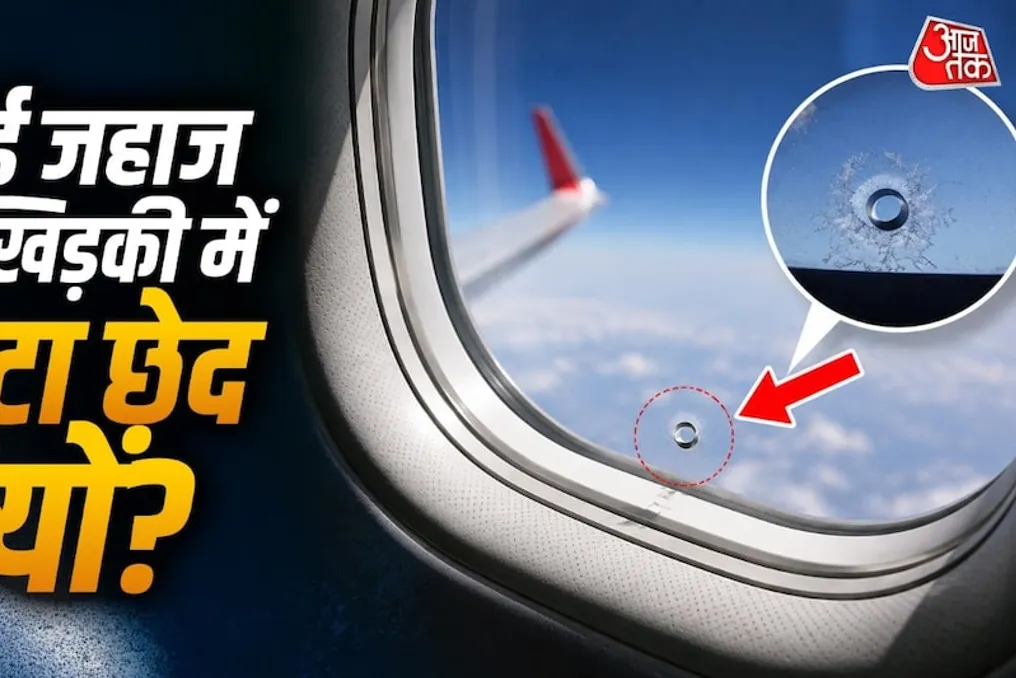
Those who have traveled by plane have probably noticed a small hole at the bottom of the porthole. Although it seems insignificant at first glance, it is actually an extremely important element related to passenger safety. A common misconception is that this hole is designed for air passage, but its true function is completely different.
An airplane window is not like ordinary glass; it usually consists of three layers. The outermost layer withstands weather conditions and strong winds. The intermediate layer provides additional protection, and the innermost layer is accessible to passengers and primarily serves for comfort and safety. The small hole that passengers see is located not in the inner layer, but in the intermediate layer.
When flying at an altitude of about 35,000 feet, the outside air pressure is very low. If the pressure inside the aircraft also dropped to this level, people would have difficulty breathing. Therefore, artificial normal atmospheric pressure is maintained inside the aircraft. Because there is a significant difference between the external and internal pressure, considerable pressure is exerted on the windows. This is where the crucial role of this small hole manifests: it balances the pressure.
This small hole is called a bleed hole. Its main task is to regulate the air pressure between the different layers of the porthole. Thanks to this, most of the load from the pressure difference between the external and internal space falls only on the outer layer. The middle and inner layers are not subjected to excessive pressure, which makes the window stronger and significantly reduces the risk of its failure.
If this small hole were not provided in the window, the pressure could affect the three layers differently. This would create additional stress on the window, increasing the probability of weakening during prolonged operation. Thus, this small hole plays a key role in maintaining the overall strength of the entire porthole.
Another advantage of this hole is that it helps prevent condensation. Since the temperature inside and outside the aircraft often differs greatly, moisture can accumulate between the glass layers, causing fogging. The small hole controls the airflow and helps reduce humidity. This allows the window to remain clean, and passengers can easily observe the scenery.
Many believe that this hole allows outside air to enter, but this is not the case. The aircraft is completely sealed. This hole is designed to be so small and specific that outside air does not enter the cabin directly. Its function is limited exclusively to controlling the pressure between the porthole layers.
In aircraft design, there is a scientific reason behind every detail. Whether it is seatbelts, rounded window edges, or this small hole, every detail is created with passenger safety in mind. It is thanks to this that airplanes can fly safely at thousands of feet for millions of flights. The small hole in the porthole may seem insignificant, but it is critically important for safety because it regulates air pressure, prevents moisture formation, and maintains the overall structural integrity.