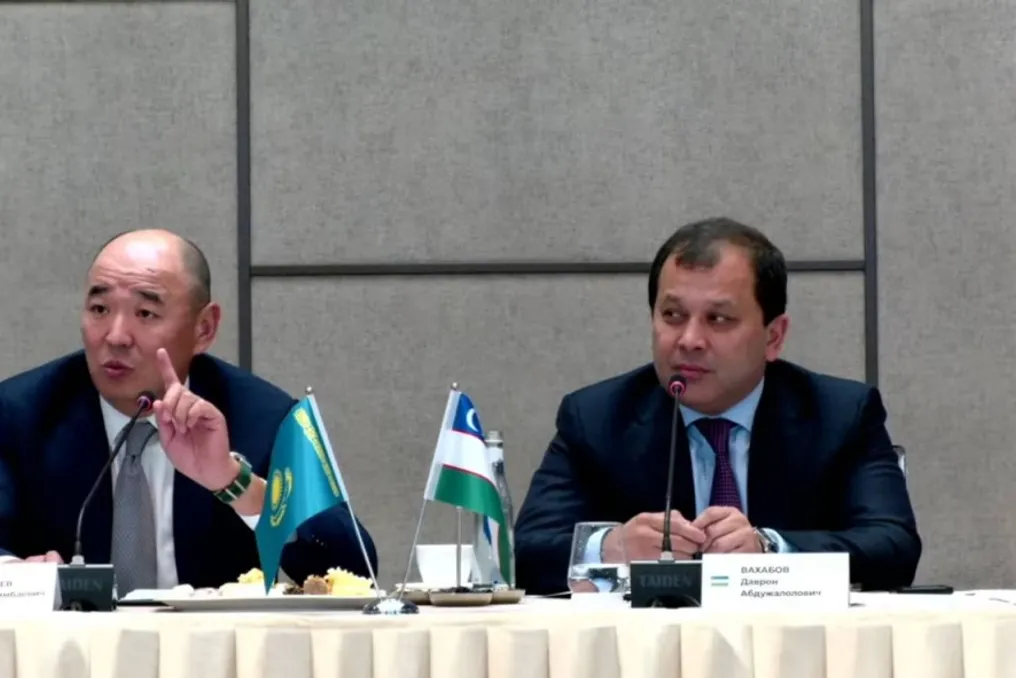
Uzbekistan and Kazakhstan are working on organizing joint business trips to Syria and Iraq. The first mission is planned for the Syrian city of Aleppo at the end of September, and the second trip is scheduled for early October.
Uzbekistan and Kazakhstan are working on organizing joint business trips to Syria and Iraq. The first mission is planned for the Syrian city of Aleppo at the end of September, and the second trip is scheduled for early October.
The Chairman of the Chamber of Commerce and Industry of Uzbekistan, Davron Vakhabov, proposed creating a group of 20–30 business representatives. The first trip to Aleppo is expected to include a trilateral business forum bringing together companies from Uzbekistan, Kazakhstan, and Syria. This business trip will coincide with the grand opening of the Uzbek Trade House, which began its operations in March.
There is demand in Syria for a number of goods, including food products, construction materials, vegetable oil, meat, and metal products. Sunflower oil produced in Uzbekistan using Kazakh raw materials has already been supplied to Aleppo.
Subsequently, the delegation will head to Erbil. According to Vakhabov, approximately two decades before holding the forum, Uzbekistan visited about 180 Iraqi entrepreneurs. Iraqi partners expressed interest in regular supplies, specifically seven or eight full containers of Uzbek confectionery products, as well as porcelain stoneware produced in the Fergana region.
There was also previous information about Uzbekistan opening a Trade House in the capital of Belarus.
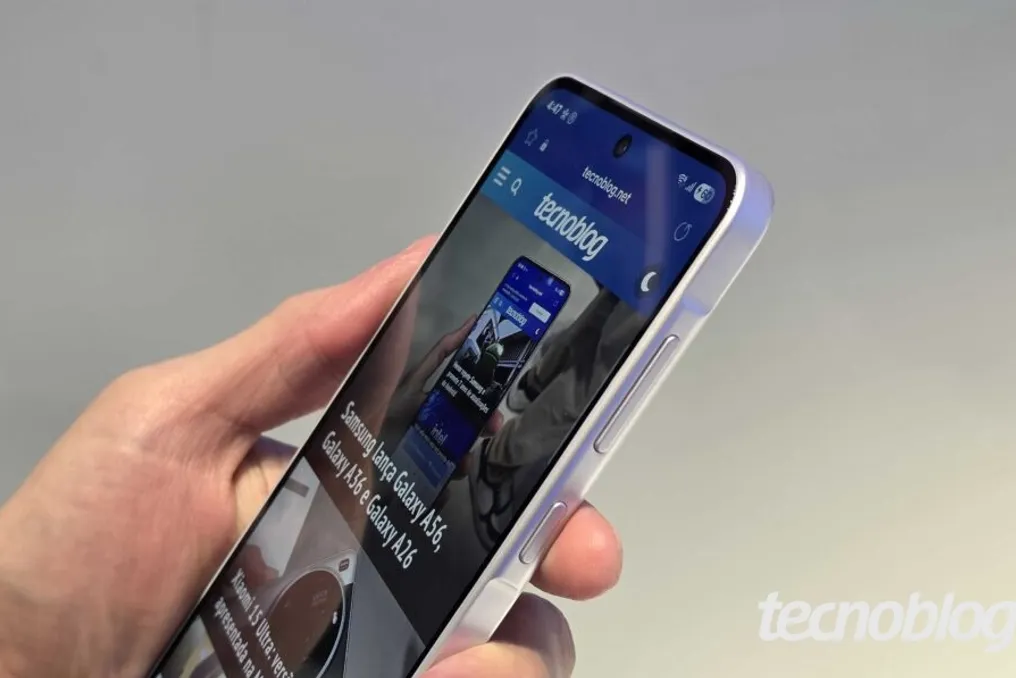
The Samsung Galaxy A36 with 128 GB capacity has been launched on sale, reaching its lowest historical price of R$ 1,190 when paid via Pix. This price on Mercado Livre represents a significant reduction of 56% compared to the original price of R$ 2,699. This mid-range smartphone, dated 2025, features well-balanced technical specifications, making it suitable for users who only need to perform basic tasks.
One of the most notable features of this device is its large 6.7-inch Super AMOLED display. The screen technology ensures the display of high-quality images in Full HD+ resolution, while also offering colors with greater brightness and contrast. Additionally, the 120 Hz refresh rate, characteristic of more sophisticated models, ensures smooth navigation and agile tactile response.
The rear camera setup consists of a 50 MP main sensor with optical image stabilization (OIS), which helps reduce blur in photos taken in motion; an 8 MP ultrawide lens for wider shots; and a 5 MP macro camera. On the front, there is a 12 MP camera capable of recording 4K videos. It is worth noting that this camera system is identical to that found in the successor model, the Galaxy A37.
The Galaxy A36 5G is equipped with a 5,000 mAh battery, with Samsung promising up to 29 hours of video playback autonomy. Charging support is up to 45W, although the charger with this power is not included in the package. Unlike the new generation, this device uses a Snapdragon processor, specifically the Snapdragon 6 Gen 3 (4 nm), accompanied by 6 GB of RAM and 128 GB of storage.
The hardware performance allows for social media browsing and watching movies on streaming platforms, but it may show limitations when it comes to intensive multitasking. The IP67 certification grants the device complete resistance against dust and allows temporary immersion of up to 1 meter for 30 minutes in water, protecting it against small household incidents, such as in the kitchen or bathroom. For connectivity, it offers Wi-Fi 6, Bluetooth 5.4, and NFC for contactless payments.
Considering the numerous similarities with the new A37 and, especially, its lowest historical price, the offer available on Mercado Livre is considered advantageous. The Galaxy A36 (128 GB) is being sold for only R$ 1,190 via Pix, representing a 56% discount.
The Galaxy S24 Ultra, 256 GB model, has been put on sale on Amazon for R$ 4,319 using Pix. This premium Samsung smartphone, which was launched in 2024 for R$ 9,999, offers a significant 57% discount, making it an attractive option for 2026.
This device features a vast 6.8-inch Dynamic AMOLED 2X screen, displaying Quad HD resolution and a 120 Hz refresh rate. Furthermore, the panel supports HDR10+ for better image detail and reaches a maximum brightness of 2,600 nits, also supporting the S Pen stylus.
In terms of photography, the phone has a quadruple camera system, whose main sensor is 200 MP, offering 100x hybrid zoom and Optical Image Stabilization (OIS), in addition to 8K video recording capability. The front camera, with 12 MP, is dedicated to detailed selfies and 4K recordings.
Focusing on high performance and Galaxy AI functionalities, the Galaxy S24 Ultra is equipped with the Snapdragon 8 Gen 3 chipset and 12 GB of RAM. The 256 GB internal storage provides adequate space for all types of files, such as photos, videos, and applications.
The 5,000 mAh battery of this Samsung flagship guarantees up to 30 hours of video playback. Although it comes with a 25 W charger in the box, the device is compatible with 45 W fast charging adapters, allowing it to charge from 0 to 65% in just 30 minutes.
The phone's connections include 5G, Wi-Fi 7, Bluetooth 5.3, Ultra Wideband (UWB), and NFC for proximity functions. In terms of software, it comes factory-installed with Android 14 and will be entitled to at least seven major operating system updates.
Finally, the Galaxy S24 Ultra (available for R$ 4,319 via Pix) is built with a titanium body and glass rear finish, weighing 232 grams. It has an IP68 water resistance certification, allowing it to be submerged in fresh water for up to 30 minutes at a depth of 1.5 meters.
The Italian government reinstated entry restrictions starting August 1st following the mass arrival of migrants in the Spanish city of Ceuta last week. Madrid had demanded that these restrictions be lifted by next Sunday, or it would apply 'corresponding' measures to protect the interests and dignity of Spanish citizens.
This request was rejected by the executive authority of Giorgia Meloni, who stated her unwillingness to accept ultimatums. In response, Pedro Sánchez's government introduced controls for travelers arriving from Italy, despite Italy being part of the Schengen Area of free movement in the European Union.