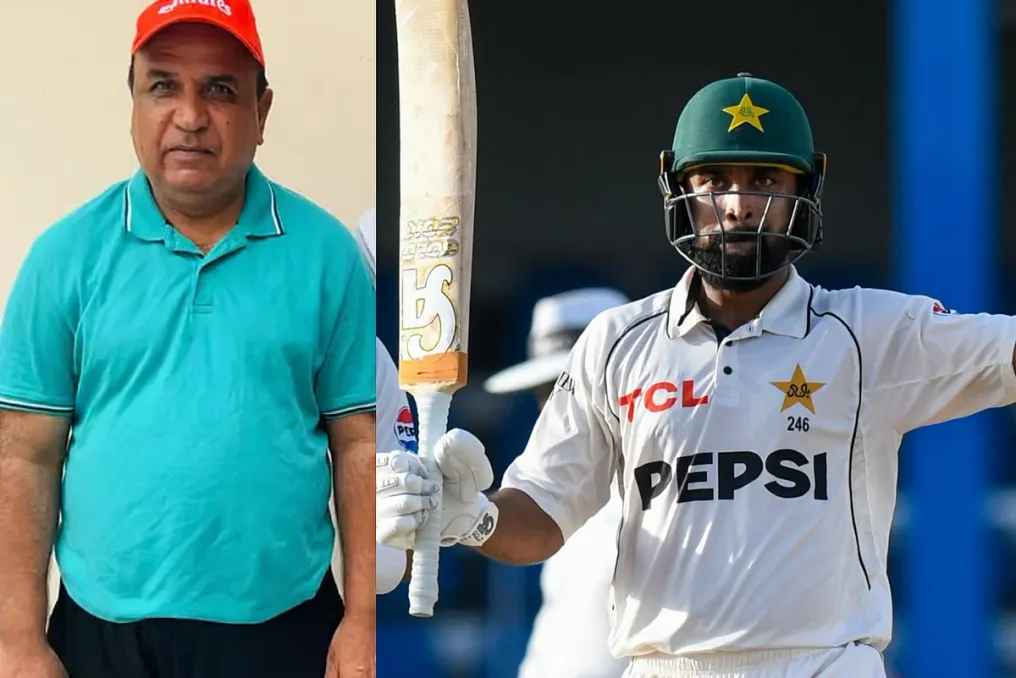
When the summer school holidays began in Dubai last month, Shafiq Ahmed, an experienced cricket coach at GEMS Modern Academy, traveled to Lahore, Pakistan, to spend time with his family.
Like most ordinary people, Ahmed values these precious moments in life, finding peace in the company of loved ones. However, even domestic comfort could not entirely alleviate the stress Ahmed felt watching his son Abdullah Shafique play for Pakistan internationally.
The past few years had been extremely stressful for Ahmed as he watched his son fight for runs and lose his spot in the Pakistan Test team. Ahmed, a former first-class player in Pakistan who played alongside legendary Wasim Akram, noticed Shafique's talent when he was only three years old. Even before Shafique started training under world-renowned coaches, it was his father who shaped his game; the technique of copying and the elegance of his shots were the result of Ahmed's work.
After advancing in his national cricket career, Shafique debuted in Test matches in 2021 and soon established himself as a classy opening batsman, scoring magnificent centuries against England, Australia, and Sri Lanka. Experts called him Pakistan's best batsman after Babar Azam, and Shafique was on his way to becoming a world-class player.
However, a sharp decline in form followed, and he could not regain his rhythm and confidence, leading to his exclusion from the squad in October 2025. After spending almost a year away from international cricket, 26-year-old Shafique was preparing to travel to the West Indies last month when his father, Ahmed, arrived in Lahore for the summer break.
Shafique was scheduled to participate in the T20 tournament, the Global Super League, in the West Indies. When Ahmed asked him about his plans, including the possibility of taking a break after the GSL to visit friends in the USA, the 26-year-old athlete knew what he wanted: to return to Pakistan after the GSL to prepare for the domestic cricket season and give himself another chance to regain peak form and a place in the Pakistan Test team.
What happened next became a dramatic turn of events, which Ahmed described as resembling a movie script. For someone who had been out of the Pakistan squad for nearly 10 months, Shafique received a distress signal from the national team management after Shaheen Afridi sustained a finger injury during a match against the hosts, the West Indies, which the visitors lost by a large margin.
Shafique, who was already in the Caribbean for the T20 tournament, found himself in the right place at the right time. When asked to join the team for the crucial second Test, Shafique flew to Port-of-Spain to represent his country at the highest level once again. He had not played red-ball cricket since December of last year.
But when he came out to bat at number three, an unusual position for a natural opener, after Pakistan lost an early wicket off the West Indies' first score of 333 runs, Shafique went through several tense moments against the aggressive fast bowler Shamir Joseph. The right-handed attack eventually settled down, and he began to display his full arsenal of graceful strokes. Together with captain Babar, Shafique demonstrated a masterclass in building an innings, concluding a spectacular comeback with a magnificent unbeaten 160 runs, securing Pakistan's eight-run victory.
In Lahore, his father, Ahmed, stepped away from the television, unable to bear the tension of watching his son face challenges in Test cricket. But now there was vigor in his steps, as Shafique's unexpected achievements renewed his hopes that he would become a true great figure in Pakistani cricket.