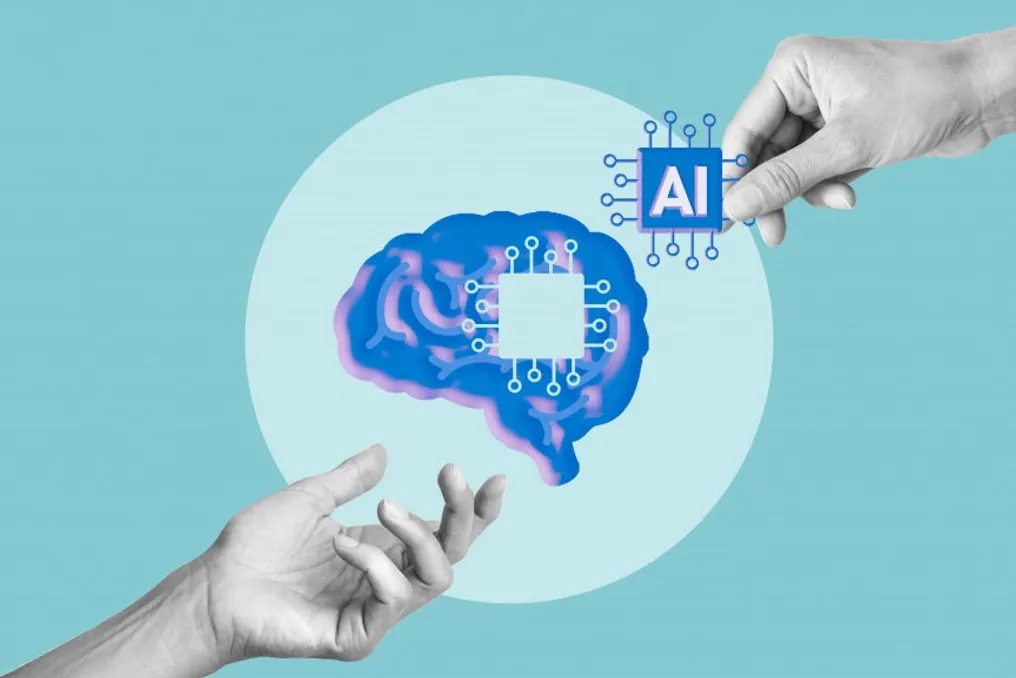
The use of artificial intelligence (AI) for academic or work tasks has created a problem that goes beyond simple learning. When a person presents text or a project created by a machine as their own, they gain a quick and easy advantage. According to neuroscientist Álvaro Machado Dias, this dynamic creates incentives for lying.
However, the impact of this phenomenon is not limited to ethical issues. In his column for the program Olhar Digital News, the specialist warns that the ease with which one can avoid mental strain gradually weakens people's moral boundaries. Furthermore, constant dependence on technology leads to the atrophy of the ability to make complex decisions and increases inequality in the labor market.
For the neuroscientist, the crisis caused by AI in education lies in assessment methods based on work done outside the classroom. By allowing tasks to be automated and submitted without real effort, the technology rewards deception instead of student development.
Dr. Álvaro Machado Dias explains: 'The problem goes beyond saving effort. It creates incentives for lying. When we create an environment where lying is advantageous, we lower the ethical barrier to future lies. Thus, we are raising less ethical people.'
This habit of outsourcing mental work to a machine, a process known as cognitive offloading, affects the brain selectively. Simple daily choices remain intact, but the ability to solve complex problems begins to deteriorate.
The neuroscientist notes: 'Quick and intuitive decisions are practically unaffected. The problem lies in complex decisions that require evaluating options, building mental models, and imagining possibilities. This is where cognitive offloading reduces the quality of our decisions.'
Seeking ways around it is a biological tendency of the brain to conserve energy. Nevertheless, constantly avoiding mental friction and discomfort has a negative impact on intellectual health and well-being.
The professor from Unifesp points out: 'In the short term, avoiding effort seems great because you don't feel tired. But in the medium term, this loss of intellectual power is felt as a loss of vitality. And vitality is directly linked to well-being.'
The paradox is that what prevents immediate discomfort ultimately causes long-term dissatisfaction.
Beyond the cognitive and ethical consequences for the individual, technology changes job dynamics. In routine and operational tasks, such as call centers, algorithms increase the productivity of entry-level workers and standardize skills at a low level. The neuroscientist analyzes: 'Results show that AI significantly increases the productivity of those at a basic level, while the productivity of specialists improves only slightly. That is, it levels competencies.'
The situation changes in complex functions requiring management of processes, people, and strategies. Those who already possess these skills use AI as an amplifier, increasing the distance from operational workers. The specialist says: 'In these cases, the asymmetry increases significantly.'
Dr. Álvaro Machado Dias concludes: 'Those who know how to integrate AI into their work achieve much higher productivity and the ability to transform reality compared to those who remain in more operational processes. Therefore, AI democratizes opportunities, but also increases inequality.'
This trend of delegating thought is an evolution of cognitive offloading. Unlike traditional tools such as notebooks and calculators, which merely stored data statically, generative AI interprets, generates, and structures content in real time. This enhances the 'Google effect,' a phenomenon where the brain stops storing information knowing it is within one click away.
The shift from passive storage to delegating thought carries risks for intellectual autonomy. By avoiding the mental work required for true learning, a person becomes a mere curator of finished results, which atrophies synthesis and problem-solving abilities.
Psychologist and psychoanalyst Beatriz Breves warns in an interview with Olhar Digital: 'When AI starts functioning as a constant 'crutch' for thinking, there is a risk of weakening our capacity for reflection, development, and creativity.'
This behavior is supported by the instant reward system of AI platforms. Unlike scrolling through social media, which uses random rewards, chatbots provide a precise and fast answer to every query. This effortless satisfaction trains the brain to lack mental friction. Over time, this search for instant answers sets the stage for the loss of vitality and the use of shortcuts in complex tasks.
The result of this process is so-called 'algorithmicization of thought,' where the mind begins to reason in the same rigid structure as the machine. Dr. Álvaro Machado Dias notes in an interview with Olhar Digital: 'One thing that happens when frequently using algorithms to aid thinking is that people start turning things into bullet points. They become people of bulleted lists.'
Since AI-generated content is based on statistical averages, excessive reliance on this technology limits original creativity and hinders the strengthening of critical thinking. Thus, the biggest problem posed by generative AI is behavioral: it is necessary to maintain mental friction to prevent the atrophy of intellectual power and the weakening of moral boundaries due to the pursuit of efficiency.