The Platform for Women's Rights expressed support for the sanctions imposed in cases of wage discrimination.
The Platform for Women's Rights expressed support for the sanctions imposed in cases of wage discrimination.
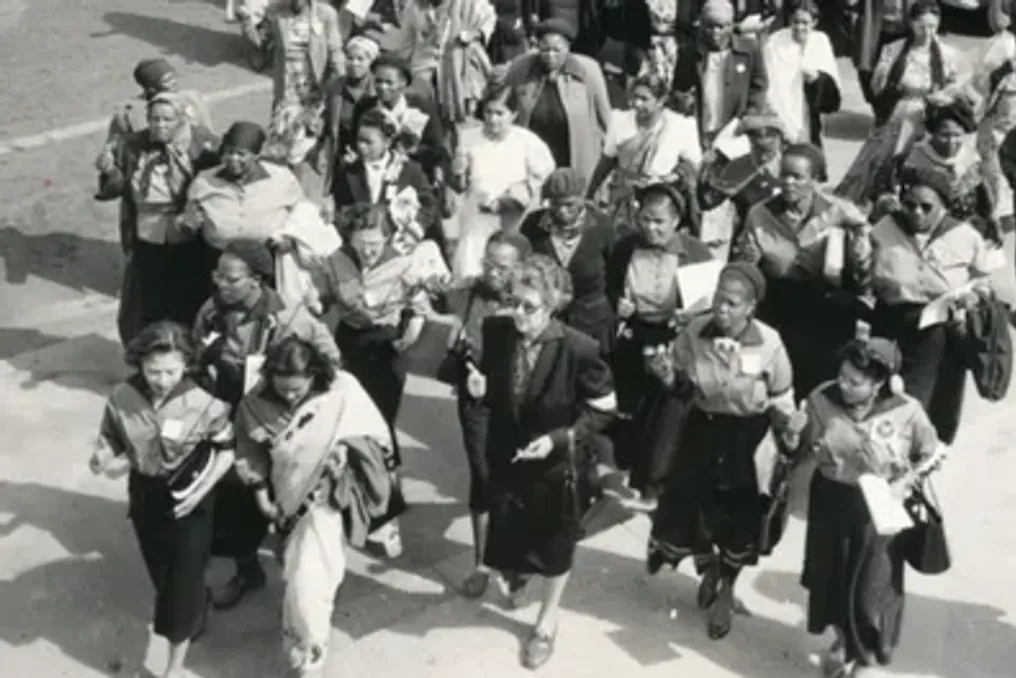
Seventy years ago, on August 9, 1956, over 20,000 brave women marched to the Union Buildings in Pretoria, peacefully protesting against the repressive laws of the apartheid regime. They protested not only against unjust legislation but also against a system that stripped women of their dignity, autonomy, and rightful place in society.
This historic act became one of the defining moments in the struggle for the liberation of South Africa and inspired generations with the slogan: 'Wathint' Abafazi, Wathint' Imbokodo' — 'If you beat a woman, you beat a rock.'
On the anniversary of the Women's March, tribute is paid to these remarkable women, reaffirming commitment to the constitutional vision they helped create—a democratic South Africa based on human dignity, equality, non-racial and non-sexist principles, the promotion of human rights and freedoms, and the rule of law.
The Constitution is viewed not merely as a legal document but as a national contract reflecting the aspirations of millions who fought for justice, demanding a society where every person has equal protection, equal opportunities, and equal value.
Although the women who participated in the 1956 march may not have marched under the current Constitution, they fought for the very values that define constitutional democracy today. Their courage laid the moral foundation upon which the democratic state is built.
The Preamble to the Constitution calls on all South Africans to heal past divisions, build a society founded on democratic values, social justice, and fundamental human rights, and improve the quality of life for citizens by unlocking each person's potential. These constitutional obligations remain particularly relevant for women, whose full participation in economic and social life is critical for South Africa's development.
As a developing and constitutional country, South Africa recognizes that equality cannot exist only in laws; it must be realized in people's daily lives. However, for many women, constitutional rights are constrained by poverty, unemployment, unequal access to economic opportunities, gender-based violence, femicide, and systemic discrimination.
Despite significant progress in democracy in expanding women's representation in leadership and decision-making, structural barriers continue to limit the economic freedom necessary for true equality.
The Constitution demands more than formal equality. Section 9, or the Equality Clause, recognizes that achieving substantive equality requires targeted measures to protect and advance those who have suffered from unfair discrimination. This constitutional principle serves as the legal and moral basis for policies aimed at empowering women, gender-responsive planning and budgeting, fair access to opportunities, and inclusive economic participation. This is not privileged aid, but constitutional justice.
South Africa's evolving agenda also acknowledges that sustainable economic growth depends on broad participation. A developing nation must ensure that women are not just recipients of development but active drivers of economic transformation.
Women continue to support families, communities, and the economy. They own businesses, cultivate land, innovate in science and technology, raise children, provide healthcare, strengthen social cohesion, and contribute significantly to national productivity. Nevertheless, women disproportionately suffer from unemployment, income inequality, and unpaid care work.
These issues are not just social problems but constitutional and developmental ones. When women cannot fully participate in the economy, South Africa cannot fully realize its constitutional promise of equality or achieve the inclusive growth outlined in the National Development Plan 2030. Therefore, economic justice is inseparable from constitutional democracy; it is one of its practical expressions.
The Government of National Unity has affirmed its commitment to building an inclusive economy, creating jobs, reducing poverty, and strengthening state capacity. These priorities cannot be achieved without accelerating the economic empowerment of women, especially young women, women with disabilities, and women from rural communities who continue to face intersecting forms of disadvantage.
The Department of Women, Youth, and Persons with Disabilities continues to promote gender mainstreaming across government to ensure that every policy, program, and budget contributes to substantive equality. Their work supports the state's constitutional obligation to respect, protect, promote, and fulfill the rights contained in the Bill of Rights.
Economic justice requires targeted investments in women-owned enterprises, expanded access to finance and markets, digital integration, quality education and skills development, and greater participation of women in high-growth sectors such as science, technology, engineering, renewable energy, and advanced manufacturing.
It also requires recognizing the economic value of unpaid care and creating conditions that allow women to participate equally in the labor market through affordable childcare, social protection, and family workplaces. Equally important is the eradication of gender-based violence and femicide, which remain one of the greatest threats to women's constitutional rights. Violence undermines dignity, restricts freedom, constrains economic participation, and weakens social cohesion. Thus, building a safer South Africa is central to achieving both constitutional justice and sustainable development.
Our constitutional democracy calls on all sectors of society to contribute to the transformation. Government, business, labor, academia, civil society, traditional leaders, religious communities, and ordinary citizens share responsibility for building a society based on justice, equality, and social justice.
By marking seventy years since the Women's March, we honor not only the women who challenged apartheid but also the millions of South African women who build our democracy every day—as entrepreneurs, workers, farmers, teachers, healthcare workers, scientists, public servants, artists, caregivers, and community leaders.
Their contribution reminds us that constitutional democracy is strengthened every time women are given the opportunity to realize their full potential. The greatest tribute to the women of 1956 is not merely remembrance, but the continuous fulfillment of the constitutional values they fought for.
Their courage gave birth to hope. Our Constitution gave this hope a legal expression. Our duty seventy years later is to turn this promise into reality by advancing economic justice, substantive equality, and opportunities for every woman and girl. Only then will we truly fulfill the constitutional vision of a South Africa that belongs to all who live in it, united in diversity, dedicated to social justice, and striving to improve the quality of life for every citizen. This is the South Africa the women of 1956 marched for. This is the South Africa we must continue to build.
Exiled Bangladeshi writer Taslima Nasrin called on Sunday for the necessity of adopting a Uniform Civil Code (UCC) in India, Bangladesh, and Pakistan. She argues that such a law is a necessary condition for eradicating discrimination, especially against women.