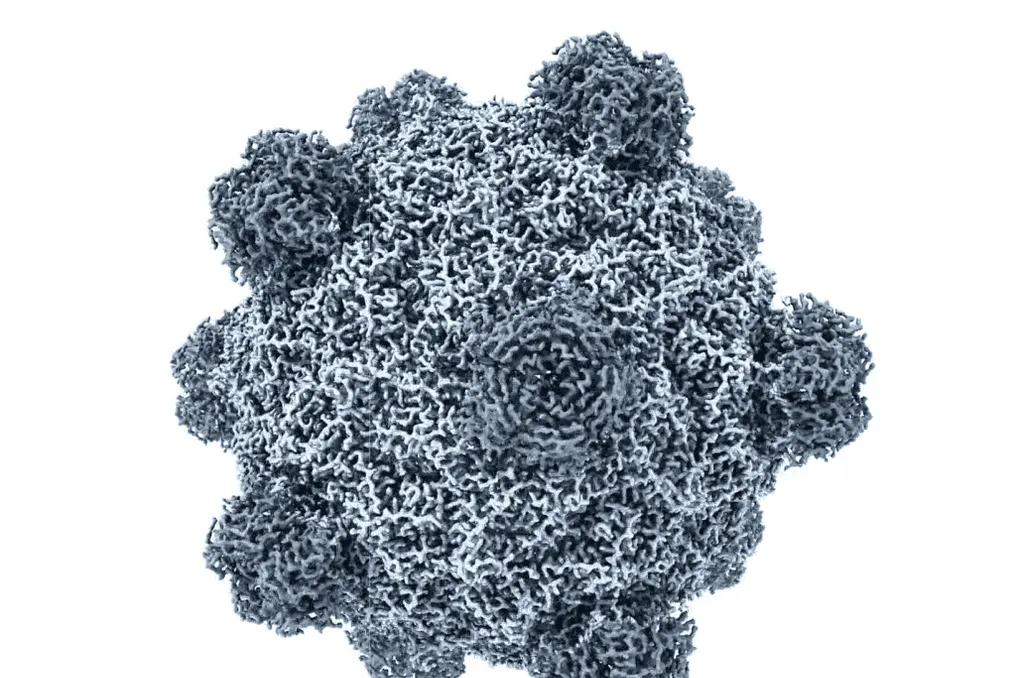
Researchers have successfully applied artificial intelligence (AI) for the first time to design viruses that do not exist in nature and demonstrated their ability to replicate. This breakthrough, described in an article published in the journal Science on Thursday (the 6th), may open new possibilities in medicine and biotechnology, but it also heightens concerns about using AI to create dangerous biological agents.
The experiments were conducted by scientists from Arc Institute in California (USA). Instead of simply reproducing known viruses, as had been done for decades, the team trained an AI model to recognize patterns in the DNA of millions of organisms and then, based on this knowledge, generate previously unseen genetic sequences.
After synthesizing these sequences in the laboratory, researchers introduced them into bacteria. Some of these bacteria began producing viruses never before observed in nature. In total, 16 AI-created viruses proved viable and were able to infect other bacteria.
Patrick Guy, a synthetic biologist from the University of Manchester (UK), who was not involved in the study, stated in an interview with The New York Times that 'this is an important milestone.' After additional training focused on this virus and about 15 thousand close variants, the Evo system was able to generate approximately 700 thousand potential versions of its genome. Scientists selected the 285 most promising sequences, synthesized the corresponding DNA, and conducted laboratory tests.
Most of the sequences generated by AI did not lead to the formation of functional viruses. Nevertheless, researchers observed clear areas between bacteria on some culture dishes—a classic sign of host cell lysis by viruses. As a result of the experiments, 16 genomes designed by Evo yielded viable viruses.
According to the researchers, some of these viruses achieved faster replication than the natural Phi X-174. Oliver Crook, a protein chemist from Oxford University (UK), who also did not participate in the study, noted that this proves that AI-created viruses 'are not just weakened versions of something that already exists.' He also emphasized that these new variants remain very similar to natural viruses and follow known biological principles.
The authors believe that this technology could accelerate the development of tools for biotechnology and medicine. Modified viruses are already used in many research and gene therapy studies, acting as carriers for delivering genes into human cells. If this approach proves successful with other viral families, researchers hope that AI models can help create more effective vectors for such treatments.
More information:
Despite the scientific potential, the study has once again raised biosecurity questions. Experts warn that systems capable of designing genomes could potentially be used in the future to develop more dangerous biological agents.
Maurice Hanke from the Johns Hopkins Center for Health Security, who was not involved in the work, asserts that governments and scientific organizations have not yet developed sufficient mechanisms to track the pace of AI development in the biological sphere. He points to a 'huge gap.' According to him, such a model could theoretically receive instructions to design more contagious or more lethal versions of known viruses.
Those responsible for the study state that they have taken measures to mitigate this risk. The Evo model did not receive information about viruses capable of infecting humans, nor about viruses affecting animals, plants, or fungi. Thus, the model is incapable of generating genomes of potentially human-dangerous viruses.
Brian Hee, a biocomputational biologist from Stanford University (USA) and one of the study's authors, stated: 'We wanted to be extremely careful.' Hanke highly praised this decision but noted that it was made at the initiative of the scientists themselves, without official directives.
Last week, the U.S. National Institutes of Health (NIH) announced a new policy aimed at restricting high-risk research that could make biological agents more dangerous. However, according to the agency itself, research conducted exclusively in a computational environment—such as generating viral DNA using AI—is not prohibited by this policy, provided it does not involve organisms already classified as threats.
For Hanke, the question remains how to assess the risks associated with previously unseen viruses created by AI. He asked: 'What is the risk of what we have never seen before?'