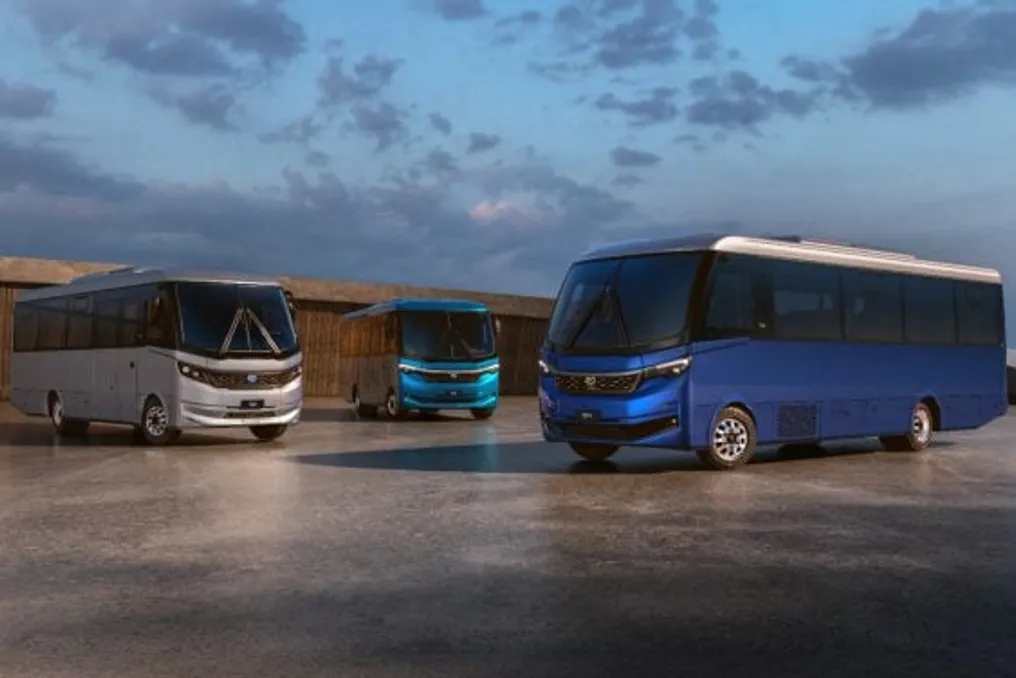
Mascarello has carried out a complete renewal of its line of microbuses, presenting the S Family, composed of models S2, S3, and S4. This new collection fully updates the portfolio in the segment and will be exhibited for the first time on the market during Lat.Bus 2026, a sectorial passenger transport event that will take place from August 11 to 13 at São Paulo Expo, located in the capital of São Paulo.
The distinction between the three versions of the family is defined by the intended type of operation. The S2 model was designed to serve urban routes, corporate transport services, and chartering. The S3 is positioned in the intermediate category, seeking a balance between efficiency and comfort. Finally, the S4 is intended for the high-end segment, focusing on executive transport, tourism, and intermunicipal operations.
A less noticeable, but of great interest to fleet companies, change lies in the new structural platform. This platform incorporates what the manufacturer calls intelligent component commonization, characterized by the standardization of parts across the three models, which results in simplification of both assembly and repair processes.
In terms of materials, Mascarello used external components made of DCPD, an injection-molded polymer used in body panels, in addition to a hybrid roof with aluminum application. According to the company, this combination contributes to reducing the body weight and increases corrosion resistance, positively impacting consumption and decreasing vehicle downtime in the garage.
All vehicles in the line are factory-equipped with full LED lighting and have their own light signature. The optical units were designed with a symmetric and modular architecture, allowing only the faulty module to be replaced, which assists companies in managing their spare parts inventory. Additionally, the S Family includes the SmartBrake system, which, according to the manufacturer, makes the braking signal more visible to vehicles traveling behind.
The driver's cabin received a revamped dashboard, ergonomic improvements, and a new control layout. In the passenger saloon, the brand promises to offer more spacious seats, internal LED lighting, new upholstery, and greater baggage storage capacity.
The new visual identity follows the work line initiated in the Horizon project, which was Mascarello's first urban electric bus and was launched this February. Both projects carry the signature of designer João Paulo Cunha Melo, who also collaborated on the development of the Marcopolo G8. Mascarello, founded in 2003 and established in Cascavel (PR), was the first coachbuilder installed in the state. The company did not disclose information about prices nor specify which chassis will receive these new bodies.