The system for protecting human rights has been strengthened by the National Center of the Republic of Uzbekistan. Information was provided about the work to be carried out under this system in the first half of 2026.
The system for protecting human rights has been strengthened by the National Center of the Republic of Uzbekistan. Information was provided about the work to be carried out under this system in the first half of 2026.
The government has prepared a draft resolution aimed at improving the procedure for assessing and controlling student knowledge in higher educational institutions, which has been presented to the public for discussion.
According to the document, it is planned to introduce an updated knowledge assessment system for students enrolling in bachelor's and master's programs starting from the 2026–2027 academic year. The 100-point grading system will be maintained.
The new system provides for the following distribution of points: 30 points for current control, 20 points for intermediate control, and 50 points for final control. Special attention is paid to the fact that in medical specialties, points will be distributed according to a separate procedure.
It is also proposed to conduct final exams in classrooms equipped with audio and video surveillance, and to store video recordings for at least one year. The project plans to develop platforms for online control and computer-based exam taking within three months, as well as conduct surveys among students at the end of each semester.
For students with disabilities, the introduction of adapted examination formats is provided for, such as Braille font, text-to-speech system, and assistant assistance.
Currently, this draft decision is in the stage of public discussion, and suggestions and comments are being accepted in the established manner.
The head of state's decree dated December 21, 2023, outlined measures aimed at fundamentally increasing the role of the mahalla institute in society and ensuring its operation as the first level in solving public problems.
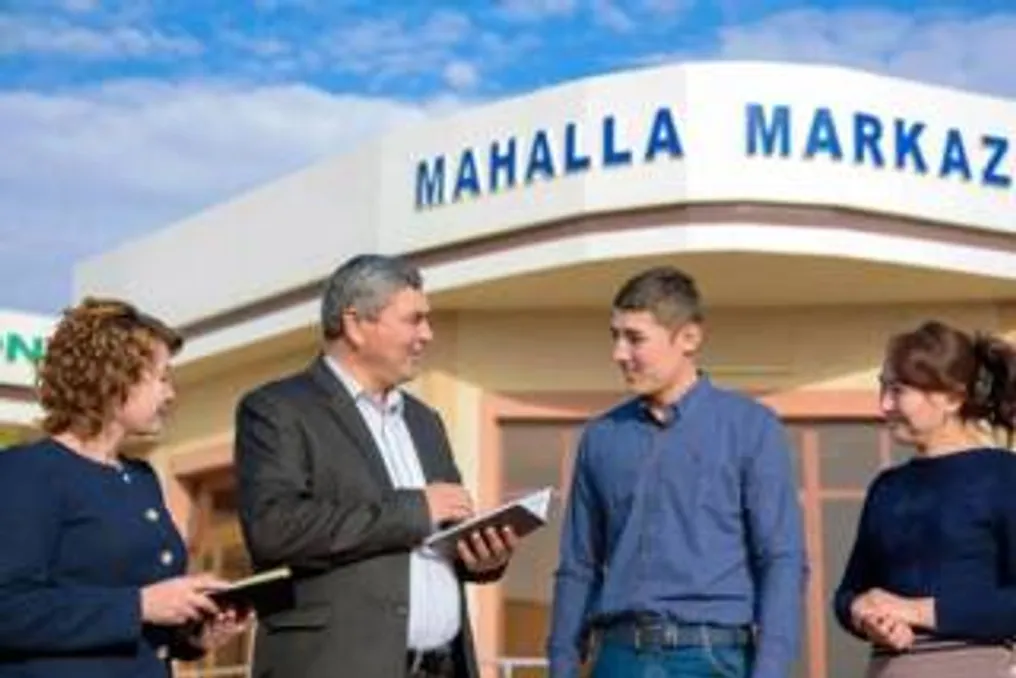
Imomali Tuev, an employee of the Legal Clinic of Tashkent State University of Law, reported that to increase the significance of the mahalla in social life and improve the management system in this area, a 'mahalla ettiligi' (seven participants) is being created, which functions based on public participation. This composition includes: the mahalla head, the deputy mayor, a youth leader, a women's affairs activist, a preventive inspector, a social worker, and a tax inspector.
The 'mahalla ettiligi' system was formed at the instruction of the head of state, and each of its members has important tasks aimed at improving life in the mahalla. For example, the mahalla head helps needy families improve housing conditions and also monitors the general condition of the mahalla.
The deputy mayor is obliged to help unemployed citizens find jobs and resolve employment issues. The youth leader must ensure the meaningful use of youth free time by involving them in sports, music, and various clubs. The women's affairs activist contributes to improving the economic situation of women by involving them in entrepreneurship, care for the sick, and crafts.
The preventive inspector is responsible for preventing offenses in the mahalla, maintaining public order, and ensuring citizen safety. As for the tax officer, their functions include expanding the tax base, legalizing business activities, and assisting self-employed individuals in transitioning to small business categories. The social worker is engaged in providing social assistance to lonely pensioners, disabled persons, and other needy individuals.
The main goal of the 'mahalla ettiligi' is to provide targeted assistance to citizens and ensure socio-economic stability in the mahalla.
From January to June 2026, the average nominal wage in Uzbekistan was 7.09 million soms, with the highest figure recorded in Tashkent.
The wage for January-June 2026 reached an average of 7,911 thousand soms nationwide. This figure exceeds the same period last year by 18.4%. For comparison, in January-June 2022, the average wage was 3,551.6 thousand soms, which represents an almost twofold increase in the average salary over four years.
When comparing by region, the highest average wage level was noted in the city of Tashkent, where it reached 12.014 million soms. Following in terms of income level is the Navoi region, where the average salary amounted to 8.723 million soms.
The lowest values for the average wage were registered in the Kashkadarya region, where it was 4.865 million soms, as well as in the Surkhandarya region, where the indicator reached 4.937 million soms.