Some time ago, obtaining land plots in Tashkent did not require participation in public auctions. A number of mechanisms existed whereby land was provided based on decisions of local heads, within special programs, or investment projects. After the introduction of mandatory auctions, the city began reviewing all decisions made under previous rules. These checks have already led to the annulment of numerous decrees, the termination of several investment agreements, and the identification of a large number of illegal constructions.
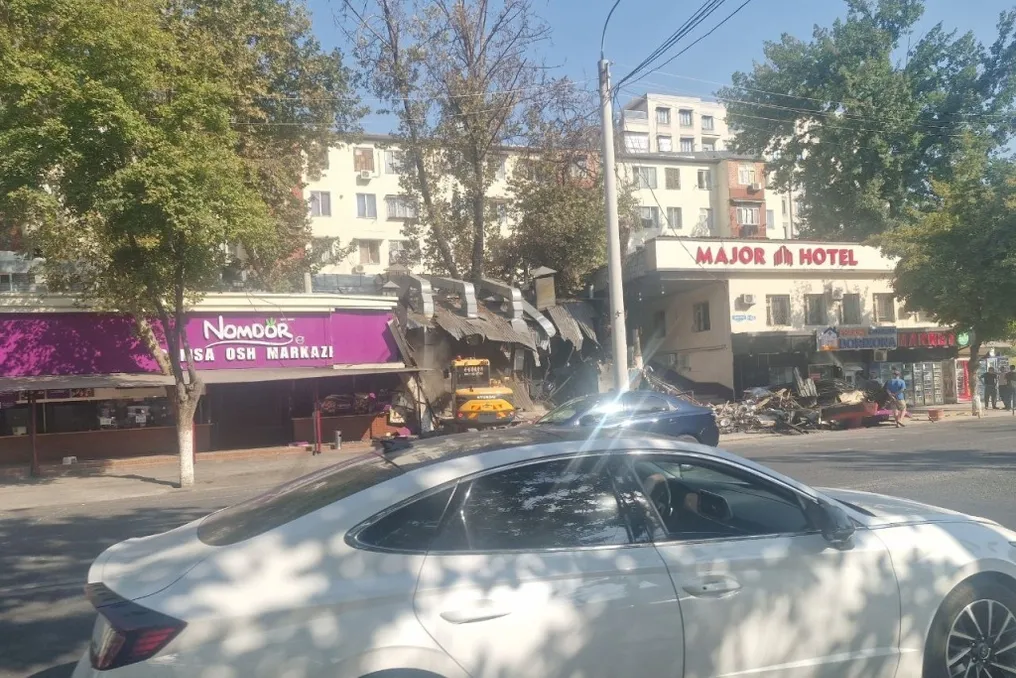
According to information provided by Anhor.uz citing data from the Tashkent city administration, 8,882 illegal structures occupying a total area of 166.84 hectares were discovered in the capital since 2024. Currently, 5,984 such objects have been dismantled, which has freed up 66.09 hectares of land. For some objects, legal proceedings are still ongoing.
Furthermore, 2,087 decrees issued based on the decision of the Tashkent mayor No. 574 from 2011 were revoked. This document allowed for securing land plots for individuals and legal entities for the purpose of improving territories without the need for auctions. The total area of land allocated under this scheme amounted to 712.38 hectares.
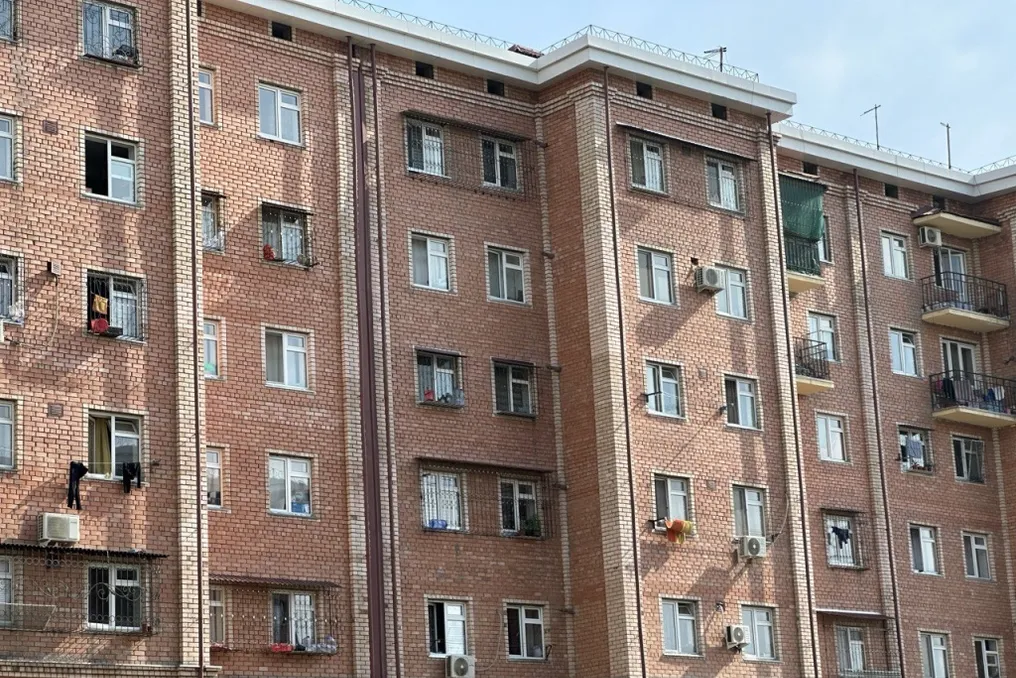
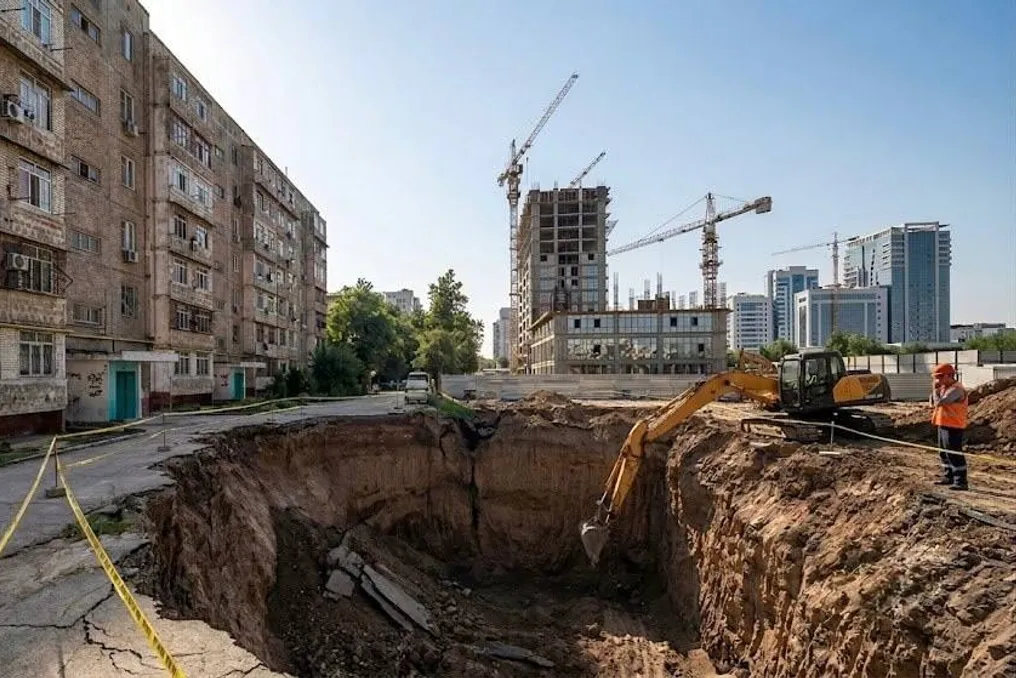
The reason for renewed attention to the former system of urban land distribution arose after a ground collapse at a construction site in the Almazar district on August 2. Upon examining documents related to this case, journalists found that the plot where the object assigned to School No. 243 was located had been transferred to a private company in 2020 without an open auction. This occurred in accordance with the then-current method of selling state property with investment obligations.
Documentation shows that as of the end of 2019, School No. 243 was the owner of the building and land plot measuring 3,006 square meters. As early as May 2020, the territorial department of the State Assets Management Agency concluded a purchase agreement for this object with the company DONMAH-IMEX under investment conditions. Ownership was officially registered in August 2022.
However, certain aspects remain unclear, such as the actual price of the transaction, the criteria for selecting this specific company, the details of the investment obligations, and the reasons for changing the designation of the former educational institution.
Mechanisms for land allocation before the introduction of auctions
The investigation revealed that before mandatory auctions were introduced in Tashkent, several ways existed to allocate land without competitive bidding. In addition to mayoral decisions on securing plots for improvement, an experiment aimed at improving the investment climate has been operating since 2018, allowing entrepreneurs to obtain specific plots for investment projects without open tenders. Purchase agreements for state property with investment obligations were also used.
Although these mechanisms complied with the legislation of the time and were not considered illegal, the absence of a competitive process complicated the assessment of why a particular investor was chosen, how justified the asset value was, and to what extent the assumed investment obligations were fulfilled.
Currently, authorities are reviewing decisions made under these schemes. Illegal construction was identified on 254 plots previously allocated under Mayor's Decree No. 574. Objects on 69 plots were voluntarily demolished. Lawsuits were filed for another 44 plots, 36 of which have already been satisfied, and the rest are under judicial review.
Projects that received land under the investment experiment were also checked. As a result, 69 contracts with entrepreneurs who failed to meet their investment obligations were terminated. The 74.1 hectares of released land were returned to the city reserve and subsequently put up for open auction.
In parallel, the land distribution market has transformed. If between 2021 and 2023, 390 plots totaling 105.5 hectares were sold through open tenders for the amount of 769 billion soms, then from the beginning of 2024 until August 1, 2026, 967 plots covering 204.1 hectares have already been sold for the amount of 4.951 trillion soms.
According to the city administration, not only the number of auctions held has increased, but also the share of plots offered in the central districts of the capital. Nevertheless, the authors of the investigation warn that directly comparing land prices across different years requires caution, as factors such as location, area, and intended use influence these indicators.
The review of previously made decisions is ongoing. Authorities are working to free up urban territories from unauthorized construction, and legal proceedings for several objects have not yet concluded. Simultaneously, Anhor.uz journalists await official responses that should shed light on the circumstances of transferring the former School No. 243 object to a private investor and the terms of the concluded deal.