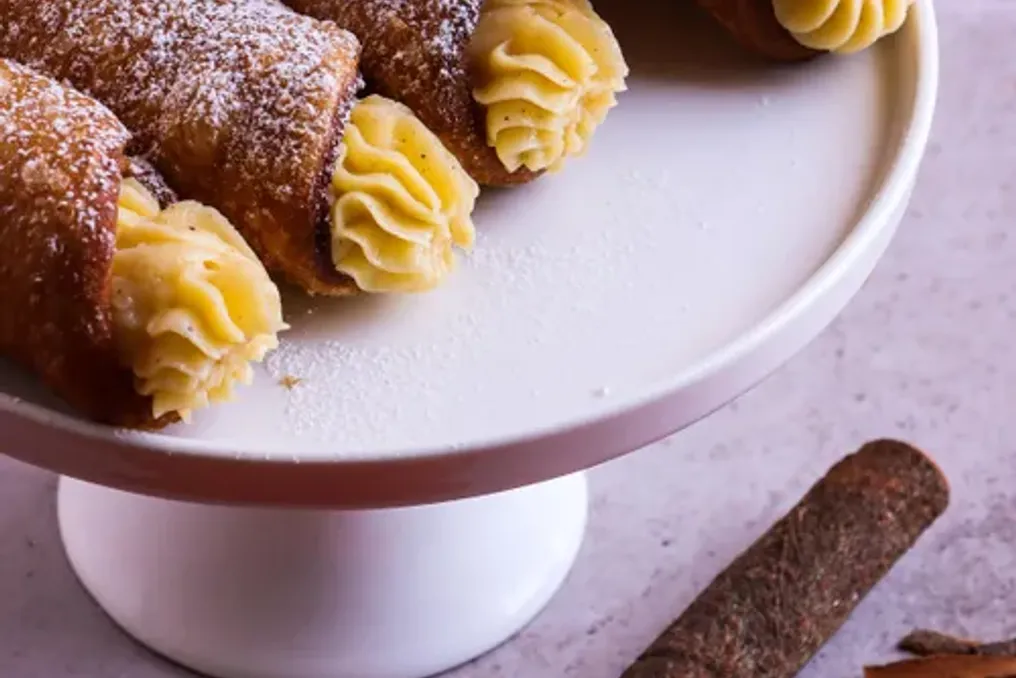
This recipe offers to prepare cannoli filled with a creamy milk tart filling. The cooking process is divided into two main stages: preparing the shells and creating the filling.
This recipe offers to prepare cannoli filled with a creamy milk tart filling. The cooking process is divided into two main stages: preparing the shells and creating the filling.
The following ingredients are required for the base: 260 g of cookie flour, 57.5 g of powdered sugar, 1 teaspoon of salt, 1 teaspoon of ground cinnamon, 4 tablespoons of unsalted butter, 6 tablespoons of dry white wine, 1 large egg, and 1 egg white for brushing.
First, mix all dry components in a bowl. Then, rub the butter into this mixture until it reaches a crumbly state. After that, add the white wine and the whole egg, kneading the dough for five minutes until smooth. Wrap the finished dough in plastic wrap and refrigerate for one hour.
Roll out the dough to a thickness of 0.5 cm, cut circles using a cookie cutter or a glass, and then wrap them around a cannoli mold. The edges are overlapped and sealed with a small amount of egg white. Fry the shells until golden and crispy. After removing them, let them cool before taking them off the mold. This process is repeated until all the dough is used.
For the filling, you need: one can of condensed milk, ½ cup of milk, ¾ cup of Amarala cream, 2 cups of warm water, 2 tablespoons of melted butter, 4 eggs, 6 tablespoons of cornstarch, a pinch of salt, and ground cinnamon.
All filling ingredients—condensed milk, milk, Amarala, warm water, melted butter, eggs, cornstarch, and salt—are mixed in a microwave-safe bowl and thoroughly stirred. Heat the mixture in the microwave on high power for 7 minutes. Then, remove the bowl and whisk to prevent lumps from forming.
Next, heat the mixture again in the microwave on high power for 5 minutes, then remove it to stir. After that, reheat it on high power for another 3 minutes, after which it is removed for final stirring. Cover the mixture with plastic wrap and let it cool. Transfer the finished filling to a pastry bag and fill the prepared cannoli shells.
Every region in India is famous for its unique desserts. While Mathura Peda is well-known, there is also Dharwad Peda, which is the calling card of the city of Dharwad in the state of Karnataka. This sweet is sold in the market for a price ranging from 600 to 800 rupees per kilogram, but it can be easily made at home to achieve a taste identical to the store-bought version.
This dessert, made from milk and sugar, is characterized by its light brown color, grainy texture, as well as a caramel aroma and taste. According to the Karnataka Tourism Department, the history of Dharwad Peda spans over 175 years, and it has received a Geographical Indication (GI) tag.
The history of Dharwad Peda is quite well-known: it is believed that a vendor named Ram Ratan Singh Thakur from Unnavaada (Uttar Pradesh) arrived in Dharwad. After this, he began producing peda from milk and selling it locally. Over time, this sweet became so popular that its identity became associated with the city of Dharwad. Later, this dessert acquired its own recognition in Dharwad and was sometimes referred to as Line Bazaar Peda. Today, Dharwad Peda is among the main traditional sweets of Karnataka and holds a GI tag, highlighting its popularity.
The authentic taste of Dharwad Peda is achieved through a long process of milk preparation. For homemade preparation, a large quantity of ingredients is not required; only some patience is needed to prepare it.
The specialty of Dharwad Peda lies in its light caramelized taste and grainy structure, which distinguishes it from other desserts. The preparation involves slow simmering of milk, which leads to a change in the color of the milk solids and imparts a unique flavor to the sweet. This is its main distinguishing feature, and you can make homemade Dharwad Peda similar to the store-bought one, for example, for the festival of Savan.
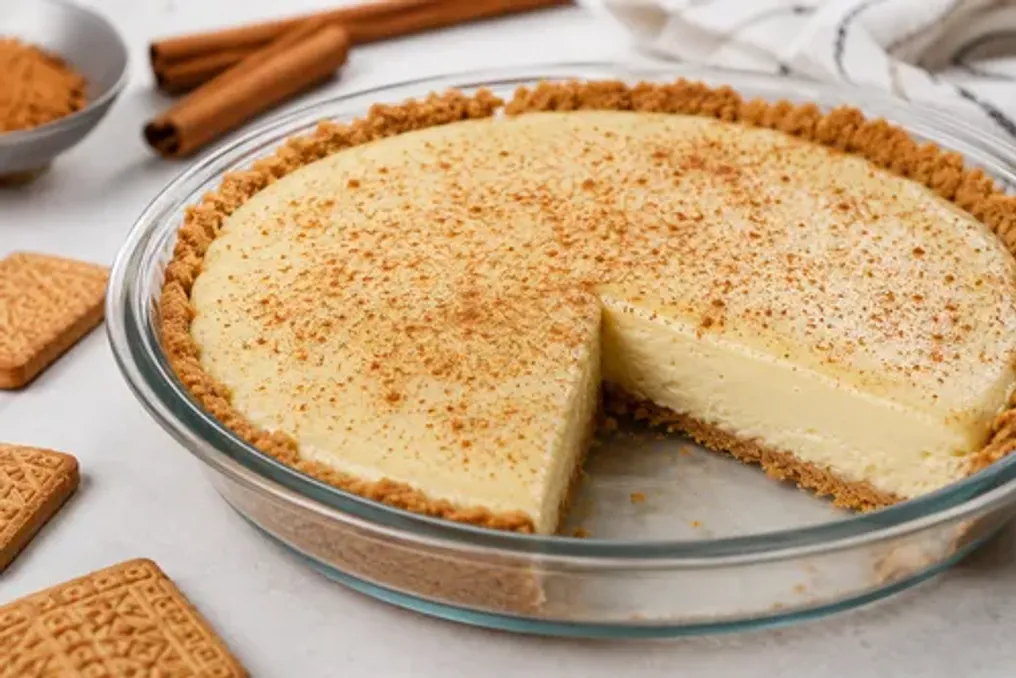
The no-bake milk tart is a simplified version of the traditional milk tart, making it ideal for those who enjoy this dessert but do not wish to prepare pastry or use an oven.
The shortbread base is made by mixing crushed biscuits with melted butter, and the familiar milk tart filling is prepared on the stovetop. Sweetened condensed milk provides sweetness and richness to the filling, while cinnamon and vanilla offer a flavor well-known in South Africa.
After the filling is poured onto the base, the process is completed in the refrigerator. The tart needs to rest for several hours to set, resulting in a creamy milk tart that can be sliced and served without baking.
First, crush the biscuits into fine crumbs using a food processor or by placing them in a sealed bag and crushing them with a rolling pin. Then, mix these crumbs with the melted butter, stirring thoroughly until the butter is evenly distributed, so the mixture holds together when pressed.
Transfer the resulting shortbread mixture into a 23cm round pie dish or a baking pan with sides. Press the mixture firmly into the bottom and up the sides, trying to make the layer as even as possible. After this, place the base in the refrigerator while preparing the filling.
To prepare the custard, grease the inner walls of a medium saucepan with butter. Add the milk, cream, sweetened condensed milk, cinnamon stick, and vanilla extract. Heat over medium heat until the mixture is hot and just begins to simmer.
While the milk mixture is heating, whisk the eggs and water in a separate bowl. Add the cornstarch and salt, and whisk until smooth. Then, reduce the heat under the saucepan and slowly pour in the egg mixture while constantly stirring with a whisk. Continue cooking and stirring until the custard thickens; this will take several minutes. The mixture should become thick and creamy, yet still pourable.
After this, remove the cinnamon stick and take the custard off the heat. Take the shortbread base out of the refrigerator and pour the warm custard over it. Level the surface, then generously sprinkle with ground cinnamon. Let the tart cool before covering it and placing it in the refrigerator. It is recommended to chill for at least four hours or overnight for a firmer set.
Before serving, take the tart out of the refrigerator for a few minutes, then slice and serve, optionally sprinkling with an extra dusting of cinnamon.
The custard should thicken noticeably before being poured onto the shortbread base, but it should not be so thick that it is difficult to pour. It will firm up significantly during chilling. If cooked too long in an attempt to make it very thick, it may result in a heavier filling.
The simplest way to determine the correct consistency is to stir continuously during cooking. When the whisk leaves a visible trail in the custard, and the mixture has clearly thickened, it is ready. It is important to maintain moderate heat and not stop whisking after adding the egg-starch mixture, as this helps maintain the smoothness of the filling.
Tennis biscuits are a common choice in South African recipes, but they are not the only option. You can use regular tea biscuits, digestive biscuits, or Graham crackers. The choice of biscuit will slightly alter the taste and texture of the base, but the method remains unchanged. Regardless of the biscuit chosen, ensure the crumbs are fine and the mixture is pressed firmly into the mold.