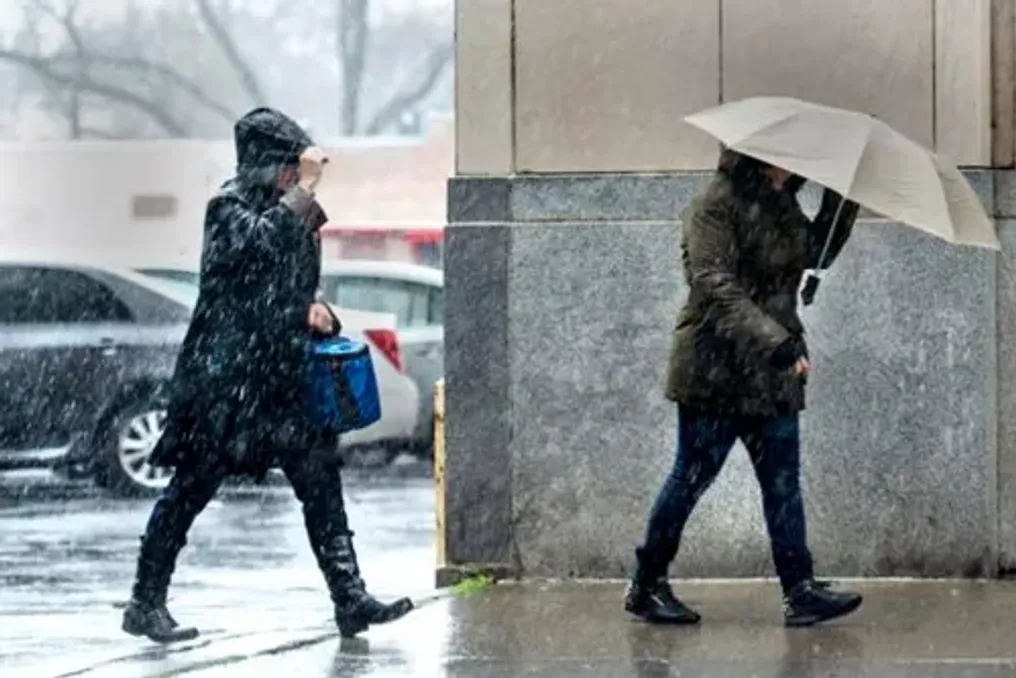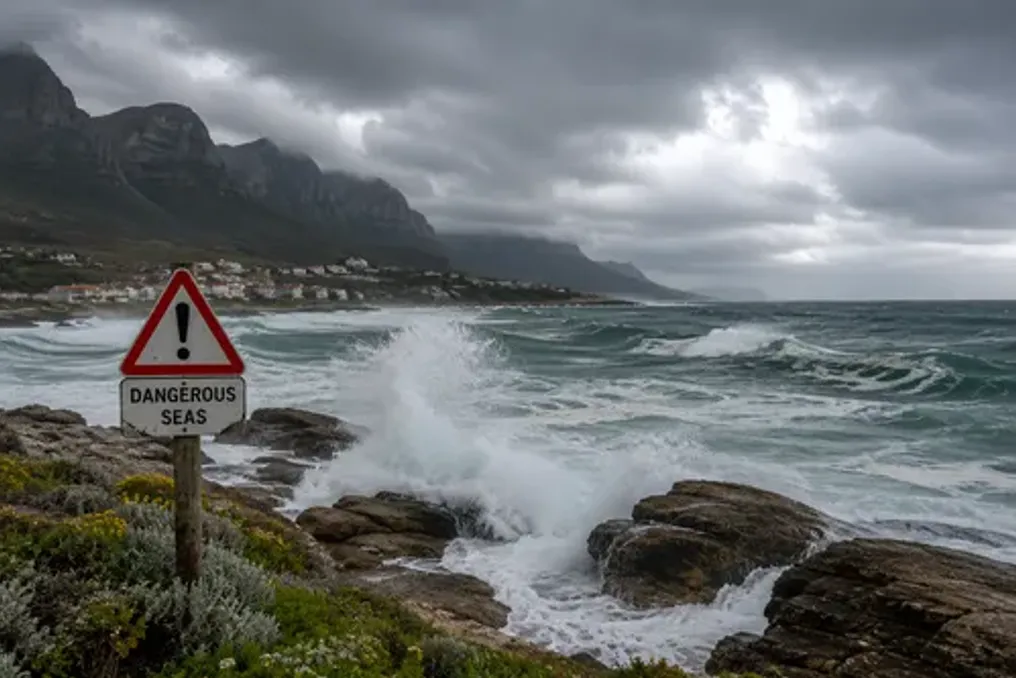
A powerful cold front is expected to move across South Africa starting on Sunday. It will bring snow, heavy rain, destructive wind, rough seas, and very low temperatures. In light of this, authorities are warning of possible flooding, hazardous road conditions, and power outages.
According to forecasts, the cold front, accompanied by a steep upper troposphere, will reach the coasts of the Western and Northern Cape on Sunday, August 9th. This will result in cold, very cold, humid, and windy weather, as well as stormy seas and snowfall in mountainous areas.
According to the South African Weather Service (SAWS), the adverse weather conditions will spread eastward into the Eastern Cape as the system moves across the country.
By Monday, August 10th, further deepening of the upper troposphere over the central and eastern parts of South Africa is expected, which will prolong cold and very cold conditions inland. Variable rain and precipitation are forecast for the southern regions, while snow is expected in the mountainous areas of Free State, KwaZulu-Natal, and Mpumalanga.
Although the probability of light snowfall in some higher areas outside these provinces is low, meteorologists note the highest confidence regarding the mountain ranges of the Free State, KwaZulu-Natal, and Mpumalanga.
SAWS has warned that the weather system may cause localized flooding in low-lying areas, as well as on roads, bridges, and informal settlements due to prolonged rainfall. Destructive winds can also lead to fallen trees, roof and infrastructure damage, power supply interruptions, and create dangerous driving conditions.
Stormy seas and high waves are expected along the coast, posing a risk to maritime activities and coastal infrastructure. Very low temperatures may increase the risk of frostbite for vulnerable communities and place additional strain on livestock. Snow cover on mountain passes may also trigger hazardous road conditions, road closures, and transport disruptions.
SAWS strongly urges the public, drivers, farmers, and disaster management agencies to monitor the latest forecasts and weather warnings, and to take necessary precautions as the weather system moves across the country.