
Kazakhstan has successfully completed the main stage of creating the Trans-Caspian optical fiber channel system. Submarine fiber was successfully laid on the seabed and connected to the country's coastline.
Similar stories
uza.uzAugust 5, 14:17
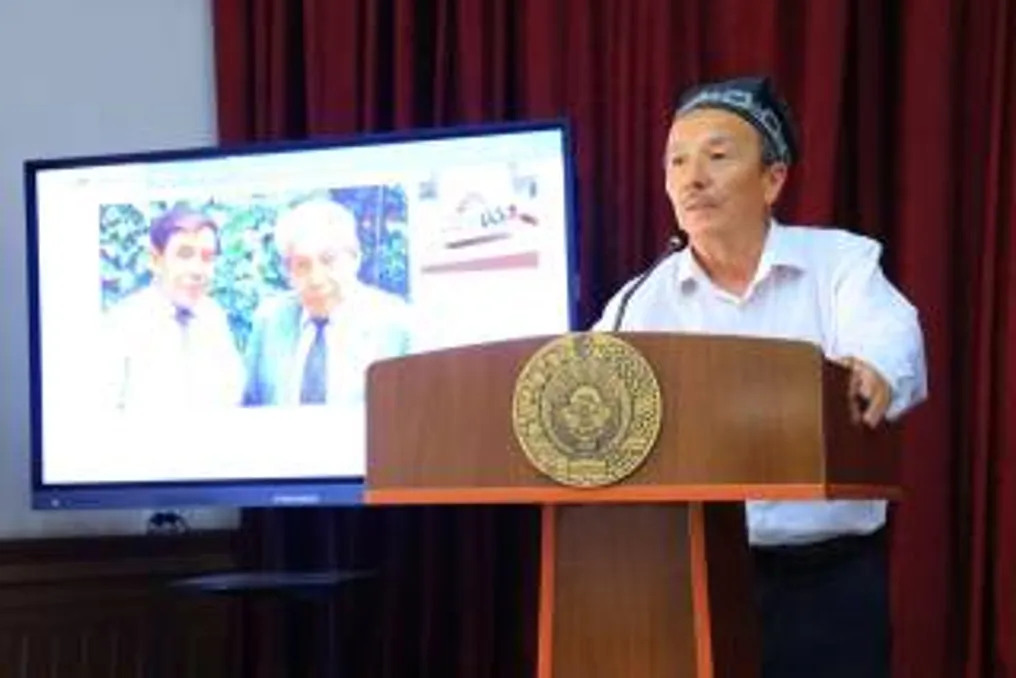
Event dedicated to the creativity of Utkir Khoshimov organized in an Andijan military unit
A literary and educational event titled 'The Contribution of Uzbek Folk Writer Utkir Khoshimov to Uzbek National Literature' took place at a military unit in the city of Andijan.
This event was organized by the regional branch of the Writers' Union of Uzbekistan at the initiative of the Writers' Union of Uzbekistan on the eve of the celebration of the thirty-fifth anniversary of independence and in honor of the 85th anniversary of the beloved people's writer Utkir Khoshimov. Military personnel, writers, and poets participated in the event.
During the event, the topic of boosting soldiers' morale, as well as stimulating their interest in reading and literature, was discussed in detail; specifically, the life of the great writer Utkir Khoshimov, his creative activities, and his immortal works were highlighted.
The creators provided participants with information about the life and work of Utkir Khoshimov, his invaluable contribution to the development of Uzbek literature, as well as the concepts of patriotism, humanism, glorification of national values, and spiritual purity promoted in his works.
Vosid Akhmatkhonov, a specialist from the regional branch of the Writers' Union of Uzbekistan and a member of the Writers' Union of Uzbekistan, noted that literature plays a major role in increasing the effectiveness of spiritual and educational work among soldiers and encouraging them to fulfill their military duty to a high standard. He added that familiarizing soldiers with the works of the great writer Utkir Khoshimov contributed not only to spiritual enrichment but also strengthened their interest in literature.
The soldiers made a great impression on everyone present with poems they recited on themes of the Motherland, the good of the world, love, and loyalty. This event, held in an atmosphere of sincerity and lively spirit, further enriched the servicemen's knowledge of the writer's work and strengthened their love for national literature and reading culture.

uza.uzAugust 1, 14:28
The 'New Uzbekistan' Concept: Reforms and a New Philosophy of Public Administration
The 'New Uzbekistan' concept has become one of the most discussed topics in recent years, closely linked to the country's development. This terminology goes beyond a mere political slogan or reform program; according to analyses, it aims to form a completely new interaction between the state, society, and citizens. The main goal of this concept is to put human interests at the forefront of state activity.
According to political scientist Saifiddin Juraev, the first part of the analysis dedicated to the 35th anniversary of Independence focuses on forming the sovereignty, statehood, and economic foundations of the country, while the second part examines changes in the very structure of the state. Special attention is paid to transformations in state institutions, personnel policy, the legal system, information policy, civil society, ecology, and religion. The author interprets this process not as a set of separate reforms, but as an update to the method of public administration itself.
The main idea is embodied in the principle put forward by President Shavkat Mirziyoyev: 'The people should serve state institutions, not the other way around.' This approach has given new meaning to the relationship between the state and society. The citizen ceases to be an object of management and becomes the key criterion for assessing the effectiveness of state policy through their opinion. This principle has been implemented in practice through public receptions, the openness of state institutions, and the accountability of leaders, rather than remaining just an idea.
The analysis notes that the 'New Uzbekistan' concept is built on four fundamental pillars. The first is the priority of human value, enshrined in the Constitution adopted in 2023, transforming the idea of 'for the sake of human value' into the legal basis of state policy. The second is the policy of openness, where the external world is viewed not as a source of threats, but as a new opportunity for development. The third is the rule of law and legal stability, ensuring equal and predictable rules for citizens and investors. The fourth is the principle of a social state, strengthening the state's responsibility for the well-being of the population.
The practical implementation of the document is reflected in strategic programs. Following the previously adopted Strategy of Actions for 2017–2021, the 'New Uzbekistan' Development Strategy for 2022–2026 was developed and subsequently approved the 'Uzbekistan-2030' strategy, which defines the long-term goals of the country's development. These documents form a unified system that continuously continues reforms without duplicating each other.
An important aspect is the broad involvement of the public in the process of developing strategic documents. According to the analysis, over 22,000 proposals were submitted for the State Program for 2026, which was reviewed by more than 5 million citizens. Thousands of students, teachers, and civil servants participated in discussions at higher educational institutions. This indicates that the state program is becoming not just an institutional document, but a social agreement formed with the participation of society.
This document encompasses 337 specific measures. It is planned that the completion of each task defined by performance indicators will be evaluated at the end of the year. Priority tasks include modernizing local infrastructure, transitioning the economy to an innovative model, forming a new labor market, ensuring environmental sustainability, and improving the state governance and judicial systems.
Juraev also points out existing risks: the main problem lies in the discrepancy between the speed of decision-making and the capacity for its implementation locally. Therefore, the next stage emphasizes the importance of creating systems based on sustainably functioning institutions, rather than on the initiative of individual leaders.
Key provisions of the 'New Uzbekistan' concept are related to the system of public administration. State bodies, which previously mainly coordinated administrative management, are now responsible for promptly responding to the needs of the population, ensuring transparency, and increasing the efficiency of service provision. This process is assessed as a fundamental change in the activities of state institutions.
The dialogue between the state and the citizen has reached a new level. Millions of appeals have been considered through the Presidential Virtual and Public Receptions. The tradition of leaders holding public receptions in mahallas has been introduced. A rating system for the openness of state institutions has been introduced, and leaders have begun to publicly report to the public. Thus, the activities of state bodies are shifting from a closed system to the principle of open governance.
Digitalization has also become an important direction of reforms. Today, hundreds of services are provided electronically through the Unified Interactive Portal of Public Services. Systems for e-government, document flow, digital identification, and electronic public procurement have been implemented. Furthermore, areas requiring licenses and permits have been significantly reduced, and many services have been moved from a permit-obtaining regime to a notification regime. In other words, excessive paperwork and bureaucratic obstacles are decreasing.
Significant institutional innovations have occurred in the field of legal protection. An Administrative Judicial System has been created, and an effective mechanism for filing complaints against the decisions of state bodies has been established. A very important change is that the obligation to prove the legality of a decision is placed not on the citizen, but on the state body. This is considered an important step towards ensuring legal balance in the relationship between the state and the citizen.
The fight against corruption is defined as a separate direction of state policy. The Anti-Corruption Agency has been established, an industry law has been adopted, income tracking for civil servants has been introduced, a mechanism for expert review of normative acts for corruption has been implemented, and a digitalization system for public services has been introduced. Through the 'Open Budget' platform, citizens have been given the opportunity to participate in the distribution of part of the budget funds, and the volume of electronic auctions for the sale of state property has expanded.
The system for organizing public services has also been radically updated. The Law 'On Civil Service' has been adopted, introducing modern mechanisms such as a unified qualification standard, recruitment based on open competition, performance evaluation, and conflict of interest limitation. A special Department of Civil Service has also been created to coordinate personnel policy.
According to Saifiddin Juraev, the next stage requires moving from the digitalization of public services to an active state model. That is, public service should be provided automatically upon the occurrence of certain life circumstances, without waiting for an application from the citizen. Consequently, this process is associated with the complete harmonization of interdepartmental information systems, the formation of a unified data register, and further strengthening of personal data security.
The analysis also highlights another important problem: in modern public administration, the main deficiency is not the number of employees, but the analytical potential. Ministries and agencies need to improve their ability to conduct deep information analysis when making decisions, assess potential consequences, and develop alternative solutions. Furthermore, it is proposed to prioritize eliminating the causes of negative situations in the fight against corruption, rather than just punishing them.

uza.uzJuly 23, 11:32
Kyrgyzstan Government Approves Plan to Build Fuel Oil Processing Plant in Southern Part of Country
The government of Kyrgyzstan has approved a project for the construction of a small oil processing plant in the southern part of the country. This step is aimed at increasing domestic fuel production and reducing dependence on imports, especially after the reduction of raw material supplies from Russia.
Financing and Products of the New Plant
According to Reuters, the $25 million project will be financed by the Chinese company 'Central Asian Energy LLC', and the corresponding contract has already been signed. The new refinery will produce gasoline and diesel fuel meeting K5 and K6 emission standards (analogous to European requirements for Eurasia), as well as bitumen and motor oil. The first stage of construction is scheduled for completion this autumn.
Supply Issues and Needs
Currently, about 90 percent of the gasoline needed for Kyrgyzstan's domestic consumption is purchased from Russia. At the end of June, the republican association of oil traders warned of a possible shortage of AI-95 and AI-98 gasoline due to supply restrictions from the Russian Federation and seasonal demand growth.
Project Location
Local media previously reported plans to build this plant in the city of Qoʻchkor-Ota, located in the Jalal-Abad region, with an oil refining capacity of 450,000 tons per year.