The press service of the Tashkent city government announced that the area around the Scientific and Educational Memorial Complex dedicated to the first President of Uzbekistan, Islam Karimov, in Tashkent will be converted into an open public park.
The press service of the Tashkent city government announced that the area around the Scientific and Educational Memorial Complex dedicated to the first President of Uzbekistan, Islam Karimov, in Tashkent will be converted into an open public park.
This project involves the comprehensive reconstruction of a 37-hectare park zone located next to the memorial complex. Plans include dismantling metal fences that currently restrict access, creating convenient entry points, and developing a unified network of pedestrian paths.
Special attention will be paid to creating an environment accessible to everyone. The project provides for infrastructure that improves accessibility for the elderly, visitors with disabilities, families with children, and users of strollers.
The city government specified that existing green areas will be preserved, and quiet rest areas and shaded walking routes will also be created. The park will also be equipped with modern lighting, navigation systems, and security measures.
The Islam Karimov Scientific and Educational Memorial Complex was established in 2017 on the site of the former Oxaroy residence. It includes a museum, a scientific and educational center, a library, and a conference hall.
According to the city government's information, the implementation of this project is part of a program aimed at improving the ecological situation in the capital, expanding green areas, and developing public park spaces.
Earlier, at the end of July, the Head of the Presidential Administration, Saied Mirziyoyev, announced plans to fully open the Afrosiyob Street park to residents, as well as to expand the Babur Ecopark and Mirzo Ulugbek Park. The city government noted that these initiatives are part of a general program to increase the number of public green spaces in Tashkent.
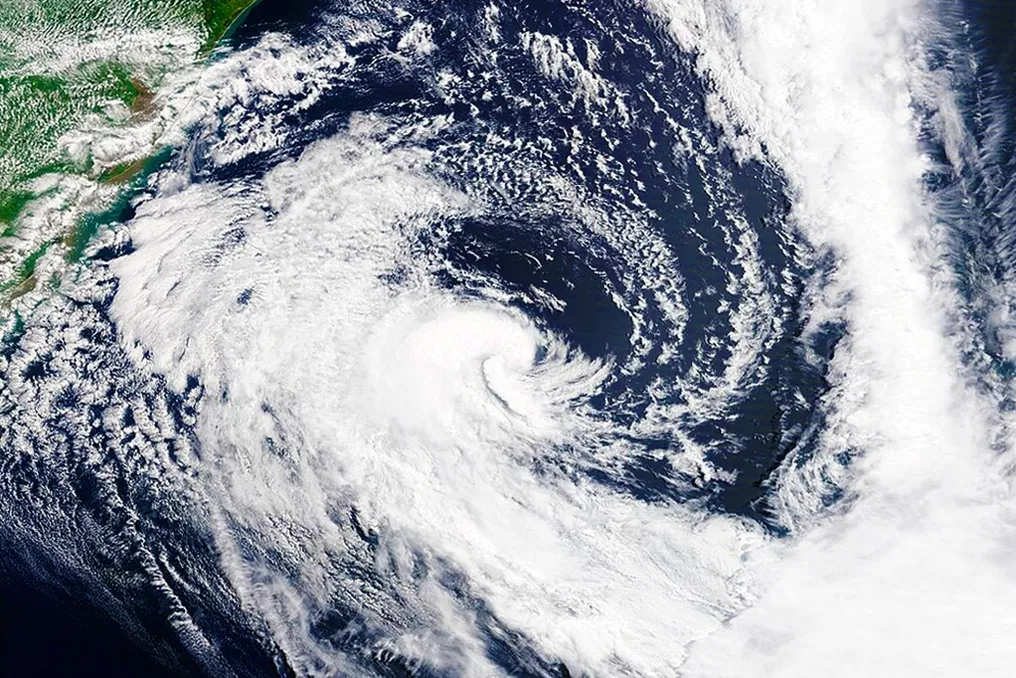
On June 30, 2020, Southern Brazil faced one of the most severe mornings in its recent history due to the passage of bomb cyclones. Wind gusts exceeding 100 km/h resulted in 13 deaths, left nearly 3,000 people displaced, and caused power outages in areas of Rio Grande do Sul, Santa Catarina, and Paraná.
This disaster was attributed to the phenomenon known as bomb cyclones, or bombogenesis, which occurs from the accelerated meeting between large masses of hot and cold air. This process involves a cycle of air heating and rising, followed by cooling and sinking, a movement called convection. This repetition generates a sudden decrease in atmospheric pressure at the center of the system, which gives the cyclone its rapid strength, justifying the name 'bomb.'
Several municipalities were impacted by the passage of this cyclone that year. In Santa Catarina, cities such as Florianópolis and Balneário Camboriú suffered destruction caused by the phenomenon.
Santa Catarina was the most affected state, recording 11 confirmed deaths. Data from the Regional Civil Defense Coordinators on the day of the event pointed to 25 affected municipalities, a number that increased to 184 municipalities, representing 62% of Santa Catarina's cities. In Chapecó, a 78-year-old woman died after being struck by a tree. In Santo Amaro da Imperatriz, a pedestrian did not survive after being hit by high-voltage wires resulting from a fallen tree.
The subsequent early mornings required the Santa Catarina Government to declare a state of public calamity. On July 1, winds reached 90 km/h, and 369,600 residences remained without power for more than 24 hours after the first blackout.
In Rio Grande do Sul, the bomb cyclone left 2,331 people homeless or displaced in 23 cities, due to flooding and strong winds. In Porto Alegre, although the gusts were milder, around 80 km/h, there was falling poles and trees, blockage of at least 28 roads, and structural damage to buildings.
In Paraná, the cyclone caused damage in at least 84 of the 399 municipalities, according to the Civil Defense report, and registered at least one death. In Curitiba, winds close to 100 km/h knocked down trees and left 193,000 properties without electricity.
The effects in the Southeast were milder, as the cyclone only touched the state of São Paulo during its trajectory in the region.
Concern about the arrival of new bomb cyclones is high, especially in the South regions and parts of the Southeast, considering the year 2026. In South America, these extratropical cyclones generally originate in the ocean, near the coasts of Argentina and Uruguay. The 2020 episode started near Paraguay and followed the southern Brazilian coast, dissipating into the sea.
With global warming, there is a trend for the impacts of bomb cyclones to become more intense. This occurs because the increase in temperature in the oceans and atmosphere tends to accentuate the contrast between the hot and cold air masses that cause the phenomenon. It is relevant to note that the cyclone preceding the 2020 one, which occurred in 2016, was less severe. Furthermore, a report from the World Meteorological Organization (WMO) points out that humanity is experiencing the ten hottest years in its recent history.
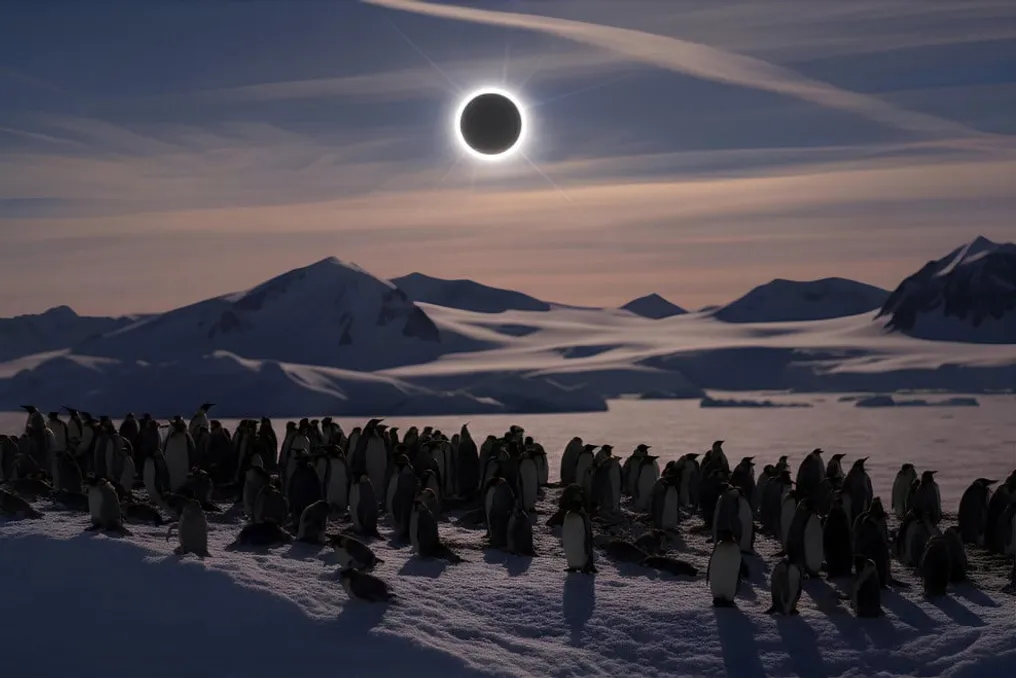
Eclipses are astronomical phenomena defined by the darkening, either total or partial, of a celestial body due to another object intervening in the path of the light source. Recently, in 2026, both a total lunar eclipse, known as the 'Blood Moon,' and an annular solar eclipse were recorded, which generated a 'Ring of Fire' over Antarctica.
The year still has two more events, both scheduled for August; the first will be a total solar eclipse, expected next week. The season will culminate with a partial lunar eclipse, visible throughout Brazil between the 27th and 28th.
The fundamental difference between lunar and solar eclipses lies in the arrangement of the three celestial bodies. In the case of a lunar eclipse, the Earth is positioned between the Sun and the Moon, allowing its shadow to obscure the satellite. In a solar eclipse, the Moon intervenes between the Sun and the Earth, casting its shadow onto an area of the planet and covering the Sun, totally or partially.
According to the Time And Date platform, there are three main categories of solar eclipses: partial, annular, and total. However, there is also a fourth standard, considered more uncommon, that combines characteristics of the others: the hybrid, exemplified by the event in April 2023.
A partial solar eclipse occurs when the Moon covers only a section of the solar disk, resulting in a 'piece' missing from the edge of the Sun. This is the most frequent type and can be observed in significantly larger regions than those affected by the Moon's densest shadow.
In an annular solar eclipse, the Moon aligns directly with the Sun but is farther from the Earth, making it appear smaller in the sky. Because it cannot completely cover the solar disk, a luminous circle remains visible around the Moon, a phenomenon popularly called the 'Ring of Fire.'
A total solar eclipse happens when the Moon completely covers the Sun for those located in the narrow band hit by the most intense shadow. For a few minutes, the sky darkens as if it were sunrise or sunset, allowing the appearance of brighter stars and planets, as well as making the solar corona, the atmosphere around the Sun, visible to the naked eye.
Finally, the hybrid solar eclipse is the rarest. Its appearance varies as the Moon's shadow travels across the Earth: at certain times it manifests as annular, and at others, it transforms into total. This change is attributed to the curvature of the Earth and the variation in distance between the Moon and observers along the eclipse trajectory.
On the following Wednesday (the 12th), the Sun may be seen completely covered in the Arctic, Greenland, Iceland, northern Spain, and a small part of Portugal. The partial phase will be visible in the rest of Europe, northern Africa, and the eastern part of North America.
This event begins at 12:34 PM (Brasília time) at an isolated point in the Arctic Ocean, north of Siberia, when the lunar penumbra first reaches the Earth, initiating the partial phase. The spectacle ends just over four hours and twenty minutes later, at 4:55 PM, in an area of the Mediterranean Sea, west of Italy.
The most notable moment should occur near the west coast of Iceland, where totality may last up to two minutes and eighteen seconds. In Spain, which has not witnessed a total solar eclipse on its continental territory for over one hundred years, the total darkness will be shorter, approaching one minute.
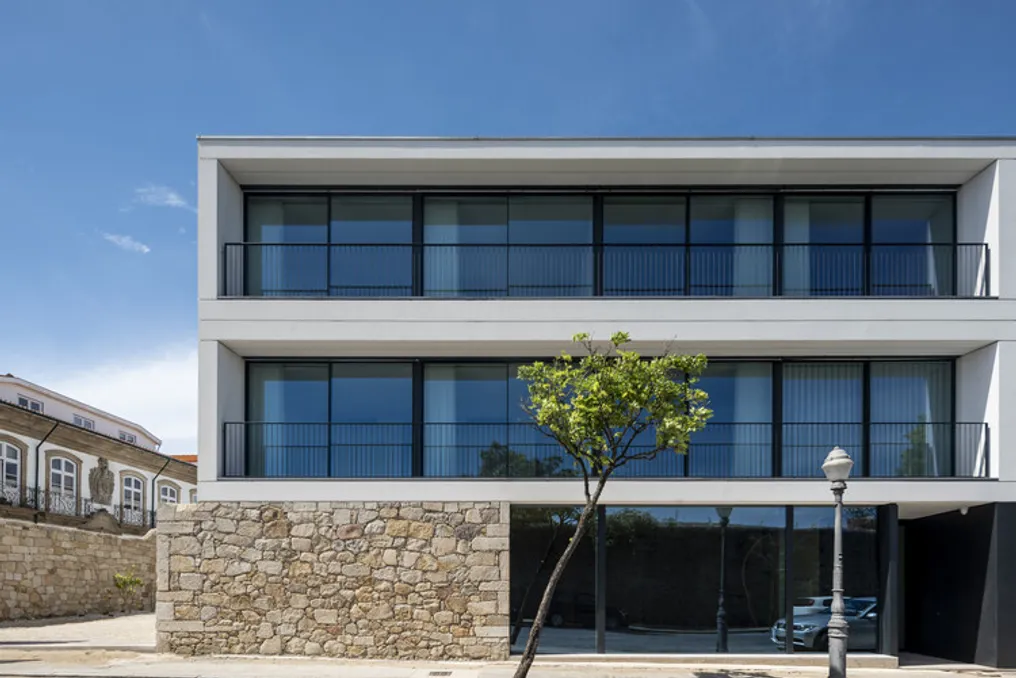
The collective housing project located in Vila do Conde was developed by architect Raulino Silva Arquitecto.