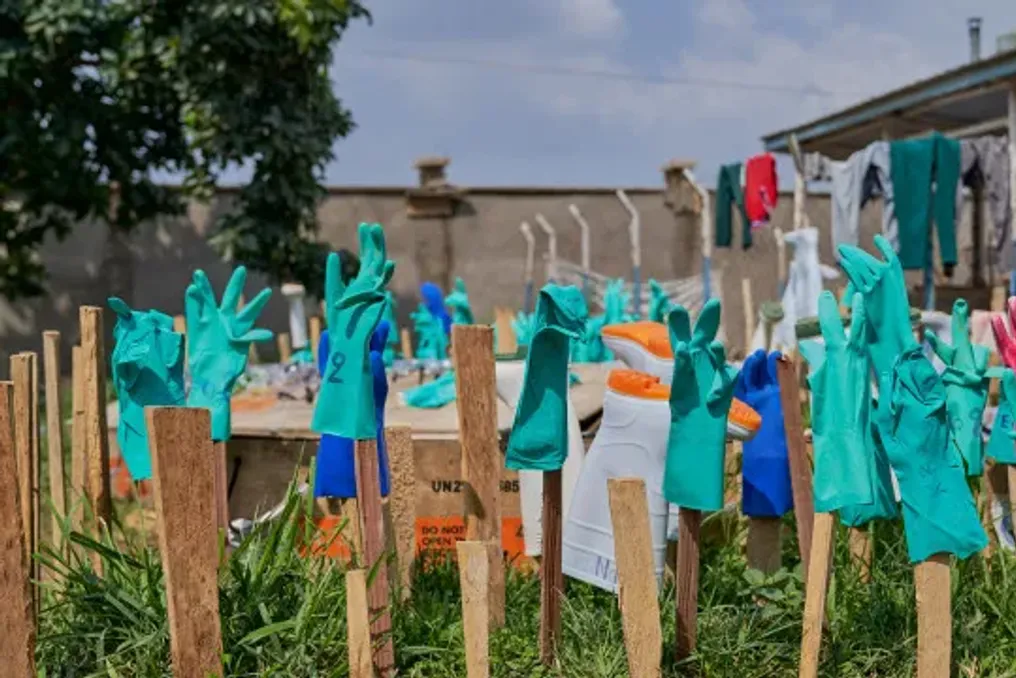
According to the Congolese Ministry of Health, data collected up to August 4 indicates that the current mortality rate associated with Ebola has reached 45.3%. Currently, 674 individuals are hospitalized or in isolation, while 776 people are recovering from the illness.
The contact tracing rate was recorded at 75.3%. The Ebola outbreak has affected five provinces in the Democratic Republic of Congo: Ituri, which serves as the epicenter of the epidemic, along with North Kivu, South Kivu, Haut-Uele (located in the east), and Tshopo (situated in the north-central region).
The National Institute of Public Health (INSP) of the Democratic Republic of Congo warned that, despite no new geographical spread in the 24 hours prior to the report, the epidemic remains in a phase of continuous transmission, characterized by high viral circulation.
This represents the seventeenth Ebola outbreak to affect the DRC. The World Health Organization (WHO) noted that this outbreak shows the fastest growth in infections compared to any other outbreak since its beginning.
However, the situation is still below the worst Ebola epidemic in history, which occurred in West Africa between 2014 and 2016, resulting in about 11,000 deaths and 28,000 infections.
The neighboring country, Uganda, where the disease also spread, announced it was Ebola-free on July 28, after confirming 20 cases, 15 of which were classified as imported from the DRC, of which two deaths were recorded.
The outbreak in question is related to the Bundibugyo strain, whose fatality rate fluctuates between 30% and 50%, and for which the WHO reports that there is no authorized vaccine or specific treatment. The Ebola virus is transmitted through direct contact with body fluids of infected humans or animals, causing severe hemorrhagic fever, vomiting, diarrhea, and internal bleeding.