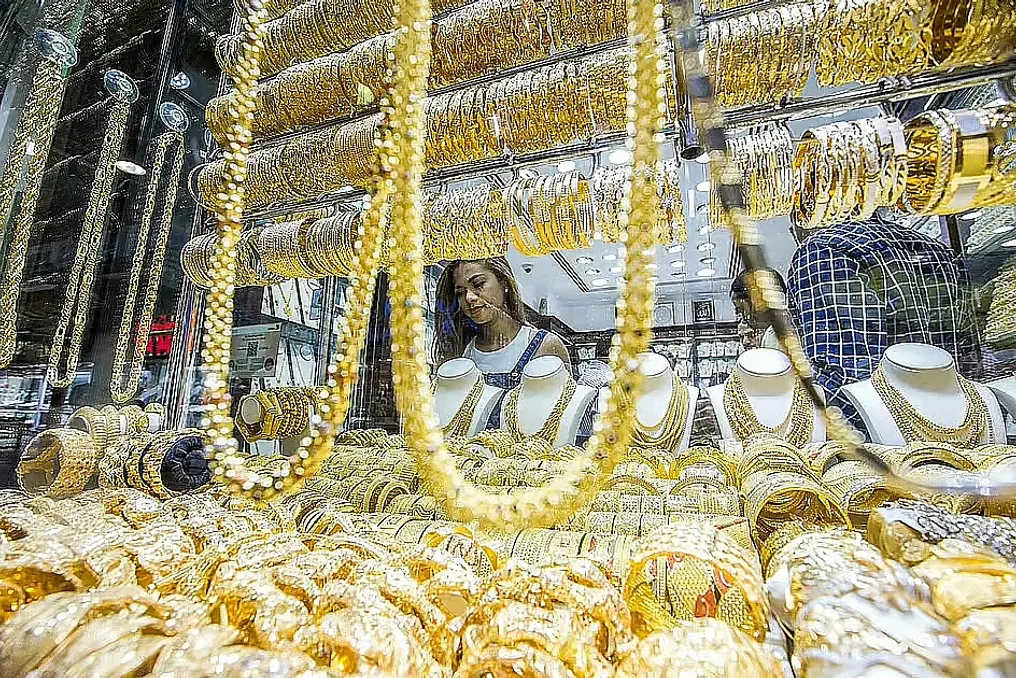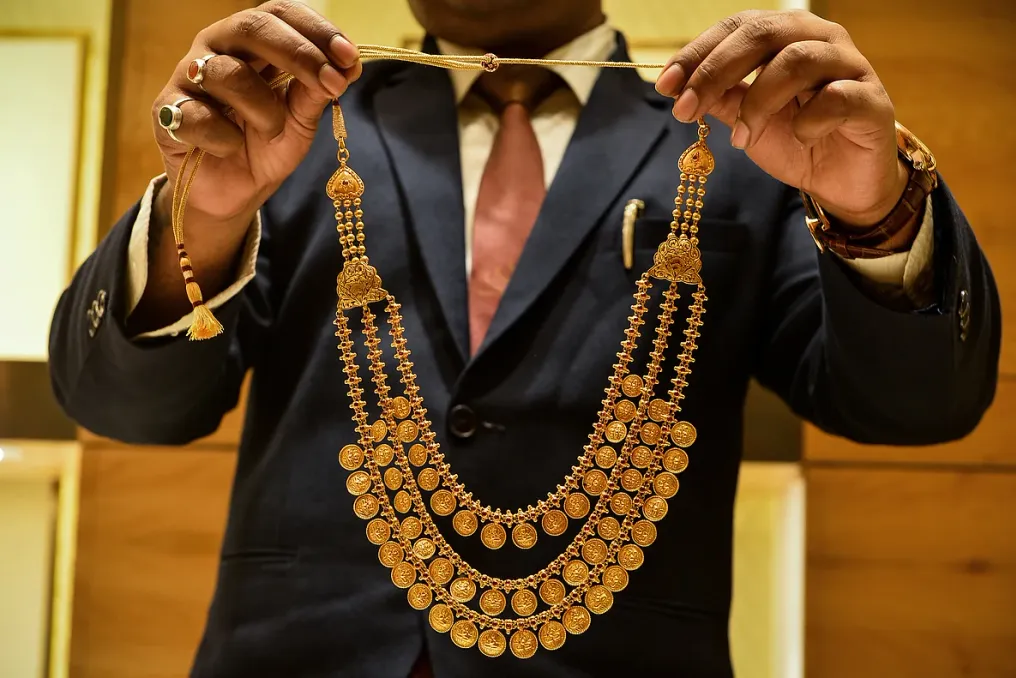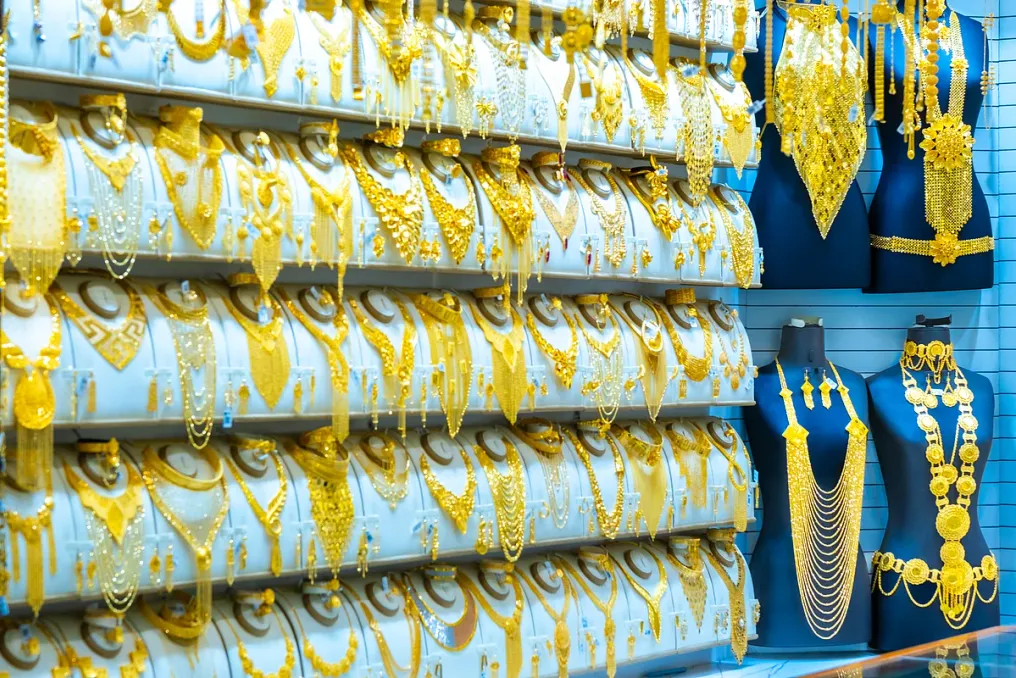
Buyers in the United Arab Emirates (UAE) are diversifying their purchases among gold jewelry, bars, and coins, indicating increased consumer awareness of the value of goods in the country, according to Dubai jewelers.
Buyers in the United Arab Emirates (UAE) are diversifying their purchases among gold jewelry, bars, and coins, indicating increased consumer awareness of the value of goods in the country, according to Dubai jewelers.
Industry leaders noted that some UAE consumers are shifting focus from large jewelry purchases to lighter pieces. Gold prices jumped by more than 21 dirhams per gram on Thursday, reaching a seven-week high amid hopes for the resumption of shipping in the Strait of Hormuz.
In the morning market in Dubai, the price of the precious metal was $4253 per ounce. In Dubai, 24K and 22K gold traded at 513.75 and 475.75 dirhams per gram, respectively.
John Paul Alukkas, CEO of Joyalukkas Jewellery, stated that consumers have become more thoughtful about purchasing gold. He emphasized that people are becoming more financially literate and view coins and bars as a simple and economically advantageous way to invest in gold, avoiding additional manufacturing charges or premiums associated with handmade items.
Many clients are now combining purchases: for example, buying wedding or special occasion jewelry and supplementing it with a coin or bar for long-term savings. According to Alukkas, this is a balanced approach to owning gold. He added that while demand for jewelry has decreased in the short term, this reflects a change in purchasing behavior rather than an overall decline in interest in gold.
Another positive trend, according to Alukkas, is the growing interest of clients in responsibly sourced certified gold and diamonds.
According to World Gold Council data for the second quarter of 2026, demand for yellow jewelry fell by 28 percent, while demand for bars and coins grew by 30 percent year-on-year.
Alukkas noted that the World Gold Council data reflects a general market trend, but the company's retail experience has been relatively more resilient. He explained that the decrease in jewelry demand in some segments is linked to consumers becoming more price-sensitive after the sharp rise in gold prices. Simultaneously, demand for gold coins and bars has significantly increased, as many buyers use gold as a hedge and protective asset against economic uncertainty.
Anil Dhanak, Managing Director of Kanz Jewels, reported that buyers are becoming more mindful of the cost of their purchases. He mentioned that many clients opt for light and modern jewelry designs, while others prefer to first purchase bars, postponing large jewelry purchases. Buyer behavior has become closely tied to price fluctuations: when prices rise, clients tend to buy earlier, expecting further growth, but when prices begin to fall, many adopt a waiting strategy, anticipating further price drops before buying.
Shamlal Ahmed, Managing Director of International Operations at Malabar Gold & Diamonds, stated that some clients are adopting a more measured, observational approach, especially when purchasing heavy and less essential jewelry due to constant gold price fluctuations. He added that the growing demand for gold coins and bars indicates an increasing preference for gold as an investment and savings tool.
Ahmed also emphasized that jewelry remains the preferred choice for personal adornment, gifts, and celebrating important life events. He also noted the rise in investment purchases, with coins and gold bars becoming increasingly popular among novice investors. Furthermore, there is a trend of exchanging existing jewelry for new pieces. Millennials and Generation Z are increasingly favoring minimalist, layered designs, everyday jewelry that combines style, wearability, and long-term value.
Chirag Vora, Managing Director of Bafleh Jewellers, observed that there are two distinct consumer sentiments in the gold market. He explained that while investment-oriented buyers are increasing purchases of gold coins and bars to hedge against global uncertainty, jewelry buyers have become more selective due to high gold prices. Instead of completely stopping purchases, many clients are optimizing their budgets by choosing lighter models, trading in old jewelry, or buying pieces for specific occasions, instead of making large, non-essential expenditures.
Gold prices in Dubai continued to trade below the 500 dirham mark for the second consecutive week. On Monday morning, the price of the precious metal fell by 3.25 percent. Meanwhile, gold dropped almost 25 percent compared to January highs.
At the opening of markets on Monday, August 3, 24-karat gold traded at 489.75 dirhams per gram, which is below the level of 495.50 dirhams recorded on Friday. Other options, such as 22K, 21K, 18K, and 14K, cost 453.50, 435.00, 372.75, and 290.75 dirhams, respectively.
On the global market, the spot price of gold was 4064.34 dollars per ounce, showing a decrease of 0.31 percent. Silver also fell by 0.39 percent, trading at $58.35 per ounce.
Analysts believe that downward pressure on the yellow metal is likely to continue, as rising energy prices increase the probability that interest rates will remain high for an extended period. Over the past month, the precious metal has mainly fluctuated in the range of $3945 to $4160, failing to overcome the immediate resistance level of $4110, noted Vijay Valecha, Investment Director at Century Financial.
Valecha added that the daily 14-period RSI index has not crossed the 50 level since April, indicating a lack of positive momentum. He suggested that a break of the recent support level of $4022 in the current session could trigger a test of lows at $3945, and subsequently $3900. Conversely, only a decisive breakthrough and close above $4160 would signal strengthening bullish momentum.
Regarding silver, it has also remained within a narrow price range between $55.60 and $63.25 over the last month. According to Valecha, a break of the recent support level at $57.14 could lead to testing the lower boundary of the range at $55.60. Otherwise, a breakout and close above $63.25 would signal the formation of bullish momentum in this metal.
He also emphasized that due to rising rates, further pressure is expected on non-yielding metals, which reduces their attractiveness. Valecha explained that according to CME Fedwatch, markets still assess the probability of a rate hike by the end of the year at 84 percent.
According to data from the World Gold Council, demand for gold jewelry is likely to remain under pressure throughout the second half of this year. Meanwhile, geopolitical uncertainty, inflation concerns, and limited alternative investment options will continue to support demand for bullion and coins.
The report on gold demand trends for the second quarter of 2026 noted that the volume of demand for jewelry reached its lowest quarterly figure since the pandemic—278 tonnes. This was due to high gold prices and general inflationary pressure, which restricted purchasing power. Nevertheless, spending on gold jewelry grew by 14% year-on-year, reaching $40 billion.
In Middle Eastern countries, jewelry demand remained weak in the second quarter due to high prices affecting affordability. Despite regional geopolitical turmoil, some growth was ensured by prices that were lower than previous peaks. Saudi Arabia showed itself to be one of the strongest participants in the region, demonstrating an 8% year-on-year decrease. In the UAE, the market recorded its fourteenth consecutive quarterly year-on-year decline, becoming one of the few markets where a drop in demand in US dollars was observed.
Market activity in the UAE was pressured by a decrease in tourist flow, as the country's economy is heavily dependent on tourists in the jewelry sector, and the conflict between the US and Iran negatively impacted activity. The market received some support due to lower prices and demand from Indian expatriates, which is likely to increase in the remainder of the year due to increased Indian import duties, giving the region a price advantage.
While jewelry demand remained weak, investment demand in the region proved more resilient. The World Gold Council noted that geopolitical instability continues to stimulate the purchase of safe-haven assets, and the correction in gold prices in the second half of the quarter contributed to the search for favorable deals. Investments in bullion and coins in the UAE increased by 30% year-on-year in the second quarter. This growth was driven by both demand for safe assets and higher Indian import duties, making the purchase of gold in the UAE relatively more attractive.
Across the Middle East, investment demand remained steady despite some slowdown compared to the exceptionally high figures at the beginning of the year. Globally, total gold demand, including over-the-counter (OTC) investments, remained unchanged year-on-year at 1269 tonnes in the second quarter. Thus, demand for the first half totaled 2522 tonnes, which is 2% more than the previous year. However, the value of this demand reached a record $380 billion due to rising prices.