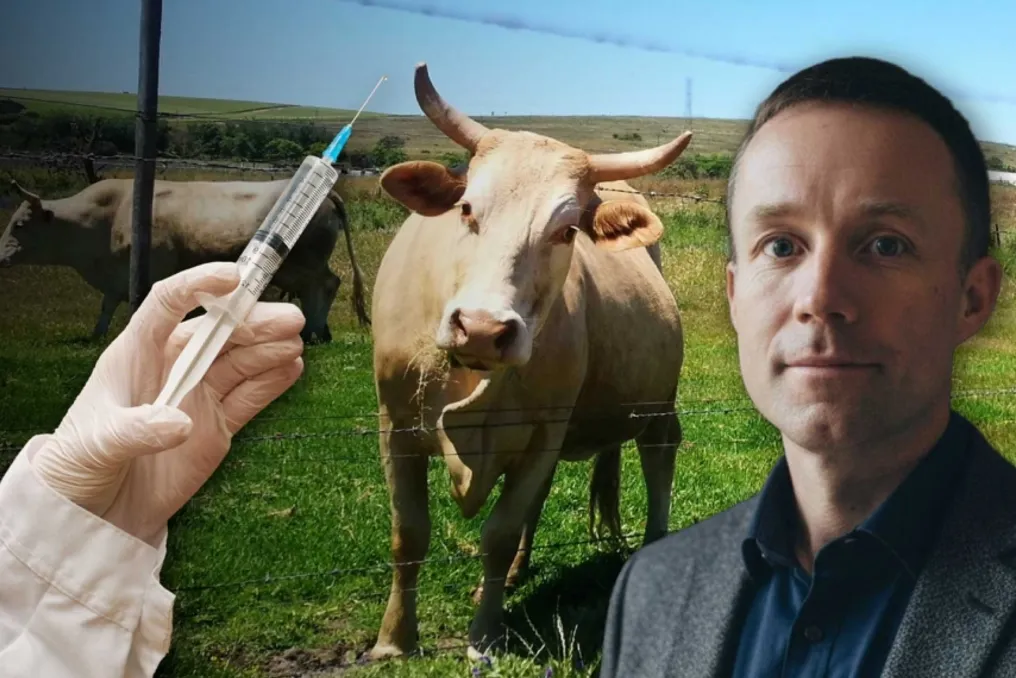
Despite significant progress in accelerated private vaccination against Foot-and-Mouth Disease (FMD), the resumption of beef exports requires providing evidence of stopping disease transmission. Andrew Murphy, a representative of FMD Response SA and a farmer, explains why reliance on a single laboratory for all diagnostic tests causes critical delays.
Recent steps by Agriculture Minister Willie Aukamp to accelerate and expand the procurement and distribution of private FMD vaccines will play a vital role in strengthening government and private sector efforts to eradicate foot-and-mouth disease. However, merely increasing the number of vaccinations will not be enough to gain the recognition needed to open export markets for South African beef.
To demonstrate to international health bodies, such as the World Organisation for Animal Health (WOAH), that the disease is being eradicated, the country must conduct regular and widespread livestock testing to measure and show the effectiveness of the vaccination program. For an adequate assessment of the country's response to FMD, WOAH requires proof of circulating strains, the presence of sufficient immune animals to halt transmission, and whether the virus is slowing down or intensifying.
Market access directly depends on verifiable tracking of disease prevalence and trends. Testing vaccination efforts is the next challenge for South Africa, one that the private sector is ready to work on with the government.
Protocols from the government's own technical working group, available in court documents, indicate that the shortage of timely diagnostics is a risk that now outweighs vaccine stock as the primary obstacle to recovery. Currently, all official FMD tests are conducted at one facility—the Agricultural Research Council's Transboundary Animal Disease Laboratory in Onderstepoort.
Although this laboratory is a highly valued WOAH reference site and sufficiently safe for handling live virus, it is now necessary to carefully assess whether it should serve as the sole diagnostic channel for the epidemic nationwide to ensure sufficient capacity for testing at the required scale and speed. Testing delays deprive South Africa of a reliable baseline of disease trends, including information on which areas are worsening or improving.
Provinces often have to wait months to find out which strain they are fighting, which slows down outbreak response, vaccine selection, and international reporting to a standstill.
Part of the solution involves moving routine blood analyses, post-vaccination monitoring, and verified screening to accredited provincial, university, and private laboratories operating under a unified national quality standard. Meanwhile, work with live viruses, confirmation, and reference functions remain in Onderstepoort, where expertise is concentrated.
This will reduce the burden on the Onderstepoort laboratory and lead to shorter test turnaround times. Farmers and their veterinarians can collect authorized samples; accredited laboratories, both public and private, can perform the tests; the industry can handle the logistics and record-keeping required by any credible surveillance system. The government's role will be to establish testing and quality standards, store test results, define disease-free zones, and prepare the argumentation that WOAH and trading partners will accept without dispute.
South Africa already uses a version of this model for avian influenza, where private veterinarians collect samples, and accredited laboratories test them according to nationally prescribed protocols. Although the biosecurity requirements for these two diseases differ, the core principle can be applied similarly: centralized quality standards, distributed execution of testing and reporting that reaches the state immediately rather than after a long delay.
The evidence must also be visible. Currently, the government publishes data on the arrival of FMD vaccines in South Africa sporadically. Instead, a brief, regular dashboard covering four areas is needed to focus the response on the correct metrics.
It is believed that reporting should include: