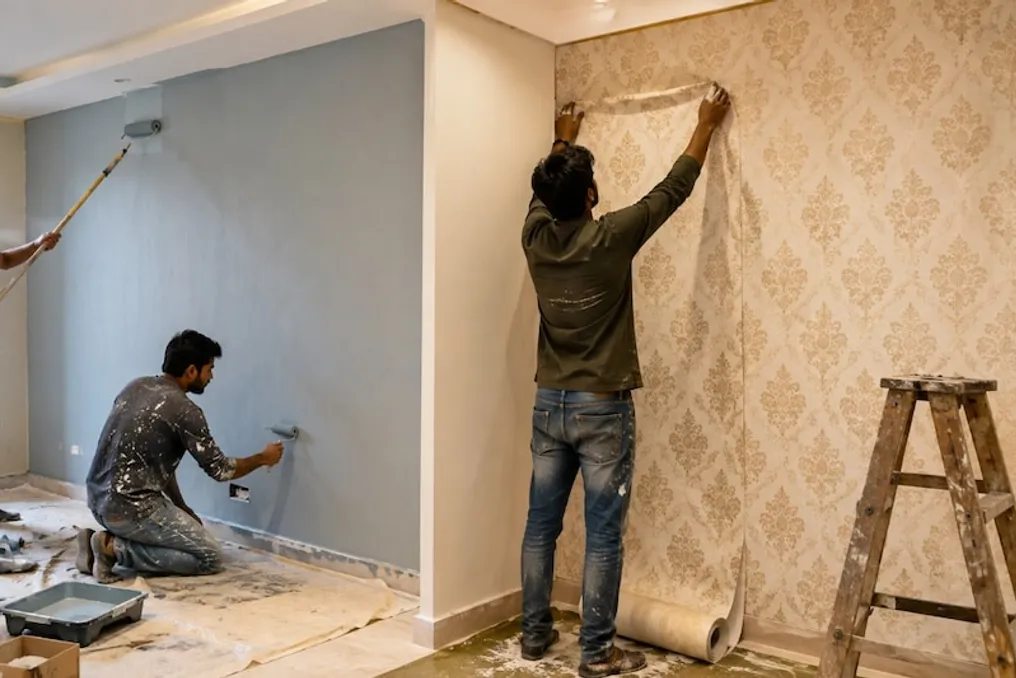
The beauty of a home is largely determined by its walls. Regardless of how expensively furnished an apartment is or what design solutions are applied inside and out, the house looks unfinished if the walls are decorated incorrectly. Today, there are many ways to give walls a shine, whether through painting or wallpapering. This article examines the options to understand which will be more affordable and how it will improve the appearance of the residence.
Both wallpaper and paint have their pros and cons. Choosing between them is an important decision that can turn into an expensive mistake you have to see every day. Next, we will look at factors that will help make the right choice between wallpaper and paint.
Whether wallpaper or paint is the more budget-friendly option for decorating walls depends on the quality of the materials themselves. Nevertheless, there are certain differences between the cost of wallpaper and paint. The initial cost of wallpapering is higher because it requires professional specialists and various types of equipment. Furthermore, when applying wallpaper, the pattern must be coordinated with the overall interior design, which increases costs.
The cost of standard wallpaper application ranges from 30 to 50 rupees per square foot. High-quality vinyl wallpaper, however, costs from 60 to 150 rupees per square foot. Although the initial costs for wallpaper may be higher, their durability justifies the price: they can last up to 15 years and possess high strength.
On the other hand, painting walls proves to be a more economical option compared to wallpaper. Although qualified craftsmen are also needed for painting, this method is significantly more accessible. The cost of applying simple paint, dispenser, or emulsion ranges from 10 to 25 rupees per square foot. However, textured or designer paint will cost more—from 60 to 250 rupees per square foot.
Although painting is cheaper, the wall coating can deteriorate over time. Paint can last 5-6 years on a well-prepared surface, but it requires renewal or touch-ups every one to two years.
Even if the paint on the walls begins to damage, minor defects can be easily fixed with repainting. Repainting can match the existing color. To restore the beauty of the wall and repaint, it is not necessary to hire professionals; this can be done yourself.
On the other hand, wallpaper is also susceptible to peeling or tearing. Even a small hole may force you to remove and reapply the wallpaper, meaning the entire process of application must be repeated. This process can be more labor-intensive and costly than repainting. Moreover, spare rolls of wallpaper may not match the color of faded wallpaper under natural light.
Both wallpaper and paint have their pros and cons. The choice between them depends on your needs and the characteristics of your home. With proper use, both materials give the home a beautiful appearance. However, paint is the most versatile choice, as it can be applied anytime and in any room. Paint can be applied over existing wallpaper, allowing the home to take on a new look.
It is important to note that wallpaper is not suitable for all rooms; it cannot be used in the kitchen or bathroom.