Following the business forum held in Tashkent, companies from Uzbekistan and Kazakhstan signed a memorandum aimed at developing industrial cooperation between the two states. The Kazakh Chamber of Foreign Trade reported this event.
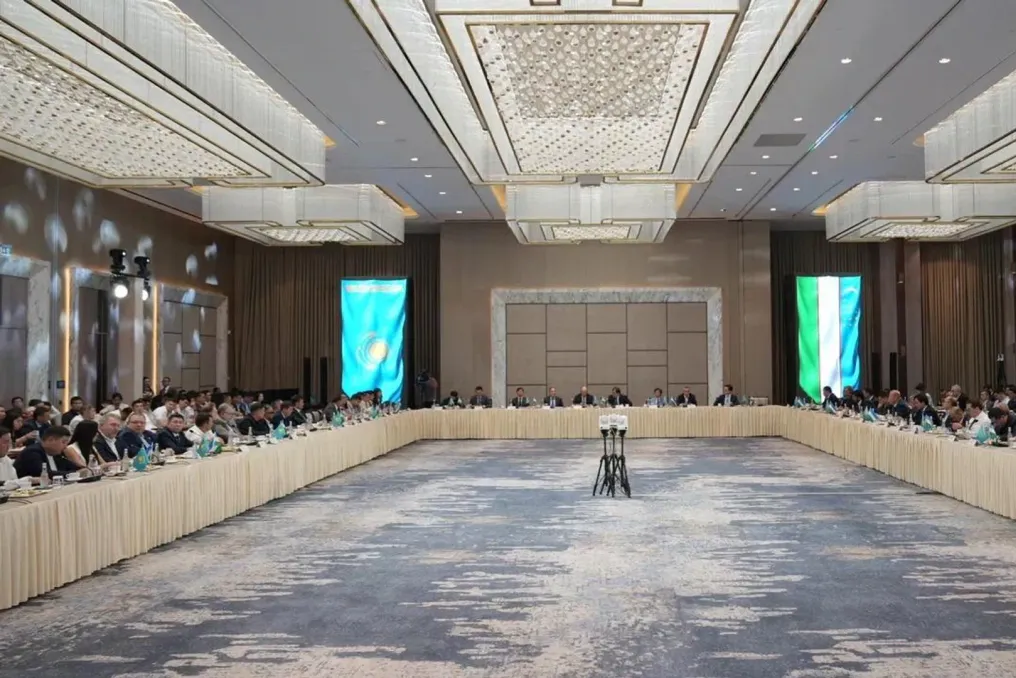
Following the business forum held in Tashkent, companies from Uzbekistan and Kazakhstan signed a memorandum aimed at developing industrial cooperation between the two states. The Kazakh Chamber of Foreign Trade reported this event.
This document was concluded between the Uzbek company Glasfit Energy and the 'Qozogiston Armatura-Izolyator Zavod' plant. The goal of the agreement is to increase the export of Kazakh products to the Uzbek market and ensure mutual supply of goods.
One of the practical areas of this partnership is the supply of products for high-voltage power lines. Furthermore, within the framework of the forum, possibilities for joint production, localization, and implementation of investment projects in various sectors were discussed, including metallurgy, chemistry, energy, mechanical engineering, agro-industry, textile industry, furniture production, household appliances, and food products.
At the conclusion of the forum, it was proposed to form a permanent expert group with the participation of trade and industrial chambers, as well as state bodies of Uzbekistan and Kazakhstan. This group could develop a joint 'roadmap' for harmonizing customs, raw material, and tariff mechanisms, as well as for simplifying cross-border movement of goods and digitizing transport and logistics processes.
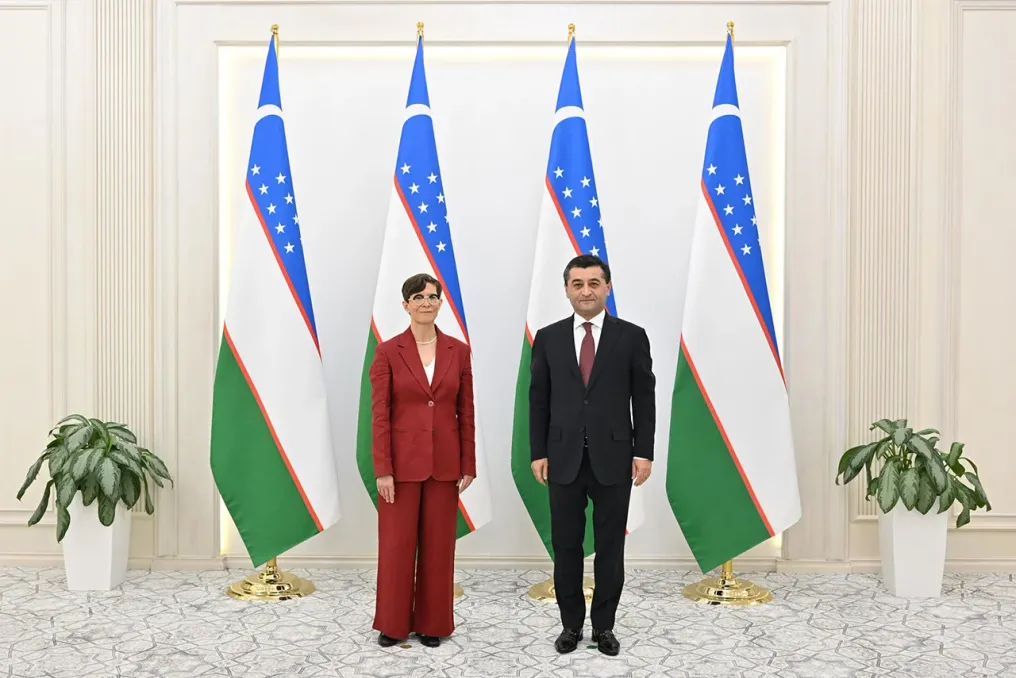
The Minister of Foreign Affairs of Uzbekistan, Bakhtiyor Saidov, met on July 7 with the founding documents of Johanna Maria Agren, the recently appointed Chargé d'Affaires of Finland in Uzbekistan.
The parties noted that relations between Uzbekistan and Finland have become significantly more active in recent years. The importance of further increasing trade, economic, and investment interaction was emphasized.
Furthermore, the meeting participants focused on the need to establish direct contacts between the business communities of both countries. Bakhtiyor Saidov wished Agren success in her diplomatic activities and assured her of Uzbekistan's full support for her efforts to strengthen Uzbek-Finnish relations.
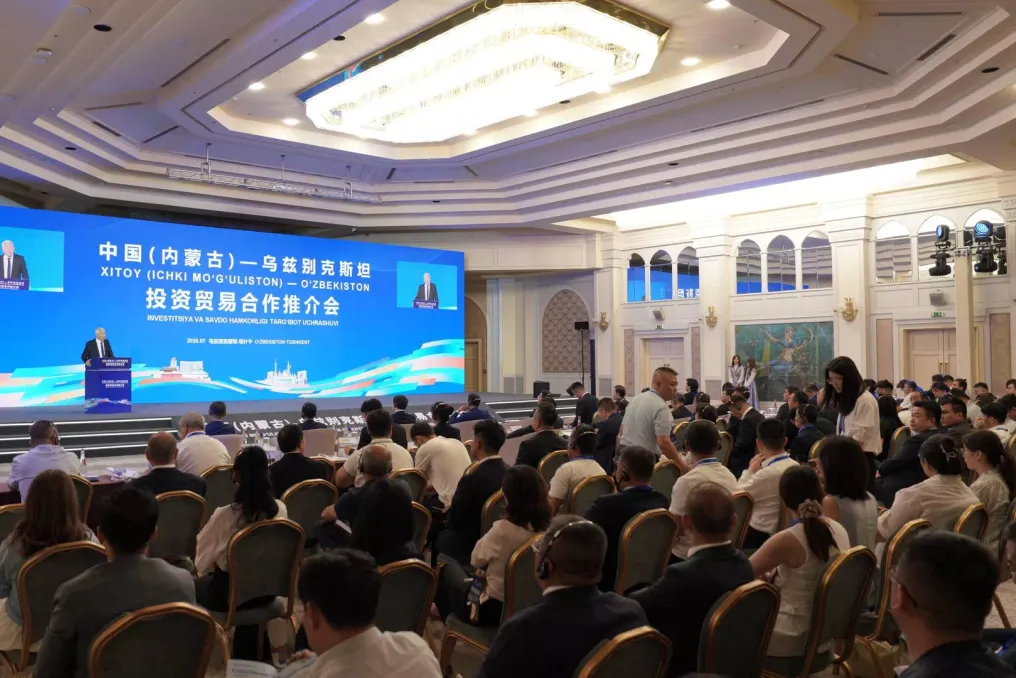
In Tashkent, representatives of companies from Uzbekistan and China, particularly from the Xinjiang Autonomous Region, held discussions on joint projects in the fields of mining, green energy, agriculture, and technology.
According to the Ministry of Investment, Industry, and Trade, 22 companies operating in sectors such as metallurgy, energy, logistics, biotechnology, automotive manufacturing, and food industry participated in the Uzbek-Chinese business forum. Representatives of state and network organizations were also present.
During the negotiations, projects concerning the mining industry, 'green' energy, agriculture, medicine, modern technologies, industrial cooperation, and export-oriented production were reviewed.
According to the ministry's data, the volume of trade between Uzbekistan and China has tripled over the last five years, reaching nearly 18 billion dollars by the end of 2025. Furthermore, the volume of direct Chinese investment has increased fivefold, amounting to 17 billion dollars.
Currently, more than 6 thousand enterprises in Uzbekistan operate with the participation of Chinese capital.
In recent years, entrepreneurship in Uzbekistan has become not only an important direction of economic policy but also a key pillar for ensuring population employment and increasing incomes. In this process, the open dialogue of the President with entrepreneurs has taken a special place. These meetings have turned into a permanent platform where business representatives directly voice their problems, propose solutions, and the state develops new support measures based on them.
The first meeting, held in 2021, laid the foundation for a new format of cooperation between the state and entrepreneurs. It was particularly noted that the private sector provides almost 90% of jobs created annually, and over 5 million people work in this sector. Special attention was paid to how significantly the attitude of society and government bodies towards entrepreneurs has changed, as they have begun to recognize business as the driving force of the economy and an important element of the development of New Uzbekistan.
Before these meetings began, over 15 thousand questions, proposals, and initiatives were received from entrepreneurs, which indicated the high need of the business community for direct and practical interaction with the authorities. The first fruits of this format were visible already in 2022. In one year, entrepreneurs built more than 55 thousand business facilities. The number of business entities with an annual turnover exceeding 1 million dollars increased from 5 thousand to 26 thousand.
Furthermore, another thousand entrepreneurs increased their turnover to the level of 1 to 10 million dollars, and the total turnover of 220 companies reached 100 million dollars. An important result was the growth in the foreign trade sector: the number of exporting enterprises reached 7.5 thousand, and the total export volume increased by 30%. In 2022, in addition to quantitative growth, a number of proposals for systemic reforms were put forward. One of the most important decisions was the division of business entities into micro, small, and medium businesses. This allowed for the abandonment of uniform standards of approach to all entrepreneurs and created the possibility of targeted support depending on the scale of activity and potential.
Based on this decision, starting January 1, 2023, a single rate of 4% was established for micro-businesses, replacing the previous system of rates that varied from 4% to 25% depending on the turnover volume. In 2023, the open dialogue was assessed as an effective mechanism for solving problems in entrepreneurship. Following the meetings of 2021 and 2022, 57 and 55 initiatives were advanced, respectively, which led to significant results. Among them are the division of business entities into categories and the introduction of special tax, credit, and financial regimes in 60 districts. Entrepreneurs operating in these districts benefited from discounts totaling about 1 trillion sums over six months, and in 20 districts, entrepreneurs' incomes increased by 1.5–2 times.
There were also significant changes in the tax system. Over the year, 20 trillion sums of VAT were returned to 6 thousand enterprises. Additionally, more than 7 trillion sums were returned to over 2 thousand exporters who complied with tax obligations, without waiting for currency receipts. Reaching 184 thousand VAT payers indicates the transition of business entities from the 'shadow economy' to legal activities. Inspections were reduced, and financial fines applied as a result of desk audits and some reporting deficiencies were abolished. As a result, the number of small enterprises grew to 40 thousand, and then to 490 thousand; the number of medium enterprises increased by 2 thousand, reaching 10 thousand; and the number of large enterprises reached 1.5 thousand.
The scope of the open dialogue is expanding in 2024. Work with entrepreneurs is conducted consistently almost year-round—from the President and Government to the khokimiyats, the Chamber of Commerce and Industry, and the Business Ombudsman. In addition to approved programs and plans, over 700 questions, initiatives, and new projects proposed by entrepreneurs have received support. To achieve these goals, an additional 8 trillion sums were allocated, and another 18 trillion sums were directed to infrastructure development in the fields of industry, agriculture, services, and entrepreneurship.
As a result, the sector is experiencing qualitative growth. The share of enterprises operating for more than three years reached 76%, and their number reached 300 thousand for the first time. The turnover of business entities for the year exceeded 25%, reaching 986 trillion sums. The number of medium enterprises with a turnover of 10 to 100 billion sums doubled, and the number of large enterprises with a turnover exceeding 100 billion sums exceeded 2,200. Moreover, 16 thousand enterprises that were previously operating at a loss transitioned to profitable activities within six months, generating a total income of 6.5 trillion sums.
An important result was the improvement of relations between the state and business. The number of tax inspections decreased from 85 thousand to 48 thousand, and desk audits decreased from 38 thousand to 12 thousand. At the same time, tax revenues did not decrease but rather increased: by 10% from large taxpayers, by 25% among enterprises at the regional level, and by 40% among district-level entrepreneurs. This situation demonstrates that strengthening mutual trust, reducing administrative pressure, and stimulating legitimate entrepreneurial activity can yield more effective results than excessive control.
In 2025, the main focus is on transitioning to a new stage of entrepreneurial development. In the first half of the year, economic growth was 7.2%. Within this growth, thousands of micro and small enterprises began to develop actively. Over the year, 1,600 micro-enterprises with a turnover exceeding 10 billion sums transitioned to the category of medium-sized businesses. 143 micro-enterprises became large business entities, and another 122 small enterprises joined the ranks of large companies.
Indeed, the country is giving top priority to bringing business activities out of the 'shadow economy' and legalizing population employment. Thanks to the implemented new mechanisms, the number of jobs in 139 thousand enterprises increased to 811 thousand, and then to 3 million. The wage fund in 273 thousand enterprises increased by 22%, reaching 4.6 trillion sums. If the average monthly salary in the private sector in 2024 was about 4 million sums, in 2025 this figure approached 5 million sums. This highlights that entrepreneurship is not only a source of income but also an important factor in improving the welfare and standard of living of the population.
In conclusion, the open dialogues held from 2021 to 2025 have transformed into an effective feedback mechanism between the state and business entities. Systemic problems arising in the activities of entrepreneurs are identified and resolved promptly and practically. Simplifying the tax and administrative burden, expanding opportunities for using financial resources, and supporting export activities and investment projects have contributed to strengthening mutual trust between the state and entrepreneurs.