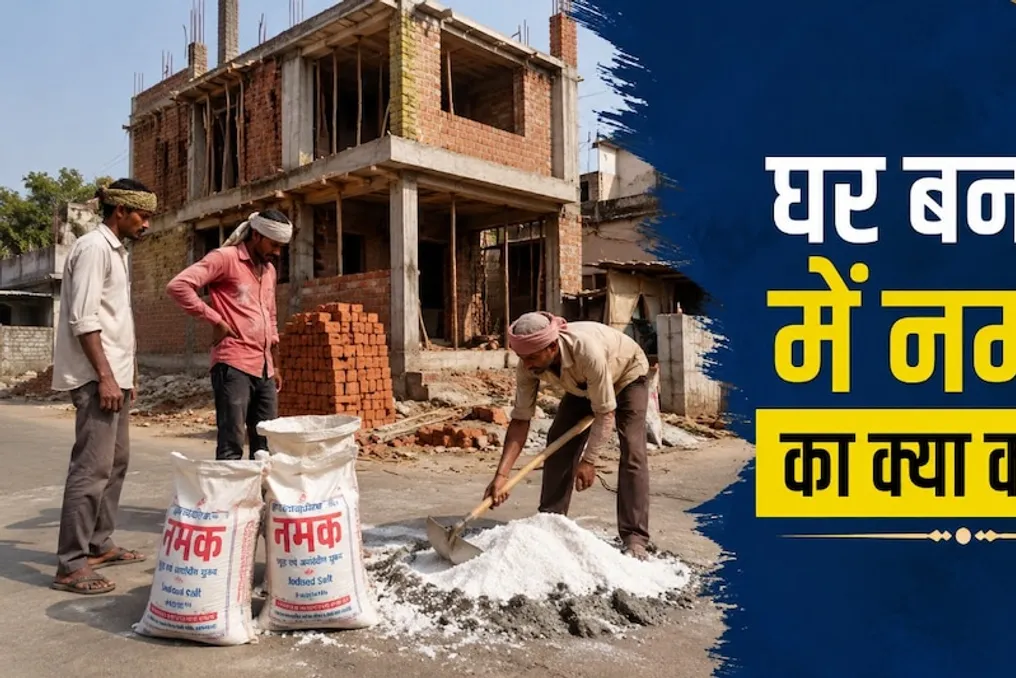
When constructing residential buildings, bricks, cement, and gravel are traditionally ordered; however, previously salt was also necessarily added to this list. The question arose as to why salt was used, especially given concerns that its application in cement could spoil the material. Today, this practice or method is considered obsolete, and the use of salt has decreased.
The main purpose of salt was to create a grounding system, which was a traditional way to ensure grounding. With this method, a deep pit, reaching 8–10 feet or more, was dug outside the house. Then, a copper plate or GI pipe was installed in this pit. Layers of coal and salt were laid around the pipe.
Water was periodically poured on top to keep the soil moist. Thanks to the mixing of salt and coal, the soil began to effectively conduct electricity into the ground. Thus, if a current leak occurred, it was directed into the soil along the grounding path, not towards a person.
Nevertheless, this method became less frequently used because it did not ensure long-term operation. Over time, the effectiveness of the grounding decreased: the salt was gradually washed away by rain or water, the metal pipe corroded, and the quality of the grounding deteriorated after several years.
Currently, grounding that does not require maintenance is used in quality construction. For this, copper or GI grounding rods are installed in the ground at depth. They are filled with special compositions, such as bentonite or EEC (a composite for improving grounding). These materials are capable of retaining moisture for a long time and easily transmitting electricity into the ground, without requiring salt. It is believed that this method remains effective for a long time because the electrode is less susceptible to rust.