
All higher education institutions in the country bear a common responsibility for ensuring quality education for millions of young people and training students who are future qualified personnel relevant to the future of the state.
All higher education institutions in the country bear a common responsibility for ensuring quality education for millions of young people and training students who are future qualified personnel relevant to the future of the state.
Information was provided regarding Obid Tursunovich Mamadiyorov's defense of his PhD dissertation in technical sciences. His dissertation topic is focused on substantiating the parameters of a tool that processes soil for planting autumn wheat among rows.
During the years of independence, Uzbekistan's foreign policy adopted a path of phased development. In the initial period, the main task was to strengthen national sovereignty and purposefully secure its place in the international community.
Subsequently, the essence of foreign policy activity changed by focusing on issues such as security, geopolitical balance, regional cooperation, and openness to the world.
In particular, in recent years, Uzbekistan has entered a new stage in its history with its efforts to foster good neighborliness in Central Asia, expand transport-logistics, trade-economic, and investment relations.
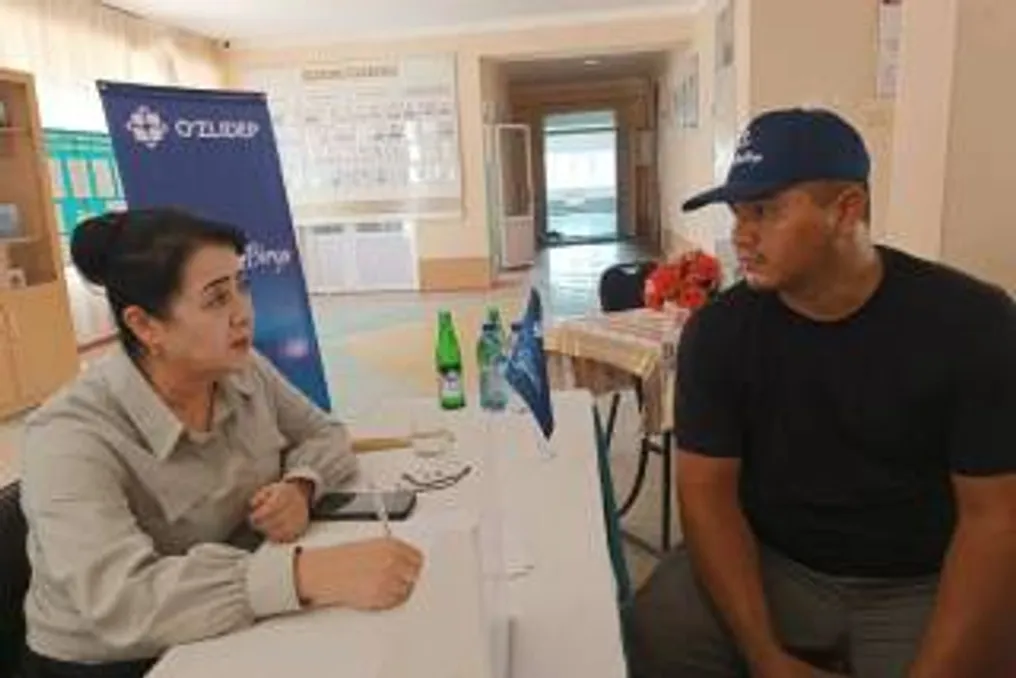
As part of O'zLiDeP's 'Together with the People' national program, another public reception was held in Yangiyer city. The main goal of this event was to study the problems of the population on-site, find quick solutions to appeals, and engage in open dialogue with citizens.
A total of 56 appeals were received from citizens during the reception. 38 of them were resolved positively at the location. Specific tasks were assigned to responsible organizations and departments regarding the remaining appeals, and their implementation was put under supervision.
Senator Pokiza Ahmadjanova, State Duma Deputy Gavhor Olimova, O'zLiDeP Sirdaryo Region Council apparatus head Shohista Bozorboeva, as well as deputies from regional and city councils, party activists, and local government officials participated in the reception.
The majority of the appeals related to issues such as medicine, education, electricity supply, drinking water, natural gas supply, household waste removal, and social support. Each appeal was examined in detail, and responsibilities were assigned to the individuals responsible for finding a solution.
The public reception also provided an opportunity for the people not only to complain but also to present their suggestions and initiatives. In particular, proposals regarding employment provision, vocational training for youth and women, attracting young specialists to the regions, developing entrepreneurship, and creating new jobs were discussed.
As emphasized at the event, direct communication with the people, studying problems in the field rather than in the office, and approaching each appeal on-site are the main goals of these public receptions. This serves to quickly resolve issues troubling citizens and strengthen open communication between state bodies and the population.
At the end of the event, special attention was paid to ensuring the implementation of appeals, finding timely solutions to social issues worrying the population, and eliminating pressing problems in the regions.