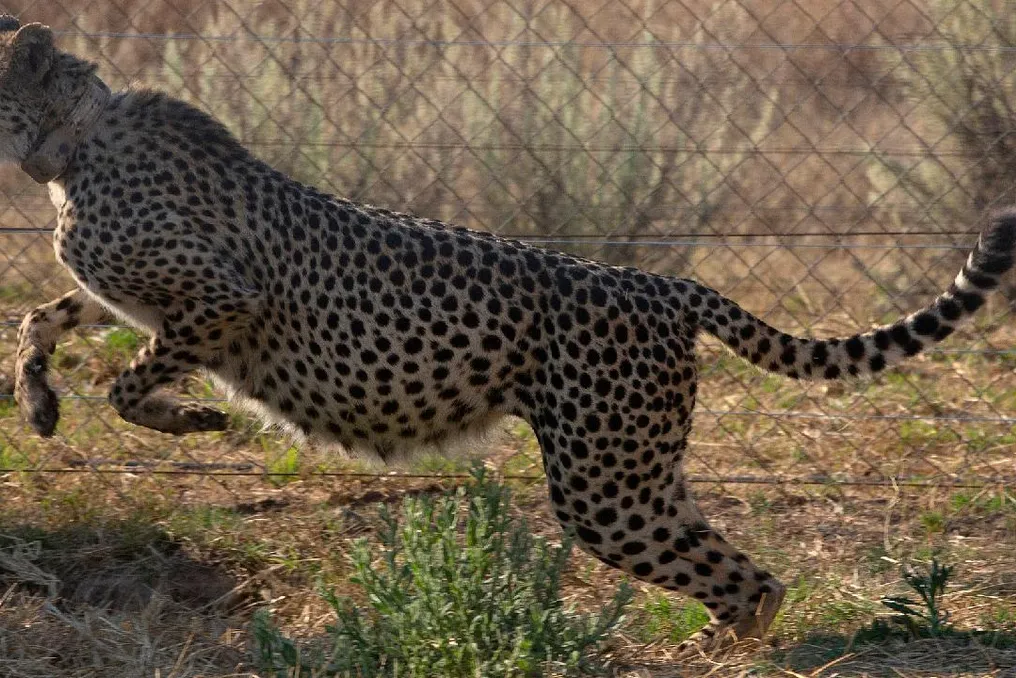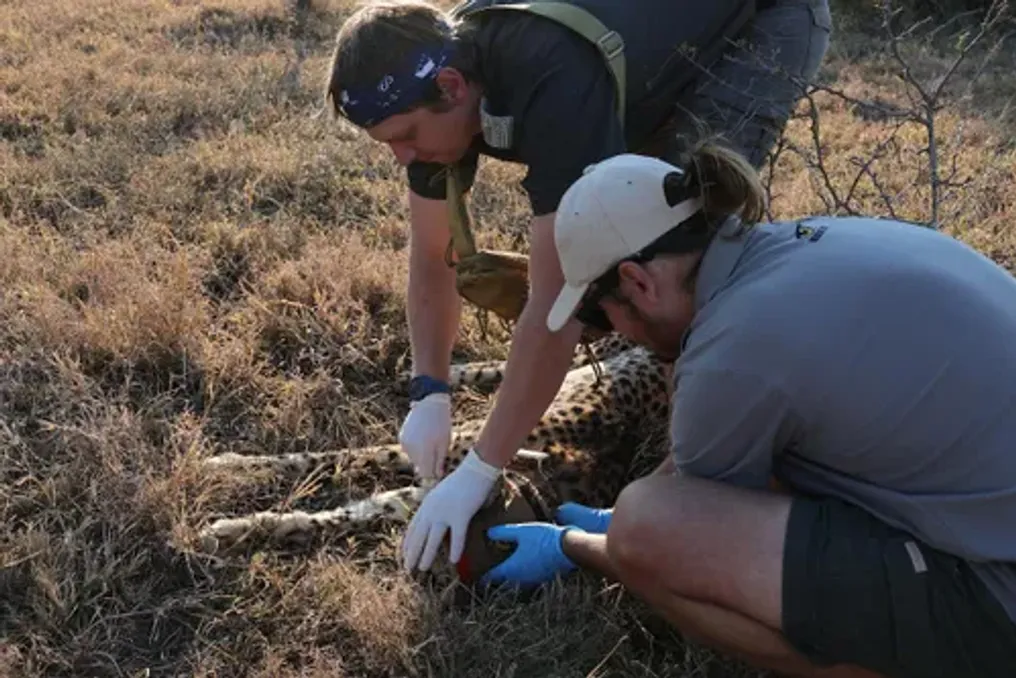
As part of a major operation to conserve cheetahs in KwaZulu-Natal, five more tracking collars were fitted in Hluhluwe-iMfolozi Park, contributing to long-term monitoring of one of South Africa's largest wild populations.
The eight-day operation, which took place at the end of July, was conducted by Wildlife ACT and Ezemvelo KZN Wildlife with support from the Forever Wild Foundation. Consequently, the total number of collared cheetahs in the park increased to eight since the start of the monitoring program in late 2025. Of the five animals fitted with collars, three received them for the first time.
The operation relied on the work of several ground teams, who received support from drones, a fixed-wing aircraft, and a helicopter provided by Ezemvelo KZN Wildlife. According to Wildlife ACT, the drone conducted 94 flights, accumulating over 30 hours in the air to help locate these elusive predators across the park's complex and diverse terrain.
Veterinary supervision was carried out by Ezemvelo KZN Wildlife veterinarians, Dr. Rowan Liming and Dr. Jennifer Lawrence, as well as Dr. Liam Best from African Wildlife Vets. Conservation team members noted that the selection of cheetahs for collar fitting is a carefully planned process based on age, sex, reproductive status, and the animal's role in the population.
Several factors are considered when selecting a cheetah for collaring, including age, sex, presence of an existing collar, and social structure. Given the rapidly growing cheetah population in HiP, priority is given to breeding females, young dispersing individuals, and potential candidates for future relocation. Females with cubs are not collared due to risks associated with separation, and weather conditions, topography, and animal welfare are also taken into account before the procedure.
One adult female required several days to locate before conditions were suitable for safe collar fitting. Ezemvelo KZN Wildlife veterinarian, Dr. Jennifer Lawrence, commented: 'Working with cheetahs is always a privilege. They are difficult to collar because they are very sensitive to drugs, and overheating poses a great danger. Conditions must be ideal, and anesthetic management becomes a priority.'
Not all animals encountered during the operation were collared. Teams postponed collaring if cubs were too young or conditions were unsuitable. Furthermore, one previously collared male received treatment for a minor injury under sedation and was released to rejoin his coalition.
Wildlife ACT reported that the specially designed collars combine GPS tracking via LoRaWAN technology with VHF telemetry. This allows conservation teams to remotely monitor the animals and locate them on the ground amidst dense vegetation where visual observation is difficult. The collected data will help control movements, identify suitable candidates for future translocations, and support long-term conservation planning.
Chris du Toit, Manager of the Wild Dog and Cheetah Conservation Program at Wildlife ACT, emphasized that each collar provides valuable information on how animals use the landscape and how the population changes over time. He added: 'Long-term understanding allows us to effectively plan for the future of this population and ensure it continues to play its role in species survival across South Africa.'
Genetic samples were also collected from all collared cheetahs to assess the genetic health of the population and assist in making future management decisions. Hluhluwe-iMfolozi Park is home to one of South Africa's most important cheetah populations, whose numbers have significantly increased over the last decade. Conservationists believe that continuous monitoring is necessary to reduce the risk of genetic bottlenecks, which could make populations more vulnerable to disease and environmental changes, despite the increase in numbers.
Wildlife ACT, Ezemvelo KZN Wildlife, African Wildlife Vets, Forever Wild Foundation, WildSky Foundation, and Ford Wildlife Foundation participated in the operation. The cheetah is currently listed on the IUCN Red List as a Vulnerable species, with estimates globally suggesting fewer than 7,500 individuals remaining, including fewer than 1,000 in South Africa.