A specialized seminar on the implementation of additive technologies (3D printing) in industrial enterprises of Uzbekistan was held at the 'Uzatom' agency.
A specialized seminar on the implementation of additive technologies (3D printing) in industrial enterprises of Uzbekistan was held at the 'Uzatom' agency.
The most powerful solar telescopes, such as the Daniel K. Inouye Solar Telescope, have managed to obtain the clearest images and video recordings of the Sun's surface to date. This research was published in the journal Nature on August 5th. Scientists used this telescope, located on Maui Island in Hawaii, to examine an area near a sunspot in great detail.
During observations, tiny rotating magnetic whirlpools were discovered on the Sun's surface. According to scientists, this discovery could significantly aid in understanding how solar storms occur and why the Sun's outer atmosphere, the corona, remains so hot.
Although the Sun appears calm from a distance, its surface is constantly in motion. Hot plasma moves continuously there, and magnetic fields also change. Thanks to new images and computer modeling, scientists were able to clearly see these small vortices for the first time. They believe that these vortices play a key role in the formation and propagation of magnetic energy in the Sun.
The process observed by scientists is called Kelvin-Helmholtz Instability (KHI). It occurs when two streams of plasma or gas pass past each other at different speeds, leading to the formation of small rotating vortices. This process has previously been observed in clouds, ocean waves, and the atmospheres of planets like Jupiter. However, it was seen on the Sun in such clear photographs for the first time.
According to the lead author of the study and a scientist at the National Solar Observatory, Dr. David Curridge, these small vortices distort and tangle the Sun's magnetic fields, contributing to the accumulation of magnetic energy. This energy is later suddenly released, causing phenomena such as solar flares and coronal mass ejections (CMEs). If these events are directed toward Earth, they can affect satellites, GPS systems, radio networks, and power grids.
Scientists have long tried to figure out why the Sun's outer atmosphere, the corona, is hotter than its surface. According to this new research, these small vortices divide large plasma flows into smaller parts. This allows energy to reach smaller levels and be released as heat. Scientists believe this could be one of the main reasons for the elevated temperature of the corona.
This discovery was made possible by the Daniel K. Inouye Solar Telescope, which is located on Maui Island in Hawaii. Its primary mirror has a diameter of 4 meters (about 13 feet). The telescope is equipped with technology that reduces image blurring caused by Earth's atmosphere. It is thanks to this that scientists were able to clearly observe the smallest details of the Sun.
Scientists note that this discovery will help in better understanding solar storms in the future. If the relationship between these small vortices and large solar eruptions is fully understood, preparing to protect satellites, communication systems, and power grids will become easier.
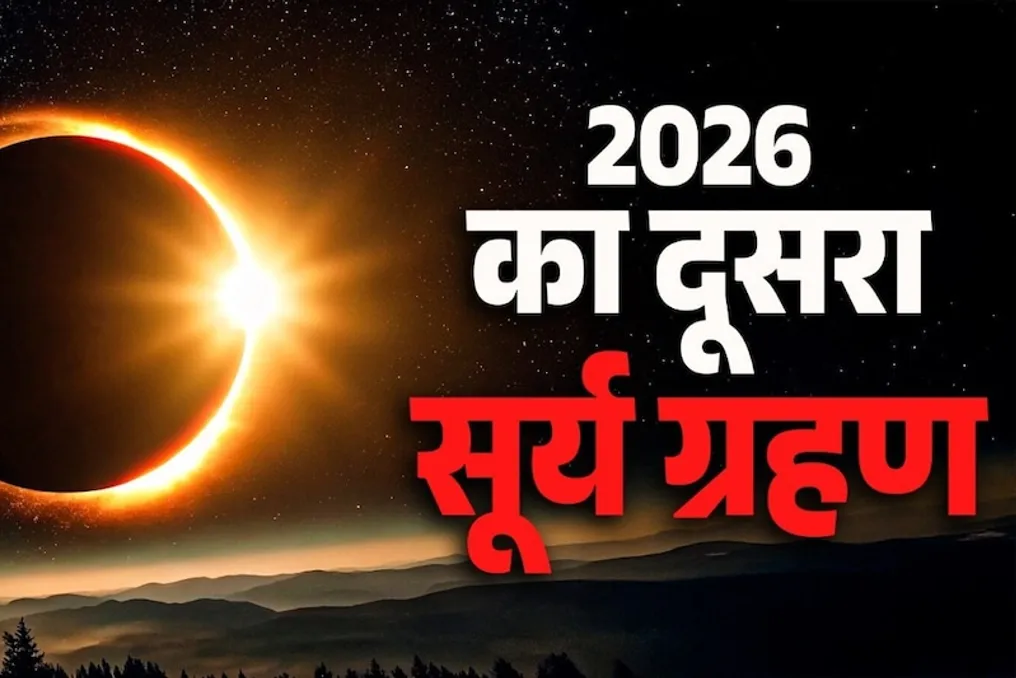
Many are interested in the date of the total solar eclipse, which will occur on August 12. In India, this eclipse falls around the time of Savan Shivaratri, which is August 11, so it is crucial to know the exact date and time of the event.
According to Drik Panchang, the total solar eclipse will begin on Wednesday, August 12, 2026. However, its final phase will last until the morning of August 13. This is a rare total solar eclipse, considered highly significant from both astronomical and astrological perspectives.
According to Indian time, the eclipse will start on August 12 at 21:04 and end on August 13 at 01:27. The brightest moment of the total solar eclipse is expected at 22:16. The total duration of this phenomenon will be 4 hours, 23 minutes, and 40 seconds.
A total solar eclipse occurs when the Moon completely covers the Sun, leaving only the light of the Sun's corona visible. It can be observed with the naked eye without special equipment.
According to astrologers, the solar eclipse scheduled for August 12 will not be visible in India. Instead, it will be observed in several locations, including Northern Russia, Greenland, Iceland, the North Atlantic, Spain, and Portugal. A partial eclipse can be seen in large parts of Europe, most of Canada, some regions of North America, and Northwest Africa.
According to sacred scriptures, the Vajral period begins 12 hours before the start of the solar eclipse. Nevertheless, religious rules stipulate that the Vajral period is only valid in places where the eclipse is directly observed. Since it will not be visible in India, the Vajral period will not be considered valid there. Temple doors will remain open, and there will be no restrictions on worship, auspicious deeds, or daily religious rituals.
Even if this eclipse is not visible in India, according to astrology, the change in the signs of the Sun and other planets subtly affects all 12 zodiac signs. For people born under the signs of Aries, Leo, and Sagittarius, new opportunities for career growth and income may arise. At the same time, people with Cancer and Scorpio signs should exercise caution regarding financial transactions and health.
During the eclipse, one must not look at the Sun with the naked eye, as direct exposure can damage the retina. Also, according to religious beliefs, one should refrain from preparing or consuming food during the eclipse period, as it is believed that the influence of negative energy in the atmosphere intensifies during this time. Pregnant women are prohibited from using sharp or cutting objects such as scissors, needles, or knives, or going outside. Furthermore, during the eclipse, it is forbidden to start any new endeavors, worship, or auspicious rituals, nor to touch statues of deities; during this period, it is recommended to keep temple sanctuary doors closed at home.
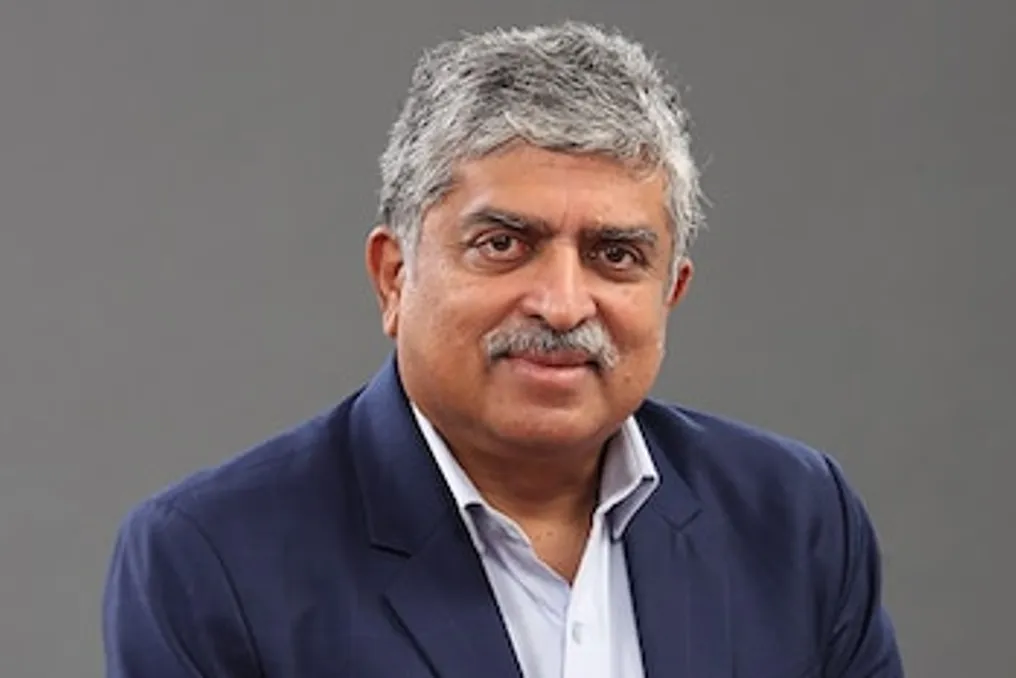
Infosys co-founder Nandan Nilakani stated on Thursday that the future of job creation in India will depend on millions of small businesses rather than large corporations. He argued his position by stating that artificial intelligence (AI) makes highly structured companies more vulnerable to automation.
Speaking at an event organized by the National Council for Applied Economic Research (NCAER), Nilakani noted that large companies are likely to become 'net job losers' as AI takes over routine tasks. Meanwhile, employment will increasingly be generated by small firms where employees perform multiple functions.
Nilakani explained that small enterprises will be the future sector for job creation because well-structured large companies are most susceptible to job losses. He added that since every position in such companies boils down to several defined tasks, they are easily automated and jobs can be eliminated. Consequently, large firms are likely to incur a net loss in terms of employment in the coming years.
He also called for simplifying regulatory norms, easing access to credit and markets, and utilizing AI tools to support small business growth. Nilakani mentioned that initiatives like the Account Aggregator framework can improve access to formal credit, while the Open Network for Digital Commerce (ONDC) can help small businesses reach wider markets. These measures, combined with deregulation and AI-based business support, have the potential to empower millions of entrepreneurs.
These statements are particularly significant as they came after the Center appointed Nilakani as chairman of a high-level examination reform commission following the Neet-UG document leak and mass student protests. On Thursday, he emphasized that India should apply AI to improve learning outcomes and expand access to knowledge through Indian language interfaces and voice interfaces.
He asserted that the country can become a global 'AI use case capital' if it implements this technology in areas such as education, agriculture, and healthcare, instead of focusing solely on AI infrastructure. Nilakani added that India can become a leader precisely in the field of applied AI, as the country actively adopts and makes AI useful. He believes that applying AI to change the lives of Indians on a population scale, similar to how digital public infrastructure was done, is the right direction for development, as it demonstrates the real utility of AI, not just its status as a technology.
Nilakani insisted that India's focus should be on solving real problems with AI, rather than competing in AI infrastructure sectors such as chips, data centers, and large language models. He also stated that AI must be available in Indian languages and through voice interfaces so that people can access knowledge regardless of whether they read in English. He noted that providing AI in users' native languages, accounting for the natural code-mixing in Indian conversations, will significantly expand access to technology and boost productivity.
Furthermore, he advocated for the introduction of portable social benefits and digital credentials that workers could carry with them when changing employers, given that workforce mobility and the gig economy are becoming increasingly common. According to him, workers should retain benefits such as pensions, insurance, and healthcare when moving to a new job, rather than having them tied to a single employer. Nilakani concluded that the key to success lies in creating portable credentials and portable benefits, ensuring complete portability of all benefits—savings, pensions, insurance, unemployment benefits, and healthcare.