Lake levels in Kenya, including Lake Baringo and other bodies of water in the Rift Valley, have risen to levels unseen for at least half a century. Scientists attribute this rise to extreme rainfall, which is a consequence of climate change.
Lake levels in Kenya, including Lake Baringo and other bodies of water in the Rift Valley, have risen to levels unseen for at least half a century. Scientists attribute this rise to extreme rainfall, which is a consequence of climate change.
According to official data, tens of thousands of people have been forced to relocate to higher ground, but many affected residents note that the lakes continue to follow them.
In 2011, when the lake first experienced a significant rise, 40-year-old Mary Milka Tiren lost her husband after a hippopotamus attack on her way home from work to a popular tourist resort, which is now completely flooded. Ten years later, her nine-year-old son spent three months in the hospital after a crocodile attack, sustaining a scar on his right arm.
Tiren recounted that 'it wanted to tear off his entire arm from his shoulder... but his peers saved him after a long struggle.' Jackson Komben, Senior Warden of the Kenya Wildlife Service (KWS), told AFP that the increase in crocodile attacks is not related to an increase in predator populations, but rather to the lake becoming close to residential buildings. He also noted that the expansion of the lake area has led to the loss of coastal ecosystems, where there were previously pastures, which in turn has caused hippo attacks.
Analysis of Copernicus Sentinel and NASA Landsat satellite imagery showed that the surface area of Lake Baringo has increased by 70 percent since 2010, reaching 234 square kilometers compared to the previous 138 square kilometers. The neighboring Lake Bogoria, known for its high sodium content, has also expanded by 21 percent over the same period, increasing from 34 to 41 square kilometers.
As the water levels in these two lakes—one freshwater, the other alkaline—have risen, the distance between them has decreased. Komben warned that if the lakes mix, fish, crocodiles, and hippos could die, leading to an unknown ecological catastrophe. Lake Baringo is a source of vital drinking and irrigation water and supports a thriving fishing industry.
Komben added that the situation could trigger a complete shift, and he is unsure if people can continue living in the area. The current distance between the lakes is estimated to be about 10 kilometers. Scientist Matthew Herngegger from the Austrian University of Natural Resources and Life Sciences stated that 'overflow is already occurring,' as satellite altimetry shows that the water level in Bogoria is high enough to overflow into Baringo, although the impact of this overflow remains uncertain.
The expansion of both lakes has dealt a serious blow to the tourism sector. Komben reported the loss of 80 percent of community conservation areas where giraffes, ostriches, wildebeest, and impalas were relocated. AFP found that at least four resorts near Lake Baringo have been flooded, and another remains abandoned on an island.
In Lake Bogoria, known for its flamingos and hot springs, the rising water level has caused a significant exodus of birds and flooded some springs. Michael Baymet, director of the local disaster management department, reported that tourism revenue has dropped from approximately $1 million annually to $200,000.
Google reviews show complaints about the decline in flamingo population in Lake Bogoria and impassable roads due to rising water levels.
Educational institutions have also suffered damage. Official records indicate that about 12 educational facilities around Lakes Baringo and Bogoria have been affected, with some being completely submerged. Approximately 240 primary and junior school students and staff on Kokwa Island in Marigat are now forced to cross Lake Baringo, which is teeming with crocodiles, reducing instructional time due to frequent ferry trips.
The women's dormitory is the most vulnerable, located just inches from the waves. One school worker noted that 'it is too dangerous for the girls who live here, as hippos and crocodiles come to the school at night.' Consequently, the school had to hire two guards to ensure student safety. The school fears that expected El Niño rains in October could flood the dormitory.
Residents on the same island know they will have to move as the water advances, but financial difficulties remain a serious problem. Faith Mpaei, 40, has moved the fence around her two-acre farm twice since 2016, when she said the lake began advancing rapidly. Her fence is now underwater, and the water is rising almost a third of the height of the house. This mother of five children stated: 'It has brought me to zero. We are helpless... I am only here temporarily, I need to move... there is nothing else to do here.'
As part of a major operation to conserve cheetahs in KwaZulu-Natal, five more tracking collars were fitted in Hluhluwe-iMfolozi Park, contributing to long-term monitoring of one of South Africa's largest wild populations.
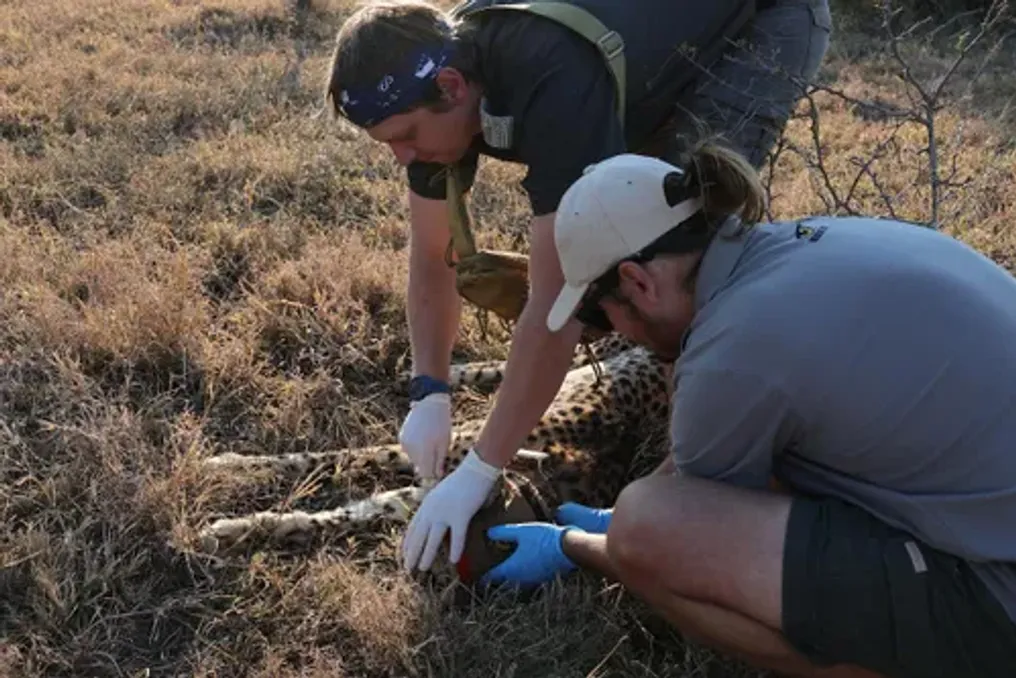
The eight-day operation, which took place at the end of July, was conducted by Wildlife ACT and Ezemvelo KZN Wildlife with support from the Forever Wild Foundation. Consequently, the total number of collared cheetahs in the park increased to eight since the start of the monitoring program in late 2025. Of the five animals fitted with collars, three received them for the first time.
The operation relied on the work of several ground teams, who received support from drones, a fixed-wing aircraft, and a helicopter provided by Ezemvelo KZN Wildlife. According to Wildlife ACT, the drone conducted 94 flights, accumulating over 30 hours in the air to help locate these elusive predators across the park's complex and diverse terrain.
Veterinary supervision was carried out by Ezemvelo KZN Wildlife veterinarians, Dr. Rowan Liming and Dr. Jennifer Lawrence, as well as Dr. Liam Best from African Wildlife Vets. Conservation team members noted that the selection of cheetahs for collar fitting is a carefully planned process based on age, sex, reproductive status, and the animal's role in the population.
Several factors are considered when selecting a cheetah for collaring, including age, sex, presence of an existing collar, and social structure. Given the rapidly growing cheetah population in HiP, priority is given to breeding females, young dispersing individuals, and potential candidates for future relocation. Females with cubs are not collared due to risks associated with separation, and weather conditions, topography, and animal welfare are also taken into account before the procedure.
One adult female required several days to locate before conditions were suitable for safe collar fitting. Ezemvelo KZN Wildlife veterinarian, Dr. Jennifer Lawrence, commented: 'Working with cheetahs is always a privilege. They are difficult to collar because they are very sensitive to drugs, and overheating poses a great danger. Conditions must be ideal, and anesthetic management becomes a priority.'
Not all animals encountered during the operation were collared. Teams postponed collaring if cubs were too young or conditions were unsuitable. Furthermore, one previously collared male received treatment for a minor injury under sedation and was released to rejoin his coalition.
Wildlife ACT reported that the specially designed collars combine GPS tracking via LoRaWAN technology with VHF telemetry. This allows conservation teams to remotely monitor the animals and locate them on the ground amidst dense vegetation where visual observation is difficult. The collected data will help control movements, identify suitable candidates for future translocations, and support long-term conservation planning.
Chris du Toit, Manager of the Wild Dog and Cheetah Conservation Program at Wildlife ACT, emphasized that each collar provides valuable information on how animals use the landscape and how the population changes over time. He added: 'Long-term understanding allows us to effectively plan for the future of this population and ensure it continues to play its role in species survival across South Africa.'
Genetic samples were also collected from all collared cheetahs to assess the genetic health of the population and assist in making future management decisions. Hluhluwe-iMfolozi Park is home to one of South Africa's most important cheetah populations, whose numbers have significantly increased over the last decade. Conservationists believe that continuous monitoring is necessary to reduce the risk of genetic bottlenecks, which could make populations more vulnerable to disease and environmental changes, despite the increase in numbers.
Wildlife ACT, Ezemvelo KZN Wildlife, African Wildlife Vets, Forever Wild Foundation, WildSky Foundation, and Ford Wildlife Foundation participated in the operation. The cheetah is currently listed on the IUCN Red List as a Vulnerable species, with estimates globally suggesting fewer than 7,500 individuals remaining, including fewer than 1,000 in South Africa.
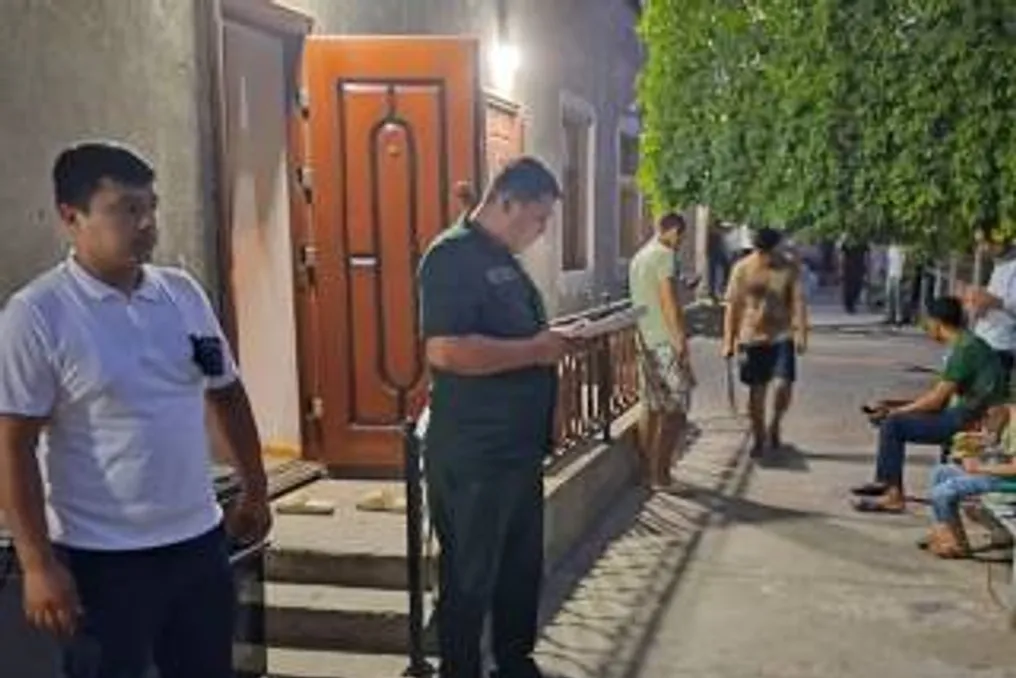
Property rights of a citizen have been restored in the Sirdryo district. Based on the legally effective decision of the Guliston interdistrict court for civil cases, the illegally occupied house was returned to its legal owner.