In Jammu and Kashmir, there is a unique kind of ambition that thrives not despite the difficulties, but because of them. These aspirations have ceased to be mere stories and are acquiring institutional character. Beneath the usual narratives about the region lies a quieter but significant story: thousands of young people prefer to create rather than wait.
Similar stories
Popular
Gradually, a complete ecosystem is forming around them. This story tells how the foundation was laid—the institutions, policies, capital, and culture that needed to take shape before any talk of the next step could begin.
Startup ecosystems do not emerge spontaneously; they are built gradually through the patient creation of institutions, which rarely makes it into news headlines. The central institution in these efforts is the Jammu and Kashmir Entrepreneurship Development Institute (JKEDI), which has undergone its own transformation, evolving from a training body into a full-fledged assistant to the entire ecosystem.
Its tasks cover the entire cycle of entrepreneurial activity: awareness raising, capacity building, incubation, project financing, mentorship, market access, and investor assistance. The logic is simple, though the execution is complex: entrepreneurs fail not in one spot, but everywhere support is absent. JKEDI's ambition is to eliminate these gaps.
The figures, while imperfect indicators of progress, deserve attention. Over 40,000 aspiring entrepreneurs have completed structured training. More than 235,000 participants have been reached through 4,100 awareness programs. Over 35,500 detailed project reports have been prepared, each representing a founder who received institutional funding instead of rejection from a formal system they did not know how to utilize.
Approximately over a decade, from 2010 to 2020, about 16,000 enterprises were created—businesses that provide livelihoods for families and reflect the choice of people who decided to build something of their own. These are not trivial achievements in a region where entrepreneurial infrastructure had to be built from scratch.
Political documents can easily be dismissed as intentions wrapped in actions. The Jammu and Kashmir policy on startups for 2024–27 raises questions about whether it is active or merely desired. The answer requires understanding the context, as timelines matter more than many realize.
The policy was officially notified in 2024, but operational guidelines were only released in July 2025, with implementation starting in August 2025. This means that all reported successes—growth in registrations, seed funding, mentor networks, cultural momentum—were achieved in less than a year.
This was not a year with a generous budget and a head start, but the first year carrying all the limitations inherent in the initial phase: systems were being created in real-time, and the team was mastering the operational structure of the policy even as it was being provided.
The first year's budget reflected this reality: it was modest enough to demonstrate the concept, but not large enough to approach a full-scale level. Against this backdrop, early indicators should be interpreted differently: about 1,400 startups were registered.
Twenty-five startups received approved seed funding of 20 lakh rupees each. Four incubators received grants of 50 lakh rupees each, with the first tranches already disbursed. A mentor network of over 400 specialists is ready to actively participate. Registrations are accelerating as awareness spreads beyond early adopters into the broader entrepreneurial community.
Beyond the numbers, the policy provided something equally important—connections. Startups were sponsored to attend national events, including Startup Mahakumbh and Bangalore Tech Summit, giving founders from Jammu and Kashmir direct access to investors, peers, and opportunities previously unavailable.
Regular mentorship sessions with successful founders, investors, and national mentors have become a routine part of the ecosystem, not an occasional feature. These are not the results of a mature, fully funded program operating at full capacity. They are ten months of implementation under real constraints, making them significantly more meaningful than they appear at first glance.
The policy demonstrated in this compressed period that the architecture functions. It does not just announce incentives; it paves a structured path from idea to registration, mentorship, seed support, and market access, integrating digital platforms and investor interaction into the implementation process rather than viewing them as future additions. Founders involved in this process find a system that moves, albeit imperfectly, and has the potential for improvement, yet possesses genuine operational intent.
If there is one metric that distinguishes an ecosystem from a program, it is the willingness of private investors to risk capital. Grants and government support can nurture businesses in the early stages; it is patient private capital that determines whether these businesses can scale.
This is where Jammu and Kashmir begins to answer an old question: will serious investors look beyond geographical borders? Thanks to programs like Capital Connect, over twenty-five venture funds have directly engaged with founders from the region, and this occurred not in superficial meetings, but through structured presentation sessions, investor interactions, and mentorship events.
Startups from Jammu and Kashmir, such as Fast Beetle Services, Genetico Research, GR8 Sports, and E-Curve, have attracted institutional funding amounting to several crores. These are not symbolic investments made out of regional goodwill. They are commercial decisions made by serious investors who recognized what these companies were building and chose to support them accordingly.
For every founder in Jammu and Kashmir watching from the sidelines, each such deal subtly changes the perception of what is possible.
A founder without access to prototyping equipment, co-working spaces, or peer networks operates with a structural deficit that motivation alone cannot overcome. Incubation infrastructure is not a luxury; it is the difference between an idea that develops and an idea that vanishes.
Last year, the Startup Policy funded four university incubators at IIT Jammu, SMVDU Katra, IUST Pulwama, and SKUAST Kashmir, providing each with a grant of 50 lakh rupees, with the first tranches already disbursed. The selection of institutions was deliberate: placing incubation within universities allows it to be located where early-stage founders are, instead of requiring them to travel to receive support that should come to them.
Strategic partnerships brought national expertise into this infrastructure. Collaboration with T-Hub, TISS, and leading corporations, including Tally, Zoho, AWS, and Sanchi Connect, connected our incubators to networks, best practices, and opportunities far beyond what any regional organization could build independently.
The Startup India initiative further integrated our work into the national framework, ensuring that the Jammu and Kashmir ecosystem is connected to the country's broader innovation architecture, rather than functioning on the periphery.
Infrastructure can be built. Policy can be written. Capital can be mobilized. But none of this will be sustainable without a generational shift in people's mindset regarding entrepreneurship as a viable and desirable path, and culture requires much more time to form than any program or policy.
Last year, we launched a Startup Idea Contest, not primarily as a competition, but as a catalyst. The goal was to awaken entrepreneurial thinking where it had not yet been invited: in rural areas, remote districts, communities where the idea of starting a business never seemed a realistic option. Over 5,000 students participated in 43 camps, covering all 20 districts of Jammu and Kashmir.
This is not contest statistics. It is 5,000 young people who spent time in a setting where they were told, through structure, through mentors, through peers, that their ideas deserved serious consideration. For many of them, this was the first such recognition.
The Idea Contest for those under 18 is a continuation of this logic and perhaps an initiative we are secretly proud of. It reaches students before they finalize their views on what they are capable of and what they are not. The reason is simple: if we approach people after they have already decided on their future, we are too late.
Combined with design thinking workshops, access to workshops, and structured mentorship, the Under-18 Contest is not intended to produce teenage entrepreneurs. It is designed to cultivate a generation of people who inherently start building when faced with a problem, regardless of the career path they ultimately choose.
We have also begun to systematically develop founder potential through training modules covering market validation, pricing strategy, intellectual property, regulatory pathways, and fundraising. The gap between a good idea and a funded business is rarely talent-related. More often, it is knowledge that no one has decided to transfer.
The Jammu and Kashmir startup ecosystem has reached a tipping point that must be stated plainly. The policy is working. Institutions exist. Incubation infrastructure is expanding. Private capital is beginning to flow. The cultural momentum, for the first time measurable in thousands of students attending camps across twenty districts, is real.
These are not trifles. Years of sustained effort were required to create them, and they are important. Five years ago, this conversation would have been impossible because the institutions, policy architecture, mentor networks, and early cohort of funded companies did not exist. Now they do.
This is the foundation. What will be built upon it and how fairly the next stage will be measured is another story that is still being written.
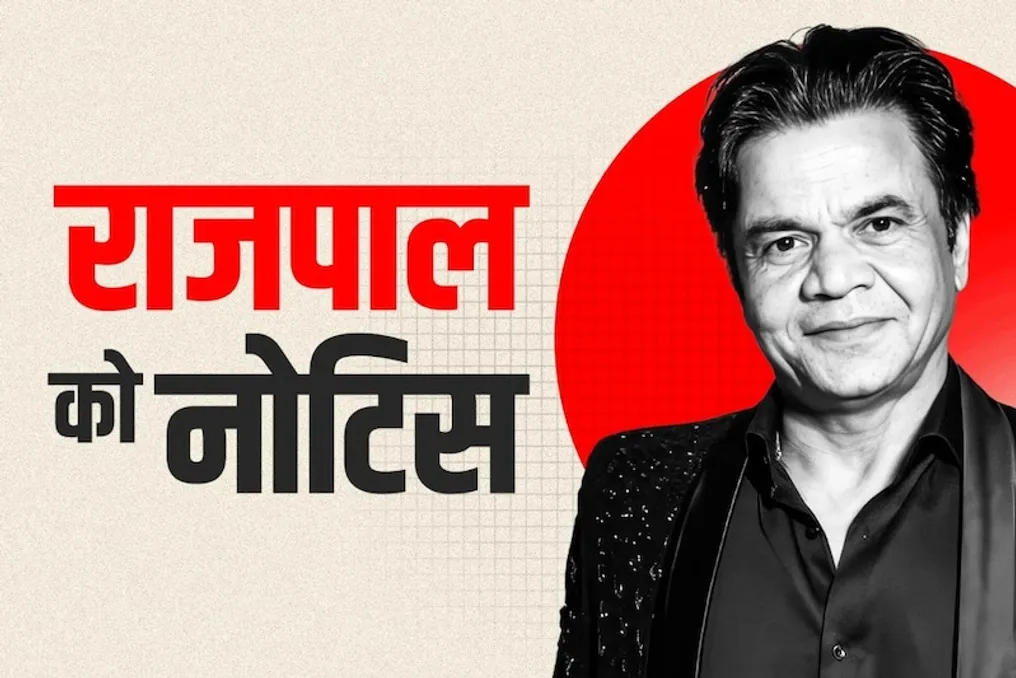
Difficulties continue to plague actor Rajpal Yadav. Following a case regarding the dishonor of nine crore rupees in cheques, serious steps have been taken by the Central Bank of India to recover the loan.
A notice regarding the sale of two major assets belonging to Rajpal Yadav was posted at the Central Bank of India branch in Shahjahanpur. The actor owed the bank 16.61 crore 61 lakh 64 thousand rupees. Rajpal Yadav took out this loan for the filming of the movie 'Ata Patla Paata'.
Bank debt recovery department employees visited Rajpal's native village in Shahjahanpur and posted a notice there about the auction of the actor's property. The bank claims that this amount includes the principal loan amount as well as accrued interest.
According to available information, Rajpal has two real estate properties in Shahjahanpur: one in the city, and another—a field and house in the village. The total estimated value of these two properties in Shahjahanpur is 3 crore 19 lakh 26 thousand rupees. The sale of this property is scheduled for September 9, 2026, in an online format.
Rajpal Yadav provided the property of his wife, Radha Yadav, and mother, Godavari Yadav, as collateral for the loan. The property sale proceedings are underway not only in Shahjahanpur but also in Mumbai. The bank will continue the recovery process according to established rules. If the debt is not repaid on time, the procedure for selling the respective assets may be initiated.
It should be noted that the company owning the dishonored cheque also resides in Shahjahanpur. Currently, no official comments have been received from Rajpal Yadav regarding this matter. It remains to be seen how he will react to this situation. As for Rajpal Yadav's work, he recently participated in Akshay Kumar's film 'Velmak Tu Da Jungle'.
Tonight, the Great Freedom Sale will begin on Amazon India. During this promotion, buyers will have access to various favorable offers, including the opportunity to purchase a Samsung smartphone at a reduced price.
The Samsung Galaxy S25 Ultra 5G, which was released last year as a flagship device, will now be available at a significantly lower cost.
During the Freedom Sale, a fixed discount of 40,000 rupees can be applied to the Samsung Galaxy S25 Ultra. Initially, Samsung launched this device in India at a price of 1,29,999 rupees.
Offers on Amazon frequently change. When checking Amazon India in the desktop version, the Samsung Galaxy S25 Ultra was listed at 93,849 rupees, and during the sale, it can be purchased for 89,999 rupees, providing the buyer with savings of 40 thousand rupees.
Regarding the camera of the Samsung Galaxy S25 Ultra, the Samsung Galaxy S25 is equipped with a quad-camera module. It features a main 200-megapixel camera, a 50-megapixel ultrawide lens, a 50-megapixel periscope telephoto lens, and a 10-megapixel telephoto camera. There is also a 16-megapixel selfie camera.
The Samsung Galaxy S25 Ultra supports S-Pen functionality, which allows not only taking handwritten notes on the screen but also controlling camera functions. Additionally, this phone is equipped with a 5000 mAh battery.
According to the Central Bank data, average rates for bank deposits in national currency increased to 17.6% per annum in June, up from 17.1% in May. This was the first increase since February. Nevertheless, the nominal yield on sum deposits remains 2.2 percentage points below the level of June last year, when the average rate was 19.7%.
The most noticeable growth over the month was seen in deposit rates for terms up to one year, which rose from 14.7% to 15.4%. However, compared to June 2025, these rates decreased by 3.4 points. The average yield on deposits held for more than one year remained almost unchanged at 18.1% per annum, which is 1.8 points lower than last year's figure.
Population Deposits
The average rate on sum deposits for individuals continued its downward trend, reaching 19.2% per annum in June—the lowest level since March 2021. Over the last month, this indicator decreased by 0.4 points, and over the year—by 2.1 points. The largest drop was recorded among short-term population deposits: rates on deposits up to one year fell from 17.4% to 16.6% per annum, which is 3.9 points less than in June of the previous year. Regarding long-term population deposits, banks offered an average of 19.6% per annum, compared to 19.9% in May and 21.5% a year earlier.
Business Deposits
The average rate on sum deposits for legal entities slightly increased in June, reaching 15.3% per annum compared to 15.2% in May. However, compared to June last year, there was a decrease of 2.6 points. The yield on corporate deposits for terms up to one year increased to 14.8% from 14.3% in May; a year earlier, the average rate was 18%. Conversely, rates on long-term business deposits decreased from 15.9% to 15.5% per annum, which is 2.3 points less than in June 2025.
Foreign Currency Deposits
Average rates on foreign currency deposits in June fell to 4.5% per annum after a sharp rise to 5.5% in May. Year-on-year, this indicator remained almost unchanged, as it was 4.6% in June last year. The decrease was mainly due to short-term foreign currency deposits, whose average yield dropped from 5.4% to 3% per annum. Rates on deposits for periods over one year decreased less noticeably—from 5.7% to 5.5%, but remained 0.7 points higher than in June 2025.
For the population, the average yield on foreign currency deposits was 5.3%, virtually unchanged over the month, although it rose by 0.5 points compared to June last year. Short-term foreign currency deposits for individuals fell to 2.7%, while long-term ones rose to 5.7% per annum. The average yield on foreign currency deposits for legal entities decreased from 5.6% in May to 3.8% in June, which is 0.5 points lower than the June figure last year. For short-term business foreign currency deposits, rates fell from 5.5% to 3.1%, and for long-term ones—from 6.3% to 4.9% per annum.
Real Deposit Yield
The real yield on population's sum deposits, calculated as the nominal rate minus inflation expectations, was 8.3% in June. This figure was 0.4 percentage points lower than the May level but exceeded the June figure last year by 1.1 points. For legal entities, the real rate in June rose to 4.9% from 4.7% in May, but compared to June 2025, it decreased by 0.5 percentage points.
Thus, despite the fall in the nominal yield on population deposits, their real yield is still higher than a year ago. The situation is the opposite for businesses: the indicator recovered slightly over the month but still lags behind the level from a year ago. Previously, the Institute of Fiscal Analysis at the Ministry of Economy and Finance proposed introducing a tax on interest income for individuals from bank deposits at a rate of 5%. According to the developers of this initiative, such a measure could bring about 1.4 trillion UZS annually to the budget. However, economists warn that this proposal could undermine confidence in the banking system, reduce citizens' interest in saving in sums, and stimulate the transfer of some funds into foreign currency, gold, or real estate, calling into question the stated budget revenue.