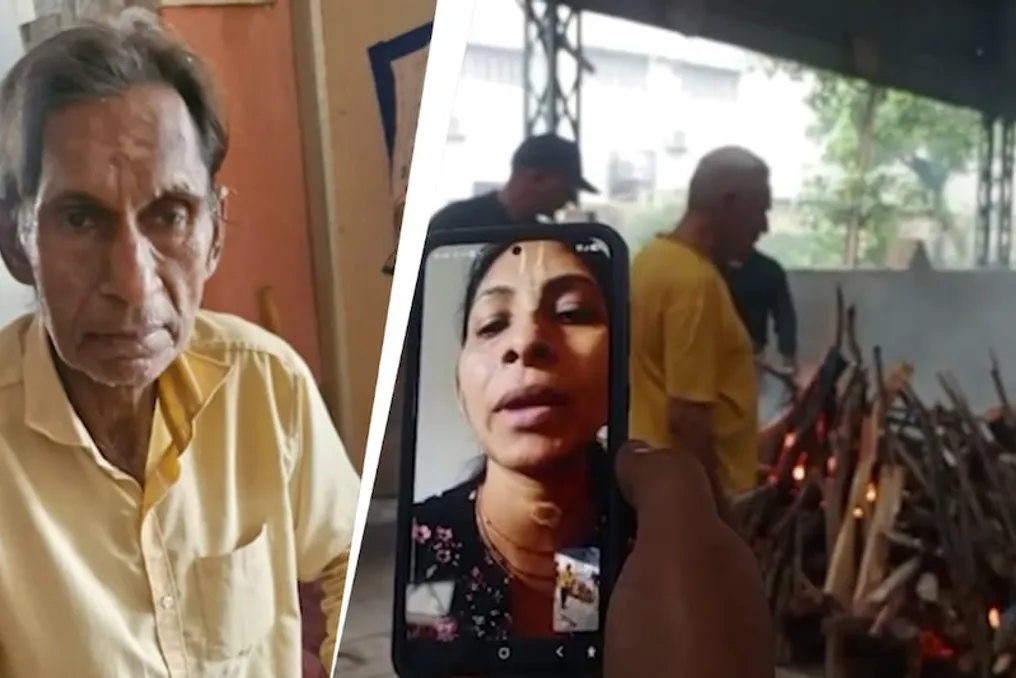
The mobile phone that always lay by the head of the bed brought hope with every call. Every screen vibration awakened the expectation that one of his daughters might call with the question: 'Dad, how are you?'. However, in the final days of his life, this expectation was replaced only by disappointment.
The story of Shivacharan Ramaratna Gupta, who lived in an old house in Sonipet, is not just a tale of an elderly person's death. It is the story of a father who dedicated his entire life to caring for his daughters' future, but on the threshold of his end, his greatest wish was to hear the voices of his relatives. Paradoxically, the eyes that watched his daughters grow up, go to school, and gain independence longed to see even one of their faces in his last days.
However, this story does not end in sorrow alone. Even after these eyes closed, they continue to bring light. Thanks to Shivacharan's organ donation, his eyes will now illuminate the life of another person.
Shivacharan Ramaratna Gupta, who lived in Mumbai, previously worked in clothing trade. According to family members, he always prioritized the education of his three daughters. The eldest daughter, Anita, works as a teacher in Nepal; the second daughter, Nisha, lives in Azamgarh, Uttar Pradesh, and is involved in teaching. The youngest daughter, Priya, lives with the family in Mumbai. His loved ones claim that Shivacharan often proudly spoke about his daughters being self-sufficient. Perhaps, for him, like any father, this was his greatest achievement.
About a year and a half ago, Shivacharan moved with his wife Mina Gupta to a nursing home managed by the Committee for Social Welfare Education in Sonipet. Due to his age and health problems, they decided to live there. Soon after, his wife passed away. After that, the nursing home became Shivacharan's home. The elderly residents, staff, and administrators living there became his family. According to the nursing home administration, after his wife's passing, he began to behave calmer than before. But one habit did not change—he continued to keep his mobile phone close, hoping his daughters would call.
The nursing home administrator, Anand, reported that about twenty days ago, Shivacharan's health began to deteriorate sharply. Following this, separate messages were sent to all three daughters asking them to visit their father if possible. The nursing home administration noted that during his illness, Shivacharan often asked if any daughter had called. When the phone rang, a slight smile of hope appeared on his face, but often it was other people calling. According to the nursing home, all three daughters were informed of his critical condition but were unable to come to him.
On the night of Tuesday, around 4:30 AM, Shivacharan Ramaratna Gupta passed away. The nursing home administration immediately notified the daughters, informing them that if they came, the funeral ceremony would be postponed. According to the nursing home, the daughters stated they could not come, citing their circumstances. Then, at the cemetery, a scene unfolded that touched everyone present. On one side, a funeral pyre burned, and on the other, the daughters bid farewell to their father via a video call on the mobile phone screen. The eldest daughter requested the funeral arrangements, sending 5100 rupees online. Later, the issue of preserving the remains was discussed, but then it was suggested to immerse them in the Ganges right at the nursing home. A video recording of the funeral was also requested.
If the story ended there, it would just be a story of loneliness. But Shivacharan left behind the most important lesson after death. By his wish and the family's consent, his eyes were donated. The eyes that watched his family all their lives and waited for relatives in his final days will now brighten the world of someone else who may have long lost hope of sight. A stranger's morning will begin with the eyes that yearned for the glimpse of their relatives until the very last moment.