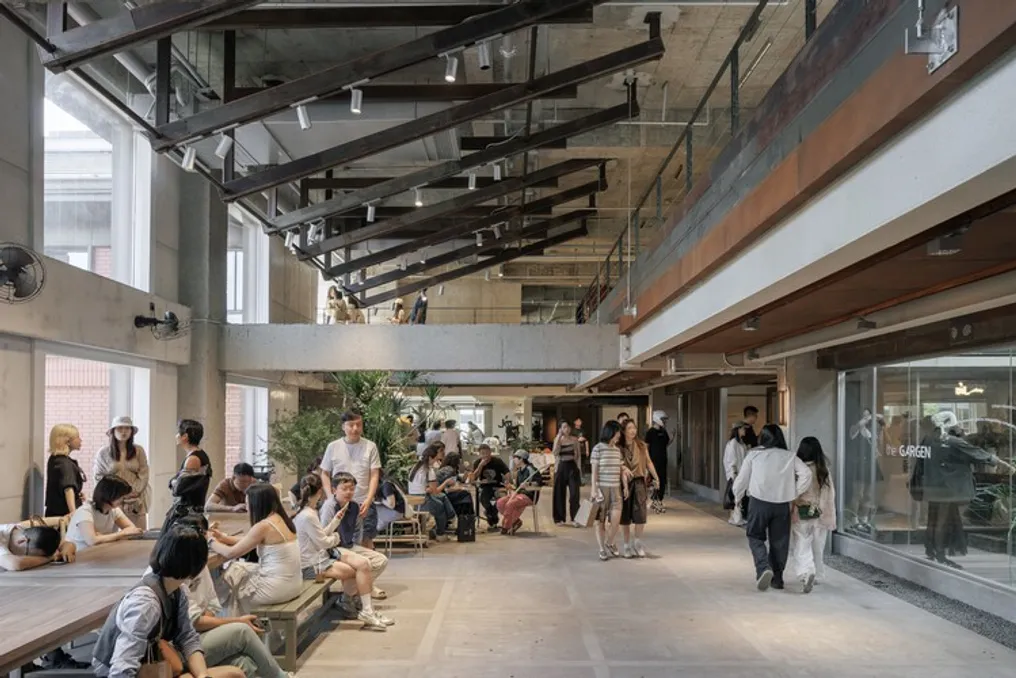
Mercado aa, a lifestyle market located on a penthouse, was conceived, designed, and is being managed by the Vari Architects office in the city of Chongqing.
Mercado aa, a lifestyle market located on a penthouse, was conceived, designed, and is being managed by the Vari Architects office in the city of Chongqing.
Instead of starting as a standard commercial request, this project originated from the daily needs of the architects themselves. Initially, it was intended to be situated above the studio, serving as a place where the team, friends, and neighbors could meet, have tea, eat, take breaks, and spend time together.
From this initial, small-scale spatial practice, the project gradually evolved, aiming to revitalize a neglected penthouse within an industrial park. The ultimate goal is to transform this space into a new area of public interaction for daily urban life.
The famous Egyptian rock band Cairokee has released a new track titled 'Tata Tata' (تاتا تاتا), which has quickly garnered millions of views. This song contains elements mocking US President Donald Trump.
Recently, the band Cairokee also presented a new album called 'Supernova,' which received positive reviews from fans. However, it is this new single that has attracted significant online attention, accumulating over 512,000 streams in just two days.
In the final verse of the song, Amir Eid compares US President Donald Trump to 'fast-food trash,' calling him worthless. The lyrics state: 'Honestly, this world is awful. It resembles Tesla. Like Trump's fast food. Bloated, but useless.'
The song 'Tata Tata' is one of ten compositions on Cairokee's album 'Supernova.' The album is generating growing interest within the artistic and musical communities of the Arab world due to its style and concept.
Several artists and intellectuals, including Egyptian writer Abdel Rahim Kamal, have characterized this project as a unique musical phenomenon that differs from recent popular music trends.
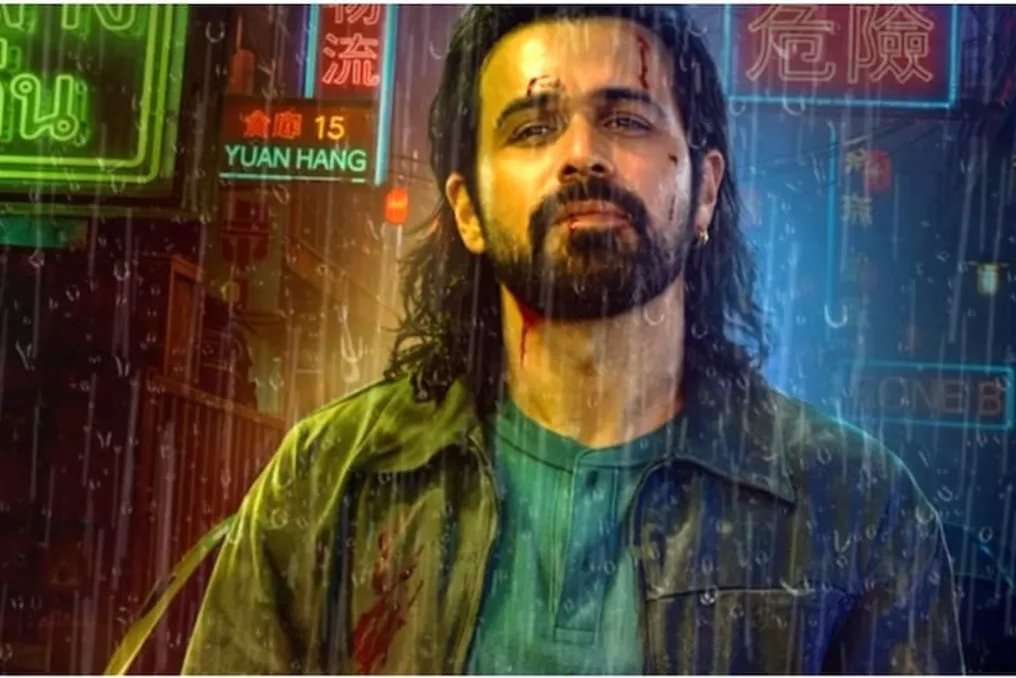
The powerful trailer for Awarapan 2 showcases Imran Hashmi's intense portrayal in the sequel to his beloved project. Imran returns as Shivam Pandit after nearly two decades. The story of this passionate lover promises to be even more dramatic and gripping.
The film is scheduled for release in theaters on August 14th of this year. The 1 minute 25 second trailer begins with hits from the original film, a strategy by the creators intended to connect viewers with the spirit of Awarapan. A scene with rain and the dramatic appearance of an injured Imran against the backdrop of the heartbreaking song 'Tere Mera Rishta...' evokes a sense of nostalgia among fans.
The character Shabana appears negative. She addresses Imran, who plays Shivam Pandit, asking: 'You have such a beautiful face, do you want to meet death?' In response, Shivam states that he has a long-standing connection with death and wishes to repay a debt. In the trailer, Shivam is shown suffering as a passionate lover. He has not forgotten the early traumas of the past.
Judging by the trailer, Shivam's anger for revenge and emotions will be at a high level this time. Disha Patani also appears as Jara, whose scenes help advance the plot and play an important role in Shivam's journey. Shabana and Nafisa are also featured in strong roles in the film, while Puran Gabbi and Surendra Vicky act as supporting actors.
The musical compositions are one of the main strengths of the film, as good music serves as fuel in such an intense story of a passionate lover. As in the first part, songs in Awarapan 2 are the main focus. It should be noted that Awarapan, released in 2007, was a box office failure. Therefore, significant success in box office collections is expected from the second film, where it will compete with Sunny Deol's film 'Bantwara 1947', despite the different genres of both movies.
The dream of the residents of Peshkurgon, which lasted for many years, has finally become a reality. The construction of convenient roads implemented in Peshkurgon ahead of the greatest and most expensive holiday—Independence Day—is a testament to the strengthening of public trust in state policy.
In this location, real results of reforms are visible, as citizens' appeals have been heard, initiatives supported, and a long-standing problem has been solved in practice.