During every monsoon season, flooded roads hide deadly dangers. Open drains and deep potholes submerged under water lead to the death of people who could have been saved.
To change this situation, 38-year-old Abhijit Dwara from Sivasagar, Assam, developed an inexpensive solar safety device using discarded plastic bottles. During the day, the device's reflector makes hidden dangers visible, and at night, automatic solar lighting helps pedestrians and drivers stay safe.
An arts graduate, Abhijit, has already created over 50 useful items from waste and now hopes that this simple invention will be implemented in flood-prone areas to prevent accidents and save lives.
Sometimes the most effective solutions are not the most expensive—they are created with compassion and determination.
Every monsoon, flooded streets turn into a hidden threat. Open drains and deep pits disappear from sight under murky water, turning a simple walk or ride into a life-threatening situation. Such accidents occur annually in flood-affected areas of Assam.
For 38-year-old Abhijit Dwara from Sivasagar, the answer was not in expensive technology but in a discarded plastic bottle. He developed a simple solar safety device that warns people about dangers hidden underwater during floods. Made from used plastic bottles and other inexpensive materials, the device reflects sunlight during the day, making it easier to detect submerged drains and potholes. After sunset, the built-in solar light automatically turns on, helping pedestrians and drivers navigate flooded roads more safely. This is a simple idea that could significantly change the situation in areas suffering from flooding every monsoon.
When a Plastic Bottle Becomes a Lifesaver
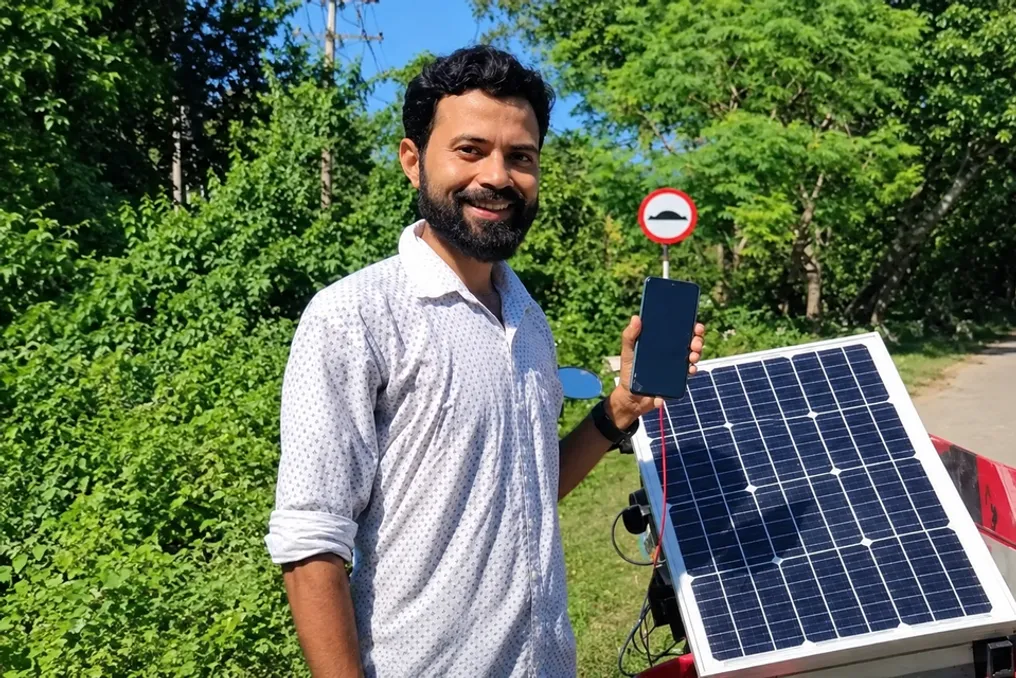
Innovation has always been a way for Abhijit to solve everyday problems. Over the years, this self-taught individual has created over 50 products using discarded materials. His inventions range from wearable devices to assist people with visual impairments to shelters for homeless dogs made from old televisions. During the floods in Sivasagar this year, he also converted his motorcycle into a mobile solar charging station, allowing residents without electricity to charge their phones.
Now he hopes his latest invention will find use in flooded towns and villages, where a simple warning marker can prevent a catastrophic accident. For him, innovation has never been about creating something extraordinary; it has always been about using what others throw away to protect lives and serve the community.