The tourism sector in South Africa continues to show steady growth, despite increasing concerns about anti-foreign sentiments and the potential impact of this on the country's image as a tourist destination.
The tourism sector in South Africa continues to show steady growth, despite increasing concerns about anti-foreign sentiments and the potential impact of this on the country's image as a tourist destination.
In recent months, protests by groups demanding action against illegal migrants have become more frequent in South Africa. These tensions surrounding immigration raise concerns about the country's reputation among visitors from other continents.
However, according to the latest tourism data from Stats SA, these concerns have not managed to slow down the flow of tourists. Between January and June 2026, South Africa registered over 5.5 million international arrivals. Stats SA data shows that international arrivals increased by 12.3% compared to the same period last year. The growth was driven primarily by tourists from other African countries, although arrivals from abroad also showed an increase.
The Department of Tourism reported that in June 2026, South Africa recorded 823,365 international tourists, which is 9.8% more than in June 2025, with arrivals from Africa growing by 12.1% year-on-year.
Statistics also showed that the United States remained South Africa's largest foreign tourism market for the second consecutive month. In June 2026, 40,566 American visitors visited South Africa to explore the country's tourism offerings. This occurred despite the ongoing tension between South Africa and the United States, as relations between the two nations have recently faced difficulties.
Tourism Minister Patricia de Lille stated that this growth indicates the resilience of South Africa's tourism sector and that efforts to diversify tourism products are yielding positive results. She emphasized that the department will continue to collaborate with industry partners and international markets to strengthen tourism, improve access to the country, and expand air connectivity.
De Lille noted: 'Once again, the targeted decision to diversify our tourism products is bringing positive results. The sustained growth in both regional and international arrivals reflects the resilience of our tourism sector and the effectiveness of the partnerships we have built with the industry and in our international markets.' She added that they will strengthen these ties through joint marketing initiatives across the African continent while expanding their presence in strategic foreign markets.
Earlier this year, IOL also reported that in April 2026, South Africa welcomed 989,329 international tourists, marking the strongest monthly growth in tourism year-on-year since the beginning of the current year, despite ongoing global aviation disruptions related to the Middle East conflict. De Lille called this 'our highest monthly year-on-year increase since the start of the year.' She concluded that despite the Middle East conflict causing global flight disruptions and ticket price increases, South Africa has not only defended its markets but has achieved growth in some regions.
The global tourism market has undergone significant changes in recent years. According to a study by the Organisation for Economic Co-operation and Development (OECD), some countries have demonstrated substantial growth in international arrivals due to infrastructure development and the implementation of new advertising campaigns, while others have yet to restore their figures to pre-pandemic levels.
Saudi Arabia ranked first globally in international tourist arrivals between 2019 and 2025, noting a growth of 67 percent. Morocco followed, showing an increase of 53 percent, and Egypt, which increased tourist inflow by 47 percent.
Brazil and Colombia also entered the top five, recording inbound tourism growth of 46 and 45 percent, respectively. The OECD attributes these positive results to large investments in tourism infrastructure, improvements in transport networks, and effective international advertising.
Turkey was also among the countries that noted a noticeable increase in foreign visitors, ranking eleventh and exceeding 2019 figures by 21 percent. Among European destinations, Norway, Serbia, Denmark, Portugal, and Spain demonstrated positive dynamics.
At the same time, many popular tourist destinations faced a significant decrease in the number of foreign guests. The largest drop was recorded in Israel, where the number of arriving tourists decreased by 71 percent. A substantial reduction was also observed in Ireland, Argentina, and Peru, while the USA, Italy, and Germany remain below 2019 levels.
Despite years of marketing campaigns focused on wildlife and diverse landscapes, experts suggest that South Africa's next significant tourism potential may lie in its sacred sites—such as churches, temples, mosques, and sacred landscapes—rather than solely in its wildlife.
Researchers from North-West University are convinced that the country's exceptional religious diversity can itself become a tourist attraction. This is possible not only by drawing visitors to individual shrines but also by creating routes that connect different faiths and communities.
As part of the SacredTravels4Growth initiative, funded by the European Union through the Erasmus+ program, Dr. Walter Wessels from the TREES research unit at North-West University is studying how pilgrimage routes, heritage, and religious destinations can contribute to sustainable tourism development, local economic growth, cultural preservation, community empowerment, and intercultural understanding. Over the next three years, they plan to develop a faith module within their current course.
However, Wessels warns that sacred tourism cannot simply be packaged and sold like a safari. Part of the project involves studying the opinions of local communities regarding tourists' participation in their religious practices and visits to spaces of deep spiritual significance. He emphasized that this differs from adventure sports: 'It is not an experience like a safari tour or extreme sport. You must approach it differently, and you must approach it with caution, because now you become part of a very sacred group of people and join their religious and cultural practices.'
South Africa possesses numerous sites that could form a new tourism product: historic churches, mosques, Hindu temples, Buddhist centers, pilgrimage sites, sacred local spaces, and sites related to the struggle for liberation.
Wessels cites Midrand in Gauteng as an example of an area where diverse religious sites are located in a small geographical zone, calling it a 'Religious Mile.' Another example is the Nan Hua Temple in Bronkhorstspruit. Although open to the public, Wessels notes that visitors do not always have access to information and tours that would help them understand what they are seeing.
The main task, in his view, is not just to let tourists pass through doors, but to create an economic ecosystem around these sacred places. He explains that even the church itself might not generate income, but the community where these events take place can earn money from secondary services offered to tourists. These services include accommodation, food, transport, local guides, and handicrafts, especially in small and rural communities with limited economic activity.
Wessels believes that South Africa does not need to copy Spain's popular pilgrimage route, the Camino de Santiago. The ideal scenario, according to him, involves visitors traveling between different religious communities, learning about their traditions, and engaging in conversations about what unites and divides them. He hopes that people will come to South Africa not for one religion, but to see how the country accommodates different faiths in the same places and to start a dialogue with representatives of other denominations.
However, Father Hugh O'Connor, Secretary General of the South African Catholic Bishops' Conference, argues that any attempts to develop pilgrimage routes must consider the practical realities of the country. He stresses that the success of established routes, such as the Camino de Santiago, depends not only on the spiritual significance or appeal of the destinations but also on hospitality, trust, and safety.
O'Connor points to numerous religious and historical sites that can offer visitors a spiritual, architectural, and historical experience, including Trappist missions in KwaZulu-Natal, Regina Mundi in Soweto, and the Sanctuary of Blessed Benedict Daswa in Limpopo. Nevertheless, he insists on the need to establish clear boundaries from the outset, noting that 'pilgrimage is a journey of faith made to a holy or sacred place, whereas tourism can include a dimension of faith; they usually have different focuses.'
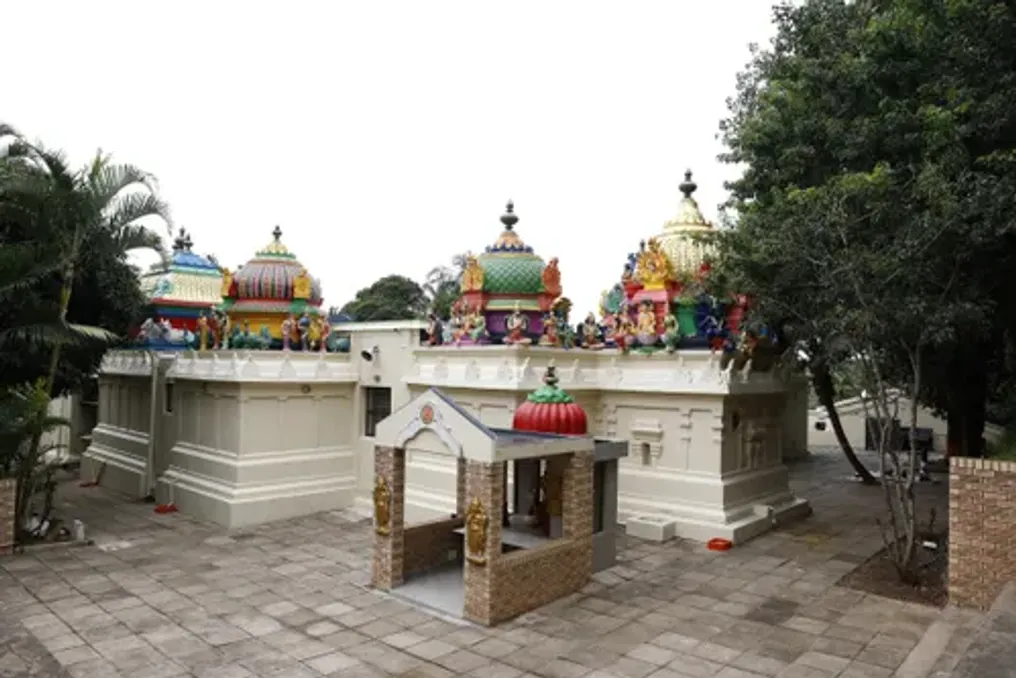
Pandit Lokesh Maharaja, Chairman of the Council of Priests of the South African Hindu Maha Sabha, also sees South Africa's multi-faith diversity as another untapped tourism opportunity. He cites the Umbilo Shri Ambalavaanar Alaiyam Temple in Durban, located near Albert Lutuli Nkosi Hospital, as an example. This temple is the oldest public Hindu temple in Africa. Historically known as the 'temple that refused to die,' it attracts international guests due to its traditional South Indian architecture, deity sculptures, and deep historical ties to Indian contract labor. Maharaja explains that 'in Hindu theology, a temple is not just a building, but a consecrated center of cosmic energy created to facilitate integration between humans and the divine environment.'