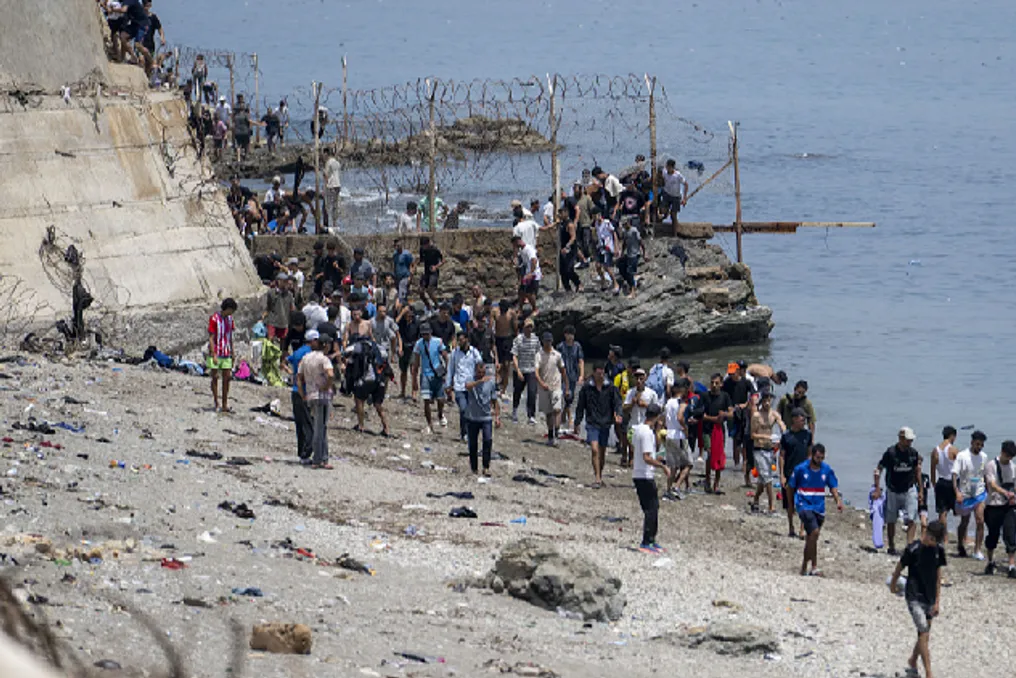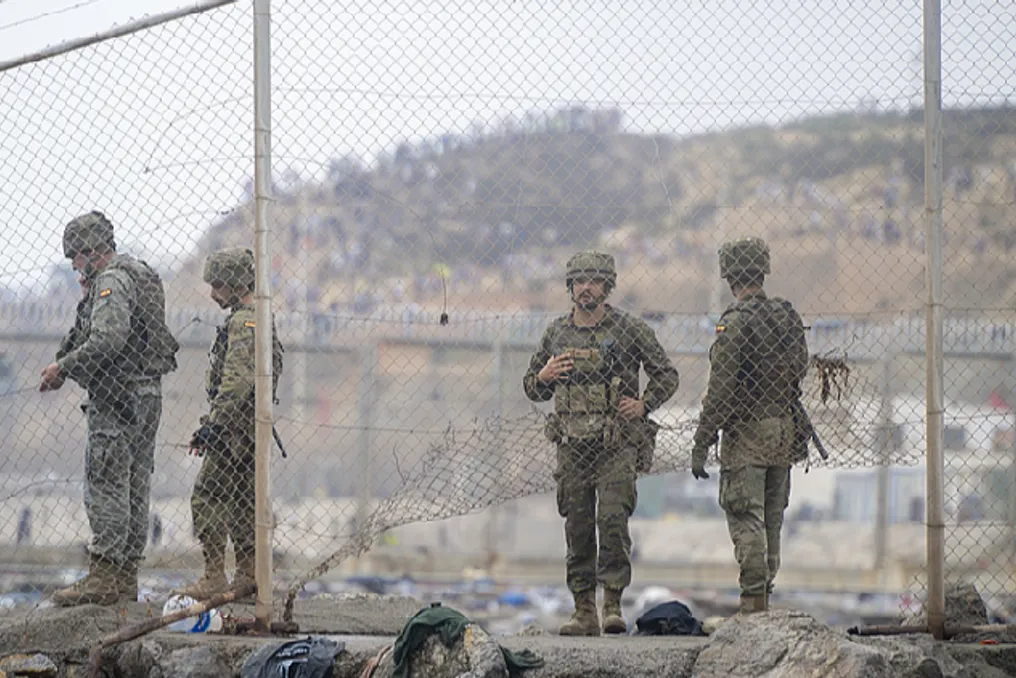
At the end of July, the Spanish enclave of Ceuta in North Africa faced a huge wave of illegal border crossings. Around 70,000 migrants, risking their lives, traveled from Morocco, crossing the border by sea or on foot to reach Ceuta, while hundreds more reached Melilla. The Spanish government reported the death of 75 people during this crossing.
Migration and refugee issues have troubled Europe for decades, requiring colossal human, material, and financial resources from the EU and its member states. Formally, the EU Pact on Migration and Asylum entered into force on June 12. The incident in Ceuta is viewed as a test of the updated European migration and asylum system, vividly demonstrating Europe's vulnerability regarding migration.
Context of the migration surge in Ceuta
The immediate trigger for this event was a ruling by the Spanish Supreme Court issued a month ago, which stated that authorities cannot arbitrarily deport migrants arriving by sea without due legal procedure. Furthermore, the Spanish government recently introduced a measure offering a potential path to legalization for irregular migrants already in the country, motivated by the desire to solve the labor shortage problem.
Nevertheless, Spain's migration policy has not significantly softened. In recent years, the EU has insisted on a stricter overall asylum policy, and Spain is no exception. The Moroccan government attributed the incident mainly to the spread of false information on social media, the activities of the smuggling mafia, and an incorrect interpretation of the Spanish Supreme Court's decision.
In response, the Spanish government promptly deployed military forces, naval vessels, and police to Ceuta, quickly deporting the vast majority of illegal entrants. The EU Commissioner for Migration also stated that these migrants would not be allowed to move further into continental Europe.
Trends and causes of the migration crisis in Europe
For over ten years, migration and refugee issues have constantly posed difficulties for Europe, manifesting in several distinct features. Firstly, the burden is not distributed equally among member states. Spain, Italy, and Greece—countries on the front lines, often with island locations, making them extremely vulnerable to irregular arrivals—bear the greatest pressure.
Secondly, the desperate crisis has caused multiple shocks to European society, gradually transforming from a short-term humanitarian emergency into a medium- to long-term structural problem. Thirdly, there is a lack of internal solidarity. Most member states advocate for common solutions at the EU level, but some countries continue to maintain a hard line on migration and show less willingness to cooperate.
The recurring outbreaks of irregular migrant influx into Europe have deep roots. From an external perspective, ongoing factors such as the civil war in Syria, the war in Ukraine, the Israeli-Palestinian conflict, as well as poverty and conflicts in Africa continuously create pressure in the form of refugees and irregular migration, making it a persistent global phenomenon.
Internally, European countries are home to developed economies with a relatively high level of social welfare. Countries like Germany, Sweden, and the Netherlands maintained a comparatively open, tolerant, and humanitarian stance towards immigrants before the refugee crisis, thereby attracting migrants and asylum seekers to risky routes into Europe.
How migration is changing politics and society in Europe
Large-scale irregular migration has introduced more heterogeneous cultural values into Europe, exacerbating disagreements within Europe on sensitive issues such as the Israeli-Palestinian conflict, and introducing what some call systemic risks to public security in open European societies. Incidents related to terrorism and public order issues involving refugees have repeatedly occurred in Belgium, France, Germany, the Netherlands, and other places. In some countries, immigration policy has become a central societal issue and a decisive factor in elections.
This trend has fundamentally changed the traditional party landscape and political ecosystem of Europe, with the most noticeable change being a general political shift to the right and a conservative turn across Europe. At national and regional levels, populist and far-right parties are consistently expanding their political influence by using migration and refugee issues. During this same period, major parties have also hardened their positions: not only have center-right parties adopted a tougher policy, but center-left parties, traditionally open and inclusive, have also begun to emphasize issues related to migration.
Consequences and reform of common asylum policy
Following the Ceuta incident, the EU and its member states largely sought to quickly take control of the situation, accelerate repatriation, and prevent irregular migrants from gaining access to continental Europe. Consequently, this incident is unlikely to escalate into a refugee crisis. In fact, the EU has been gradually reforming its migration and asylum policy since the 2015 refugee crisis, with most member states significantly tightening their national rules. The EU Pact on Migration and Asylum, which entered into force on June 12 this year, sends a clear signal that Europe no longer accepts a 'culture of hospitality,' but instead must strengthen deterrence and orderly control.
However, the implementation of European asylum policy will continue to face significant obstacles. On one hand, Europe remains internally divided: the EU hopes to share responsibility more fairly through a refugee relocation mechanism, but some member states are unwilling to cooperate. On the other hand, addressing the root causes in countries of origin presents a complex challenge. Europe urgently needs stronger international cooperation with countries of origin and transit countries for refugees. However, external partners may not always have the capacity or the will to accept those who have not received refugee status.
Thus, the surge of tens of thousands of people from Morocco toward the Spanish enclaves in just a few days is also a test of the recently reformed common EU asylum system.