In accordance with the new law regulating the real estate market segment in the emirate, Dubai will introduce a specialized rental index for residential units designated for co-living.
In accordance with the new law regulating the real estate market segment in the emirate, Dubai will introduce a specialized rental index for residential units designated for co-living.
This law, announced in March, will come into effect by the end of August. According to the guide, the index will take into account the technical characteristics and service specifications of individual co-living units. However, the document does not specify the launch timeline for the index, the methods for calculating rent, or whether rates will be assessed by area, room, bed space, or dedicated zone for each resident.
Previously, Dubai already had a functioning rental index that served as an official benchmark for determining permissible rent increases when renewing leases. The new law provides for an index specifically developed for properties licensed for co-living.
The consulting firm Mitchell’s Commercial Real Estate noted that this measure may help standardize pricing in this segment, reduce the practice of unofficial rent setting, and increase transparency.
For landlords, this may mean reduced opportunities to employ aggressive pricing in unregulated conditions, but it will also ensure greater predictability in rental figures and closer alignment with market benchmarks.
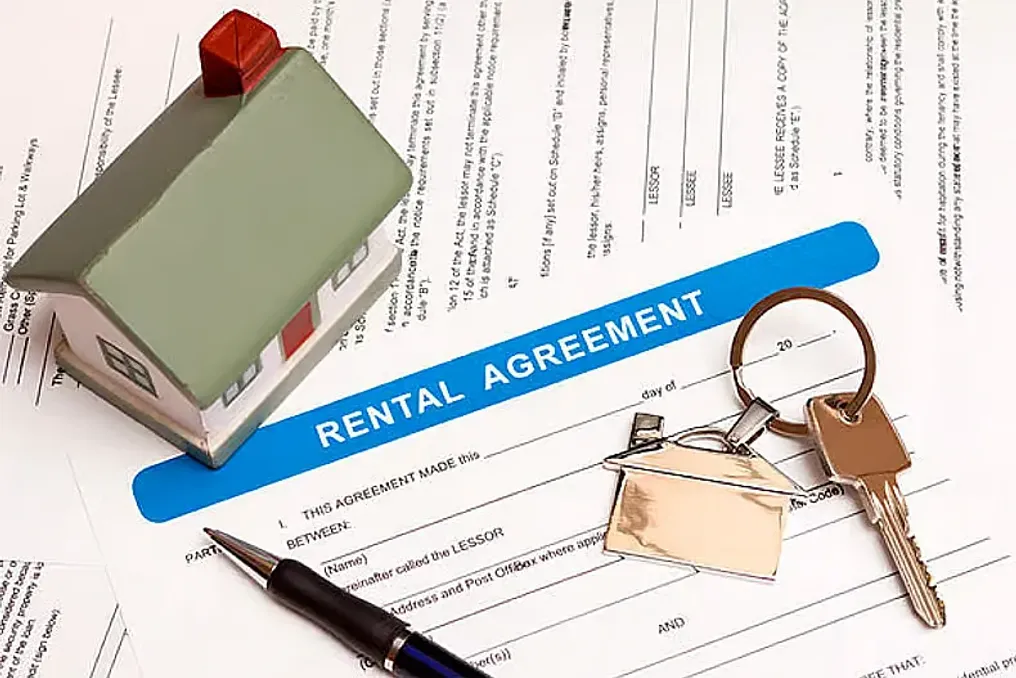
Furthermore, the DLD will prepare standard lease and management templates for co-living and publish them on its website, according to the LexisNexis guide. These contracts must contain key information, including landlord details, number of residents, property information, and details about the dedicated co-living space.
The department will manage a co-living electronic registry where information on approved units, lease agreements, and residents will be stored. This registry will be integrated with the unified digital permitting platform managed by the Dubai Municipality, as indicated in the guide.
Under the law, no person or entity will be permitted to designate property for co-living without prior approval. Approvals are typically valid for one year and can be extended for similar periods. Owners can apply for a two-year permit, provided renewal applications are submitted no later than 30 days before expiration.
The Dubai Municipality has stated that applications will be submitted through its digital channels after the announcement of relevant procedures and requirements. Permits are issued only after the authorities confirm that the property complies with urban planning, construction, health, fire safety, sanitation, security, and electrical safety requirements. Maximum capacity, minimum area per resident, and the availability of common amenities will also be considered, according to the guide.
Owners and businesses already operating co-living properties will be given one year to bring their property and operations into compliance. If necessary, the Director General of the Dubai Municipality may grant a one-time extension, as noted in the LexisNexis appendix.
Violations may result in fines ranging from 500 to 500,000 dirhams. Repeat offenses within a year may lead to doubling the initial fine, up to a maximum of 1 million dirhams.
The Dubai residential market added 24,800 new housing units to its portfolio in the first half of 2026. This figure represents a growth of 37.6% compared to the same period last year and is 12.1% higher than the second half of 2025, according to the latest report from Cavendish Maxwell on the dynamics of the Dubai residential market.
This surge in completed projects marks one of the strongest delivery periods in six months in the emirate's history. Thousands of projects launched during the 2024–2025 boom are now being handed over to buyers. Apartments led the way, accounting for about 18,900 units, which is 43% more than last year. Additionally, 5,900 units of villas and townhouses were added, showing an increase of 22.6%.
Overall, 41.3% of all units scheduled for delivery in the first half of 2026 have been completed, consistent with historical trends, as indicated in the report.
The flow of delivered properties occurs as the Dubai residential market enters a more stable rhythm after two exceptional years of growth. The total transaction volume for the first half of 2026 reached 79,300, generating revenue of AED 221.4 billion. This amount still exceeds the activity levels recorded before the boom in the first half of 2024.
The market continued to rely on off-plan sales, which accounted for 74.8% of all transactions, covering 59,300 deals. Ready property sales reached 20,000 transactions. Buyers continued to favor new developments, attracted by developers' payment plans, even though the overall pace of activity has slowed compared to the record figures of 2025.
Despite the moderation in transaction volumes, real estate prices in Dubai have remained stable. The average selling price reached AED 1,639 per square foot by June 2026, which is 1.9% higher than the previous year. Rental rates rose to AED 75.7 per square foot annually, demonstrating a 7.8% year-on-year increase.
Rental yield remains one of the most attractive among major global cities. Apartments provide a gross city yield of 6.9%, while villas and townhouses offer 5.0%. Dubai Investments Park leads all apartment complexes with a yield of 9.7%, and International City leads with 8.9%. Among villa complexes, Dubai Industrial City leads with a yield of 6.4%.
Mortgage lending activity also increased: 22,500 transactions worth AED 51.3 billion, which is 17.4% more than last year, reflecting sustained buyer confidence in financing their purchases. The growth in mortgage value for villas was the fastest, increasing by 35.6% year-on-year to AED 19.8 billion.
Dubai's high-end segment continues to attract wealthy buyers from around the world. The ultra-luxury segment—properties valued at AED 50 million and above—recorded 160 deals in the first half of 2026, a 12.7% increase compared to last year, with off-plan ultra-luxury sales rising by 25.6%. The broader luxury segment (from AED 20 million) registered 1,093 deals, surpassing the second half of 2025 by 6.2%.
Popular locations for apartment buyers included Dubai South, which saw 7,306 off-plan deals, and Jumeirah Village Circle, which led the ready property segment with 1,065 sales. For villas and townhouses, DAMAC Islands 2 led off-plan demand with 3,192 transactions, while DAMAC Hills 2 led the ready segment.
Ronan Arthur, Director of Property Valuation at Cavendish Maxwell, noted: 'The Dubai residential market shows clear signs of transitioning to a new cycle after the exceptional level of activity over the past two years. The fundamental factors driving demand for real estate in the emirate remain unchanged, but short-term prospects are shaped by a combination of factors—including the impact of fewer launches, regional uncertainty, and the general normalization of buyer activity—which will likely affect transaction levels and price dynamics.'
Looking further ahead, Dubai's development plan remains substantial: approximately 47,000 units are scheduled for delivery in the second half of 2026, followed by another 162,500 in 2027, and 128,200 in 2028. Apartments are expected to dominate future supply, making up 82.5% of units delivered in the second half of 2026, concentrated in growth areas such as Jumeirah Village Circle, Dubai South, Dubai Science Park, and Business Bay.
Meanwhile, developers have adopted a more measured approach to new launches, presenting 124 projects encompassing about 28,000 units in the first half of 2026. This is a natural adjustment following the record 410 launches in 2025. Analysts view this as a sign of a maturing market rather than a decline in confidence, as property delivery is becoming an increasingly important priority compared to new announcements.
The momentum in the real estate sector is supported by a robust broader economy. In the first quarter of 2026, Dubai's GDP reached AED 232 billion, a 2.4% increase compared to the previous year. Real estate contributed 11.2% of the total output and expanded by 3.1% annually. Thanks to the record volume of new housing entering the market, buyers and renters across Dubai have greater choice than ever before in recent memory, while the emirate's fundamental indicators point towards long-term growth as it transitions into the second half of 2026.
If a landlord in Dubai intends to sell the leased property, there are strict legal requirements for the tenant eviction procedure, even if the lease agreement has not yet expired.
According to Dubai legislation, a landlord can only demand vacating the premises under specific circumstances, particularly upon the expiration of the lease term. However, the seller's intention does not void the existing lease agreement; it remains binding on both parties until its end, and any buyer acquires the property taking into account the rights of the current tenant.
If the landlord wishes the tenant to vacate the premises for the purpose of sale, they are obligated to notify of this reason for eviction at least twelve months before the intended eviction date. This notification must be delivered through a notary or registered mail. Although the courier service Tableegh is often used to deliver the notarized notice, the law requires adherence to these formalities.
This requirement is stipulated in Article 25(2)(d) of the Amended Dubai Land Law. Furthermore, Article 28 of Law No. (26) of 2007, which regulates landlord-tenant relations in the Emirate of Dubai, states that the transfer of ownership of the leased property to a new owner should not affect the tenant's right to continue residing in the property according to the contract concluded with the previous owner, provided the lease term is fixed.
In case of non-compliance with these legally established requirements, the tenant has the right to defend their rights at the Dubai Rental Dispute Center (RDC).