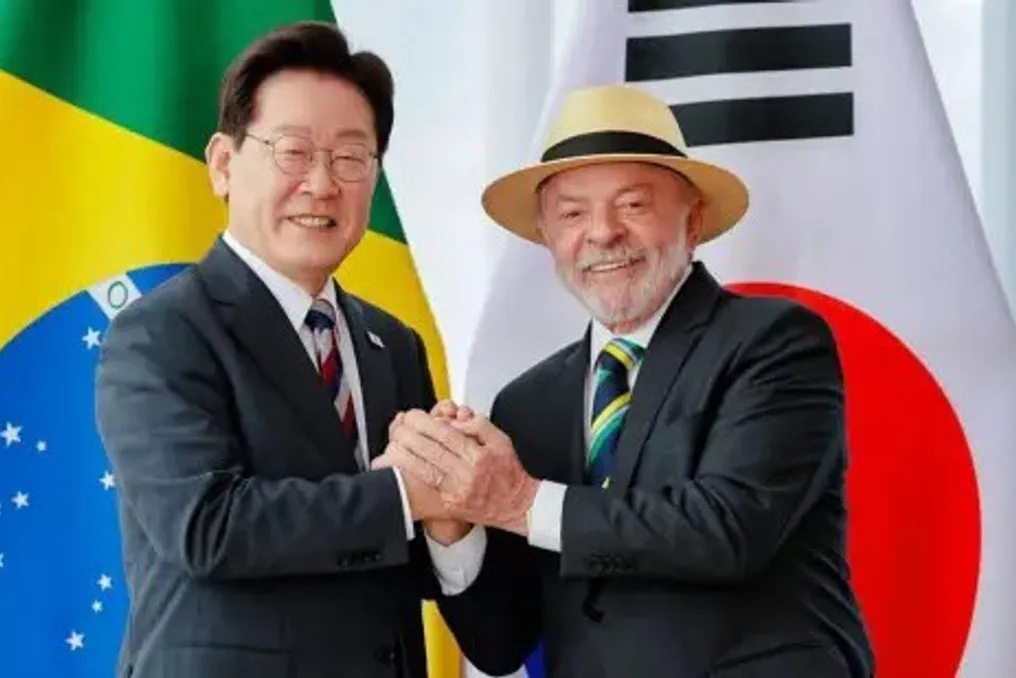
Brazil and South Korea formalized joint communiqués on Monday (27) aimed at expanding bilateral collaboration in the field of critical and strategic minerals.
Objectives of the mining partnership
This initiative aims to strengthen the relationship between the two countries in the mining sector, defining guidelines for creating production chains that are more sustainable, diversified, and resilient. Such inputs are vital for technological progress, digital transformation, and energy transition.
One of the central focuses of the agreement is promoting the processing and refining of these minerals as close as possible to the extraction sites, which will help increase the value generated within Brazilian territory. The proposal aims to reduce the export of raw materials without any processing, instead stimulating investments in higher added-value industrial phases.
Collaboration in technology and sovereignty
The signed documents also foresee deepening cooperation in research, development, innovation, and knowledge transfer between both countries. Additionally, Brazil and South Korea plan to establish permanent mechanisms for technical exchange between their governments and improve institutional capacities dedicated to the mineral sector.
During the meeting, leaders reaffirmed the importance of maintaining national sovereignty and autonomy in defining public policies related to the exploration and use of mineral resources.
Intensification of bilateral relations
The rapprochement between Brazil and South Korea in the areas of energy and mining has been intensified since February of this year, when President Luiz Inácio Lula da Silva (PT) visited the Asian nation. During this visit, the governments launched the Action Plan for Implementing the Brazil-Korea Strategic Partnership 2026–2029, placing critical minerals among the priorities of mutual cooperation.
According to the Brazilian government, the adopted strategy consists of ensuring that the country's mineral potential is accompanied by the expansion of technological innovation, industrial transformation, and processing activities. The expectation is that this will attract foreign capital, reinforce the domestic production chain, and raise Brazil's participation in more valuable segments of the mineral industry.
Trade context and energy sectors
This strengthening of the partnership occurs in a scenario of growing trade exchanges between the two countries. In 2025, the volume of trade between Brazil and South Korea reached US$ 10.8 billion (equivalent to R$ 55.4 billion). Of this amount, US$ 5.5 billion (R$ 28.2 billion) represented Brazilian exports, while US$ 5.3 billion (R$ 27.2 billion) was recorded in imports, resulting in a positive balance of US$ 168 million (R$ 861.9 million) for Brazil.
Beyond mining, the countries intend to expand cooperation in other areas related to the energy transition. Sectors covered include the development of low-carbon hydrogen, bioenergy, renewable fuels, energy efficiency, smart infrastructure, battery storage, and carbon capture technologies.
Regarding critical minerals, the collaboration encompasses essential raw materials such as lithium, rare earths, nickel, and graphite. These materials are crucial for the production of electric vehicles and batteries, as well as other low-carbon technologies. It is expected that the demand for these inputs will increase considerably in the coming years, driven by the advancement of the global energy transition.