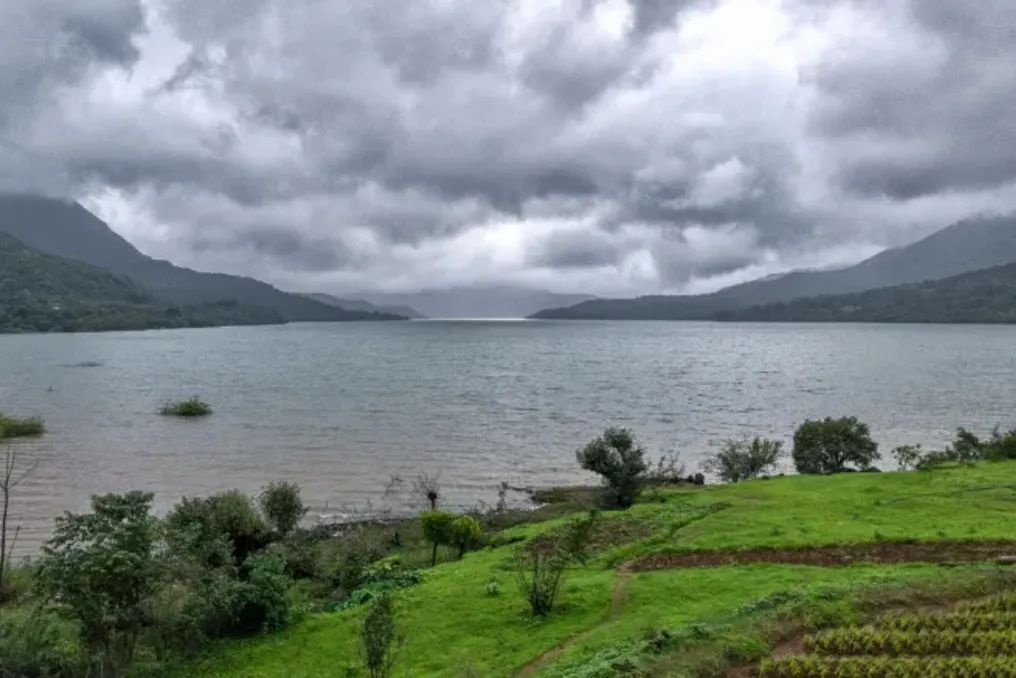
Monsoon rains in India play an important role in cooling the air and supporting agricultural crops. A new study has revealed that they also function as a vital mechanism for replenishing drinking water reserves in the region. The research, conducted in the Palghar area of Maharashtra state, West India, established that monsoon replenishment significantly improves the quality of groundwater, which can become dangerously saline and contaminated during the dry season.
Researchers from the Bhabha Atomic Research Centre and the Homi Bhabha National Institute found that although about 80% of the groundwater in this area has low or unsuitable quality, the influx of fresh water after the monsoon shifts at least half of this volume into good category.
This seasonal transition, caused by the monsoons, is critical for the region, where the population heavily relies on wells for drinking and agriculture. In the months preceding the rainy season, water stored in underground rock and soil layers, known as aquifers, becomes concentrated with salts and minerals. According to the study, this occurs due to a combination of intense evaporation and seawater intrusion from the nearby Arabian Sea.
Using a tool called the Entropy Water Quality Index, the team mapped how these factors make the water very hard and rich in minerals such as sodium and chloride, which can pose a health threat and damage agricultural soils.
To determine different types of water, the team used isotopic fingerprints. Analogous to a unique human DNA, different water sources possess distinctive isotope ratios—forms of the same chemical element that differ in the number of neutrons in the nucleus. Specifically, scientists studied stable forms of hydrogen and oxygen. By measuring these isotopes, specialists could determine the origin of the water in the well.
Before the monsoons, the isotopic composition showed strong enrichment, which served as a clear sign that a significant portion of the water was being lost due to solar heat or mixed with seawater. When the rains began, the signatures changed, demonstrating the dominant source of meteorological or rainwater, which displaced salt and diluted the chemical concentration.
In addition to natural salinity, researchers applied tritium (hydrogen-3), a radioactive isotope of hydrogen, to analyze the water. Tritium levels help scientists determine the age of the groundwater. High tritium levels in Palghar indicate that the aquifers are being replenished by modern precipitation, suggesting an active and dynamic water supply system. However, this also revealed traces of human impact.
In some areas near industrial canals, researchers found unusually high levels of tritium. These levels were linked to local industries, such as dye production and watchmaking, which use tritiated compounds. The presence of these chemicals in groundwater indicates leakage of industrial waste into the shallow aquifer, highlighting a dual threat of natural salinity and anthropogenic pollution.
By integrating three different methods—chemical analysis, isotopic tracing, and computer-based geospatial mapping—the team created a system that provides a much more accurate picture of the environment. Previous models often relied on simpler, potentially subjective indices, whereas the Entropy method used here utilizes inherent data variability to identify the most critical pollutants. This makes the results much more reliable for local government officials who need to make decisions regarding the construction of new wells or the regulation of industrial waste.
Nevertheless, the researchers noted that their dataset, while detailed, covered only 92 samples over an area of 350 square kilometers. Due to the limited number of sampling points, they had to use specific mathematical simplifications known as deterministic interpolators to estimate water quality between wells. They suggest that future work should include more frequent long-term monitoring and higher sampling density to detect small, localized pollution hotspots that might have been missed.
Demonstrating how the monsoon renews water reserves, this study offers a plan for sustainable water resource management. It emphasizes the necessity of rainwater harvesting—the practice of collecting and storing rain to replenish the land—to ensure the preservation of the water quality achieved after the monsoon for a longer period of the dry season. Furthermore, it serves as a serious warning about the vulnerability of coastal areas in the face of climate change. As sea levels rise, ocean pressure will push more salt into these freshwater reserves. By identifying areas of highest risk, the study helps Palghar and similar coastal communities plan for a future where clean water may become more scarce.