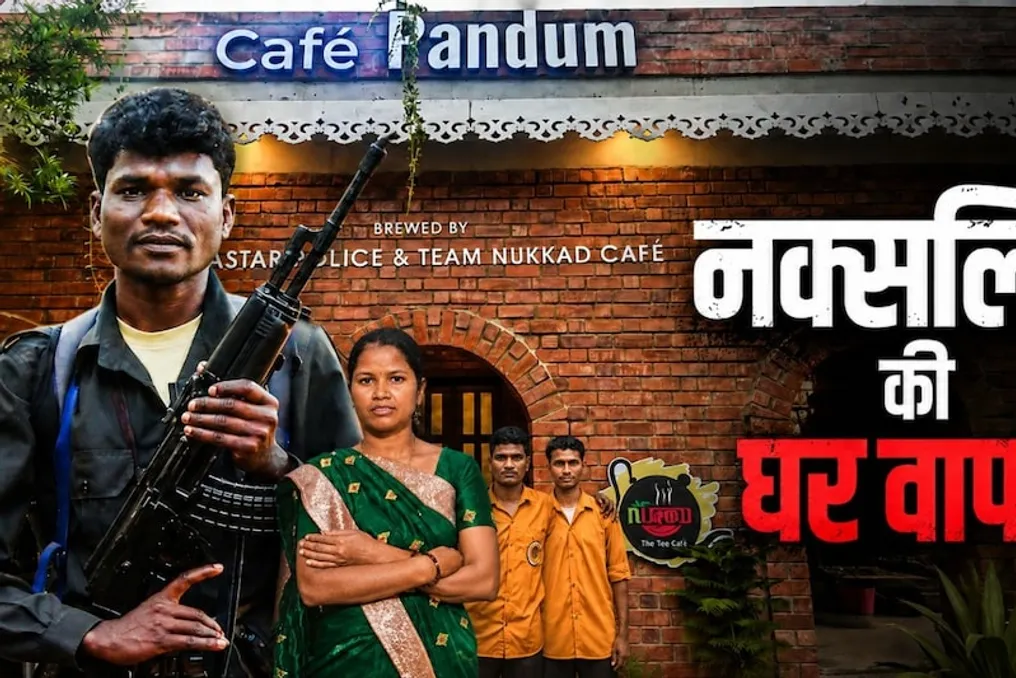
In the 'Pandum' cafe in Jagdalpur, there was the usual hustle and bustle: some ordered tea, others waited for coffee. A young man in an orange uniform quietly swept the floor. He was so absorbed in his work that visitors rarely noticed him. After starting a conversation with him through the publication Aajtak Dot In, the questions were standard: what is your name, how long have you been working, what salary do you receive. He answered every question very casually. Then I asked him: 'Did you hear that you used to be a naxalite, and you received an eight lakh reward?'
For a moment, he fell silent. He leaned the broom against the wall, sat on the nearest chair, and replied in a quiet voice: 'Yes... I went into the forest around the age of 14.' From this moment, the conversation changed. Sitting before me was not just a cafe employee; he was a person who lost his childhood in the forests of Bastar. He replaced books with weapons, learned to handle them, and saw life in the Naxal camps, before deciding to leave the forest and choose a new life.
Lakhmu told his story without any drama. It seemed he did not want to repeat his past, but he also did not wish to hide it. He recalled that he was about 14 years old when he joined the naxal camp. At that time, he did not understand what was right or wrong; what was in front of him seemed like the only world. Every word he spoke sounded as if someone had opened an old cupboard after many years. He recounted that after entering the forest, his life completely changed. Mornings began with running, followed by weapon training, and long foot marches. Life in the forest, knowing the trails, delivering messages, and constant vigilance became the norm. Gradually, he mastered shooting from AK-47 and INSAS rifles. According to him, over time, the trust of the senior leaders of the organization in him grew, his duties increased, and the forest became his only world.
During the conversation, Lakhmu smiled for the first time when he mentioned Phulmati. Phulmati also left her village and joined the Naxal organization. She underwent the same training, lived the same life, and traveled the same routes as other members of the organization. Their first meetings happened during work, and then they discussed certain common tasks. Gradually, their conversations deepened, and one day they realized that amidst the weapons and in the forest, they still had a desire to live differently. Lakhmu says: 'We both started thinking, will our whole life pass like this?' At this time, messages started arriving from their families, urging them to return home and live a normal life. Phulmati also wondered: does she always have to stay in the forest? Will she ever have her own home? Will the day come when she can sleep without fear?
It was then that they decided to return to the mainstream, to a normal life.
This decision was not only about abandoning the organization; it also meant abandoning fear. On one side was the Naxal organization, and on the other, the police. Between them were two people who simply wanted a new life. Lakhmu recounted that they expressed their desire to return home to the senior members of the organization. After that, they chose the path of self-sacrifice. According to him, the beginning was not easy; there were many fears in his heart, but one thing was clear: never to return to the forest again. After surrendering, they saw the future for the first time. After some time, they got married. Today, they are husband and wife working at the 'Pandum' cafe in Jagdalpur. Lakhmu works cleaning and earns about 9 thousand rupees a month. Phulmati also works there and contributes equally to maintaining the home with her earnings. This job may seem insignificant in a big city, but for Lakhmu, it is not just a job; it is a testament to the life he began living for the second time.
When I asked him if he missed the forest, he immediately replied: 'No... not anymore.' Then he paused slightly and added: 'Now there is peace. We work, and we live off what we earn. At night, we don't have to sleep in fear.' His answer perhaps holds the entire story.
'Pandum', located within the Jagdalpur police station premises, is not just a place to sell tea and coffee. It is a symbol of a new beginning for those who left the path of violence and chose an ordinary life. The word 'Pandum' comes from the Gondi language and means meeting and unity. This cafe was opened by the Chief Minister of Chhattisgarh, Vishnu Dev Sai. This cafe also reflects the changing picture of the world and rehabilitation in Bastar.
A customer coming here might not know that the employee wiping their table or serving them tea once roamed the forests of Bastar with a weapon. But that is the greatest beauty of this place: here, people are defined not by their past, but by their present. The conversation ended. He stood up again, picked up the broom, and resumed work just as casually. Saying goodbye.