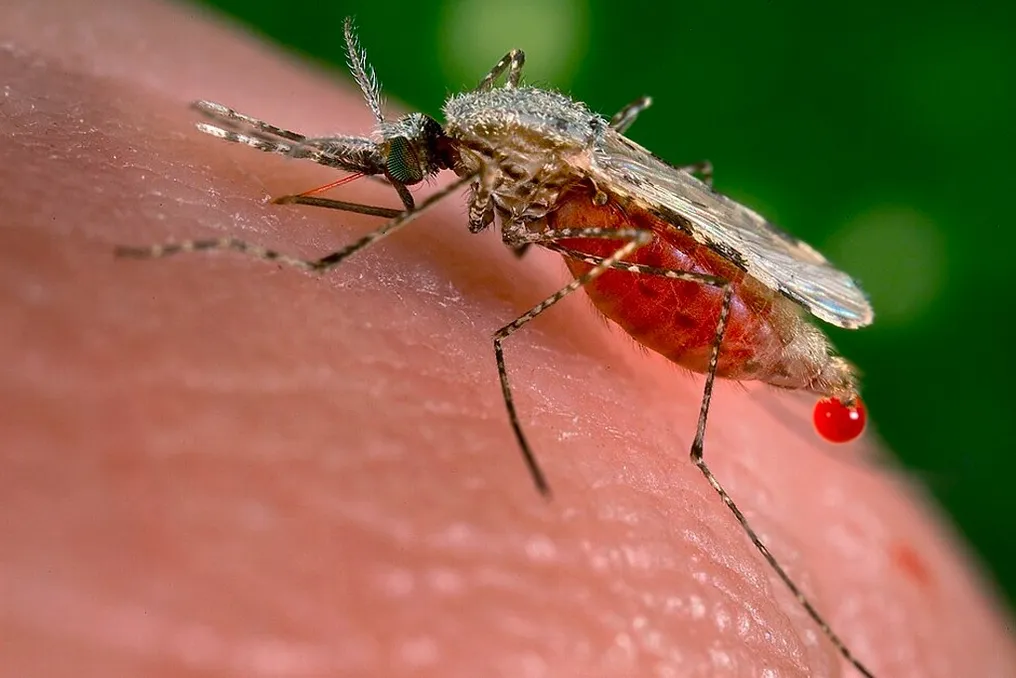
The malaria mosquito, specifically Anopheles stephensi, has shown the ability to resist insecticides, a phenomenon that persists even after decades of using chemical substances like dieldrin.
In the 1950s, dieldrin was applied to the interior walls of residences to control malaria. However, it quickly became evident that this strategy failed because Anopheles stephensi developed a genetic alteration that conferred immunity to the poison. This is a classic example of natural selection, where mutant mosquitoes had a higher probability of surviving, reproducing, and transmitting their resistant genes, making the toxicity of the poison a scientific concern.
Despite the persistence of resistance, even making the mosquitoes slower, scientists were intrigued by the maintenance of these mutations. A new study proposes that the mating process may be the factor responsible for this. The hypothesis is based on the fact that males locate their mates through the faint sound generated by the females' wing beats, and the mutation appears to increase the sensitivity of Anopheles mosquitoes to this sound, facilitating location in noisy urban environments.
Researchers replicated sounds mimicking the flight frequencies of females (between 300 and 550 hertz) in the laboratory. Males carrying the mutation showed a significantly higher chance of flying towards the speaker and landing on it.
To go beyond simple detection, the research simulated the real mating environment. Twenty-five males were placed in cages with twenty-five females for 48 hours, exposed to two scenarios: an incubator with a constant hum of 70 decibels or an environment with white noise of 93 decibels, simulating a large city. Dieldrin-resistant males showed similar results in both environments, achieving about 40% success in mating. In contrast, males without the mutation performed worse in the noisier incubator, dropping to 33%.
Subsequently, scientists tested the theory in the field, in seven urban locations in Bangui, the capital of the Central African Republic, and four adjacent villages. They observed that females without the mutation had a lower probability of mating in urban areas compared to rural areas.
Lauren Cator, a biologist from Imperial College London, who did not participate in the study, emphasizes that the data are complex to interpret, as urban habitats have various differences compared to rural ones, besides noise. She points out that exposure to pesticides, pollution, and variations in temperature and humidity can also contribute to the high prevalence of mosquitoes with mutations in cities. Cator also mentions that the study did not directly assess whether the mutation affects hearing or female mate choice.
Martin Göpfert, a neurobiologist from the University of Georg August in Göttingen, presents a counter-argument: if mosquitoes with mutations truly heard better, it would be expected that they would avoid noisy environments instead of mating in them, questioning the logic of seeking mates in loud places.