During an event organized by Y Combinator, Dmitri Dolgov raised the issue that autonomous vehicle systems based exclusively on cameras are not adequate to achieve full autonomy, pointing this out as an obstacle for Tesla.
During an event organized by Y Combinator, Dmitri Dolgov raised the issue that autonomous vehicle systems based exclusively on cameras are not adequate to achieve full autonomy, pointing this out as an obstacle for Tesla.
As Co-CEO of Waymo, Dolgov possesses specialized knowledge on the subject. It is relevant to note that Waymo is a developer of autonomous vehicle technologies, originating from a Google project in 2009, and became independent in 2016, remaining under the umbrella of Alphabet.
Based on his vast experience, Dolgov discussed at the Y Combinator meeting why the company does not fully trust autonomous driving systems that use only cameras.
The executive clarified that although humans can drive using only vision (functioning as sensors), the challenge lies in matching human performance. To achieve 100% autonomous driving, the safety level of camera-only technology would not evolve sufficiently.
Although Dolgov did not directly mention Tesla, it was understood that he was referring to Elon Musk's company, given that it has been using Tesla Vision technology, which is entirely camera-dependent since 2022. Musk defends this approach because he considers LiDAR expensive and unnecessary, arguing that the road system was designed for human vision.
In contrast, Waymo employs technology that combines cameras, LiDAR, and radars. According to Dolgov, each of these components performs distinct functions, and none serves as a mere substitute for the others. He suggested that this triple combination results in safer and more reliable autonomous driving.
Despite a multi-sensor solution potentially being more costly, Dolgov argued that Waymo's technology has already reached its sixth generation of hardware, and costs in each subsequent version have shown a reduction compared to previous ones.
Although this is a complex subject that allows for various debates, the arguments presented by Dmitri Dolgov were considered quite convincing.
Against the backdrop of growing cybersecurity threats, a parliamentary committee appealed to the Ministry of Electronics and Information Technology (MeitY) to expedite the personnel recruitment process.
The Ministry of Finance approved the creation of 269 additional positions for the Indian Computer Emergency Response Team (CERT-In), but the recruitment process is still ongoing.
The committee also requested information on whether the adopted measures have improved outcomes, particularly regarding the AI Impact Summit 2026 events aimed at increasing participation.
According to data from the Standing Committee on Communications and Information Technology, the new vacancies cover scientific, technical, and administrative positions. The Ministry reported that recruitment rules for positions from Scientist Group A to Scientist Group F have been approved, while rules for other scientific positions are under review before announcements are published.
Meta has introduced Muse Code, a new artificial intelligence agent designed for programming and game creation. This model is based on the recently launched Muse Spark 1.2 and has the capability to execute large-scale coding tasks.
With this launch, the company aims to compete with giants in the generative AI sector, such as Anthropic and OpenAI. On X, Mark Zuckerberg shared results from internal tests, comparing the new agent with various Large Language Models (LLMs) on the market, including Claude Opus 5 and GPT-5.6 (in Sol and Terra versions).
Preliminary results indicate that Muse Code's performance is still at an intermediate level when compared to its direct competitors. A notable feature of Muse Code is its ability to handle extensive projects, which it achieves by dividing tasks among multiple agents.
Two games developed with this new AI were presented on Meta's blog, displaying simplified mechanics and graphics. Muse Code is already available in beta version. Muse Spark 1.2 is specifically aimed at coding activities, ranging from bug fixing to data interpretation, while maintaining the qualities of Muse Spark 1.1 for general AI agents.
Although related, no information was provided regarding the model's improvements in cybersecurity or scientific research. The figures presented by Meta suggest that the AI falls slightly short of current Anthropic models, although it manages to surpass GPT-5.6 in certain situations. In analyses conducted by Terminal Bench 2.1, Muse Spark 1.2 ranks second, with performance close to Claude Opus 5, contrary to what Meta's internal benchmark shows.
Among the points highlighted by Zuckerberg's company are the ability to manage prolonged tasks and maintain context understanding throughout the entire process. Additionally, the AI can map and improve its own training, surpassing Muse Spark 1.1 in this aspect. Focused on programming, the new agent promises good performance in game development, which often requires multiple layers of code and various logical conditions.
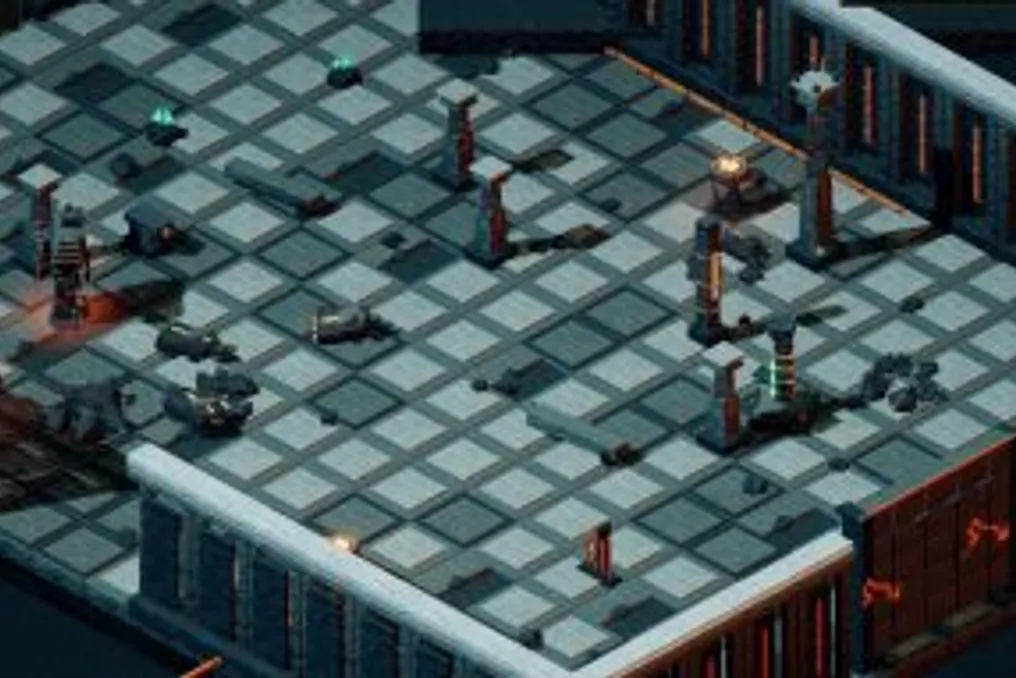
In the release of Muse Spark 1.2 on its blog, Meta also demonstrated the AI's potential with three examples, two of which were simple games. The first, named Embervault, features an isometric perspective and a board format where the player controls a robot that must eliminate constantly pursuing enemies; the gameplay demands fluidity, but the website showed freezes during the test. The second game, Avo Lawn, is a 2D tower defense type, where zombies advance slowly towards the player. In this game, the user collects seeds and acquires fruits to strengthen their defenses, lasting five attack waves, presenting a slow pace but with potential to be a good mobile game.
Researchers have identified hundreds of millennia-old geoglyphs hidden in the Amazon Forest. Initially, in the 1980s, geographer Alceu Ranzi noticed large geometric grooves while flying over the area between Rio Branco, in Acre, and Porto Velho, in Rondônia, using a window of a commercial airplane.
Intrigued by the finding, Ranzi returned to the region with a team of photographers and other researchers. This initial investigation led to the revelation of the first geoglyphs in the area: immense symbols carved and drawn directly onto the ground, created by ancient societies that lived in the Amazon.
Currently, technological advancements have facilitated the effort to decipher these structures in the interior of the tropical forest. A recent study, conducted by Brazilian researchers and published in the journal Nature, located 396 geoglyphs hidden in the forests of southern Amazonia, which were invisible due to dense vegetation.
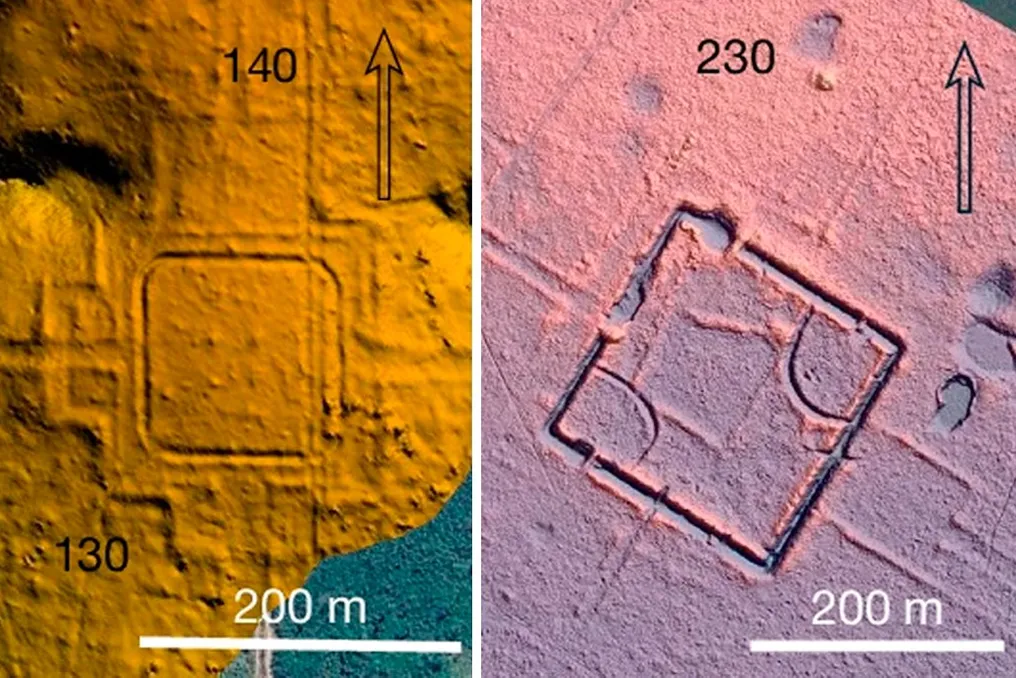
The discovery was made possible by the use of LiDAR (Light Detection and Ranging) technology, which works by sending millions of laser beams from drones or aircraft toward the ground. When hitting an object or structure, the laser is reflected back to the device, allowing for the creation of a three-dimensional map of the underlying terrain.
Thanks to LiDAR, geoglyphs on the ground that were not visible in satellite images have been exposed. The investigation covered approximately 4,5 thousand square kilometers in the states of Acre, southern Amazonas, and also parts of Bolivia and Peru.
Most of the findings are associated with other important structures, such as circulation routes and probable ceremonial sites. On average, each geoglyph occupies almost three hectares, with some being nine meters wide and having a depth of nearly five meters. The largest recorded site discovered spans over 48 hectares.
Researchers link the construction of these works to the Aquiry civilization, an indigenous community that inhabited the southwestern Amazon between 6 BC and 9 AD. Evandro Ferreira, a professor at the Federal University of Acre (UFAC), commented in an interview with Super that he considers this people to possess highly developed knowledge.
Ferreira exemplified that 'they knew how to manage the forest' and that the elaboration of the geoglyphs required a large number of people, given that it was a complex task. He added that excavations indicate they cultivated manioc, in addition to having access to beans and peanuts.
With this new discovery, the total number of known geoglyphs in the region reaches 1,700. However, Ferreira suspects that the actual number could be considerably higher. He calculated that by extrapolating the 396 geoglyphs found across the entire area occupied by the Aquiry (about 185 thousand square kilometers), there could be up to 30 thousand geoglyphs.
It is relevant to note a historical aspect: the first geometric forms were only detected in the 1980s due to the deforestation process. At that time, the growth of livestock farming and the construction of highways, such as BR-317, removed extensive areas of the forest, allowing for the observation of the terrain through aerial means.
Although LiDAR has allowed analysis of areas with dense forest, revealing hidden symbols, the technique has limitations. According to Professor Ferreira, 'as you move towards Central Amazonia, the forest is denser and the effectiveness of the laser decreases,' with precision potentially dropping from 10% to 50% in those regions.
Similar geoglyphs have been found in countries such as Peru, including the famous Nazca Lines. Peruvian drawings include representations of animals, human beings, plants, and imaginary figures, in addition to geometric patterns.
The Nazca civilization consisted of advanced farmers, capable of thriving in a difficult geographical environment, located approximately 1,700 kilometers from the Aquiry in the Amazon. The vast quantity of geoglyphs in the southwestern Amazon leads archaeologists to reevaluate theories about the development of pre-colonial civilizations. One of the main changes is the perception of the size of these societies; previously, it was believed that indigenous groups were small, but now many archaeologists estimate that the population peak of the Aquiry could have ranged between 1.25 million and 3 million inhabitants during the period between 100 AD and 300 AD, as it would require, on average, about 300 people to build and maintain each geoglyph.